







Definition and Meaning
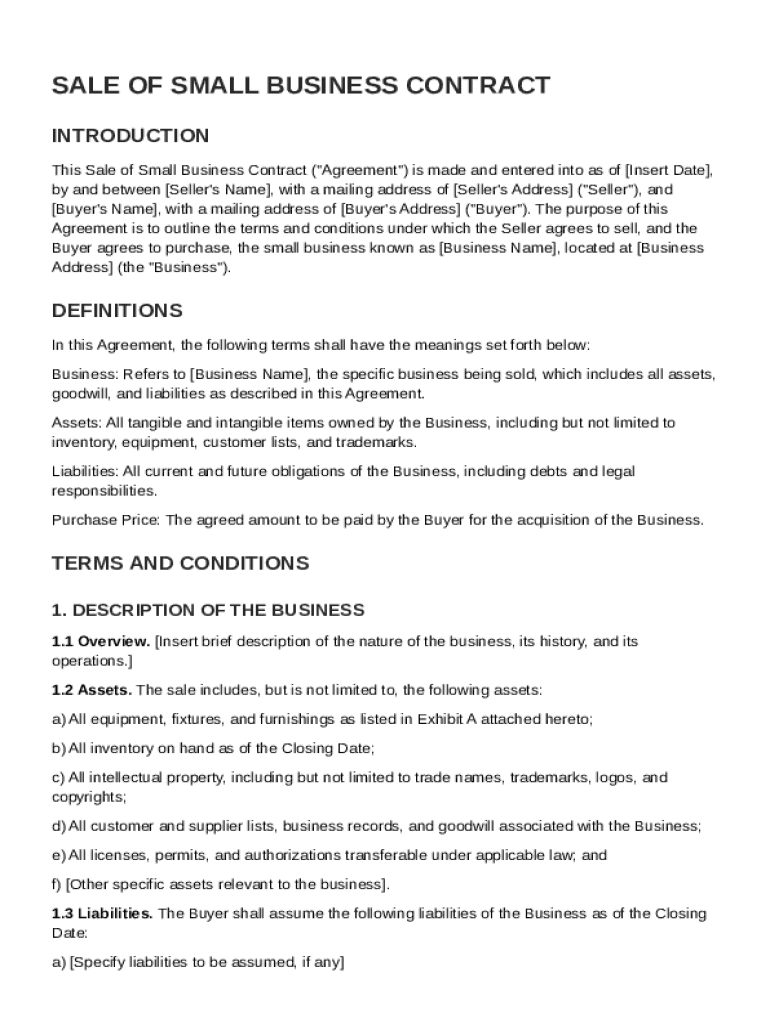
The Sale of Small Business Contract Template is a legally significant document used to structure and formalize the transfer of ownership of a small business from a seller to a buyer. This contract delineates the terms and conditions that both parties agree upon. Key components include the identification of the seller and buyer, a description of the business and its assets, the purchase price and payment terms, and other critical elements such as warranties and representations. This template serves to outline the agreement comprehensively, ensuring that both parties are clear on their rights and obligations.
Important Terms Related to the Sale of Small Business Contract
Understanding the specific terms used within the Sale of Small Business Contract Template is crucial. Common terms include:
- Purchase Price: The agreed amount the buyer will pay to the seller for the business.
- Assets and Liabilities: Detailed descriptions of what the buyer is acquiring and any obligations they are assuming.
- Non-Compete Agreement: A clause preventing the seller from starting a competing business within a specified time frame or geographical area.
- Indemnification: Provisions that outline how the parties will handle potential losses or legal claims after the sale is completed.
Each of these terms plays a critical role in defining the legal and financial responsibilities of the involved parties.
Key Elements of the Sale of Small Business Contract Template
The template includes several key components that are essential for a smooth transaction:
- Business Description: Provides a comprehensive overview of the business being sold.
- Payment Structure: Details the payment terms, including deposits, installments, or lump-sum payments.
- Closing Procedures: Outlines the steps necessary for finalizing the sale, including the transfer of titles and licenses.
- Confidentiality Obligations: Specifies the privacy terms concerning sensitive business information.
Each component is designed to ensure clarity and protect the interests of both the buyer and the seller.
Steps to Complete the Sale of Small Business Contract Template
Completing this contract template involves several steps:
- Identify the Parties: Clearly state the names and contact information of the seller and buyer.
- Detail Business Assets: List all assets included in the sale, such as inventory, equipment, and intellectual property.
- Set Financial Terms: Establish the purchase price and how it will be paid.
- Include Legal Protections: Add necessary clauses, such as non-compete and indemnification terms.
- Finalize with Signatures: Ensure both parties sign and date the document to make it legally binding.
Following these steps ensures that the contract is detailed and enforceable.
Legal Use of the Sale of Small Business Contract Template
This contract is not just a formality; it has significant legal implications. It serves as concrete evidence of the agreed-upon terms and is enforceable in the event of a dispute. Legal counsel is often recommended to ensure that the contract complies with all applicable laws and regulations. The contract’s enforceability ensures both parties adhere to their promises, providing a mechanism for dispute resolution through legal channels if necessary.
Who Typically Uses the Sale of Small Business Contract Template
The template is primarily used by small business owners looking to sell their enterprises and prospective buyers aiming to acquire a business. It is often employed by:
- Entrepreneurs seeking to transition ownership of their business.
- Buyers looking to purchase a business with clear and defined terms.
- Attorneys and advisors who support the transaction process by ensuring the agreement is comprehensive and legally sound.
The contract is vital for anyone engaging in the sale or purchase of a small business to ensure a clear and straightforward transaction.

State-Specific Rules for the Sale of Small Business Contract Template
The sale of a business can be subject to state-specific regulations. These may influence the structure of the contract, including certain disclosure requirements or mandatory clauses. States like California and New York, for instance, might have unique implications for non-compete clauses or tax obligations. Consulting with a local attorney familiar with state-specific nuances ensures that the contract is compliant with regional legislation, thus preventing legal disputes and ensuring a smooth transaction.
Software Compatibility and Integration
The Sale of Small Business Contract Template, when used in platforms like DocHub, is compatible with commonly used software such as Microsoft Word and Adobe PDF. This compatibility is crucial as it allows for easy integration into different business management systems and the ability to share documents across different software environments. Such flexibility ensures that no matter the digital ecosystem in use, the contract can be efficiently managed, stored, and retrieved by both parties, enhancing the overall effectiveness of the transaction.




