






Definition and Purpose of the HR Contract Template
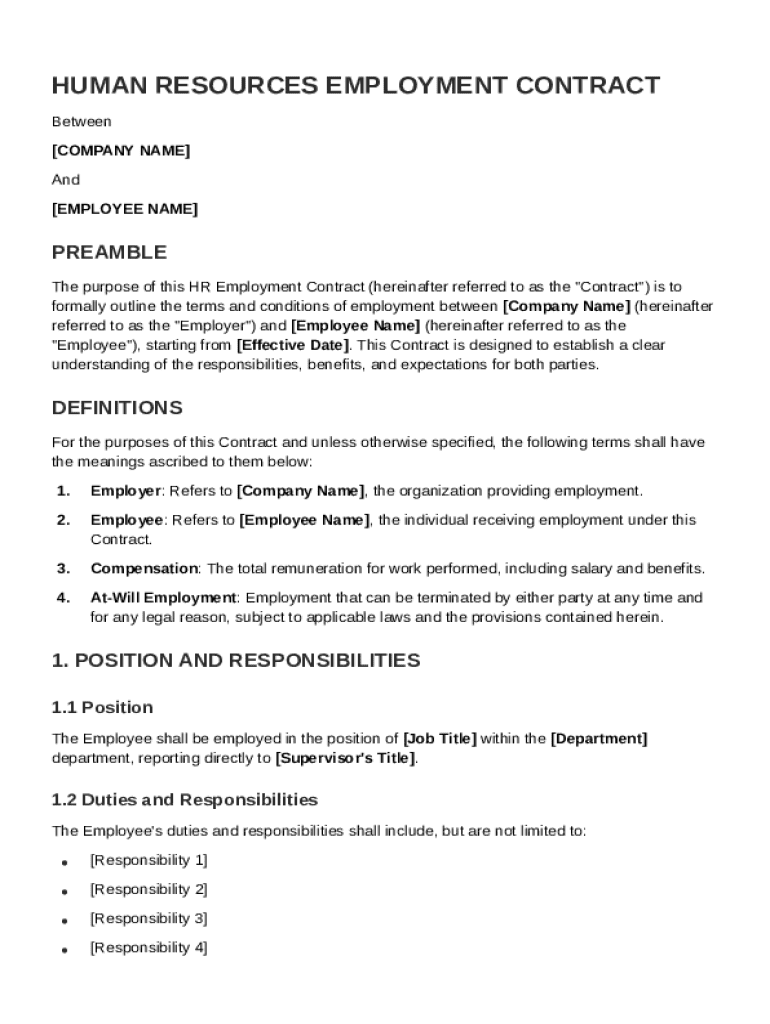
An HR contract template serves as a foundational document used in Human Resources to outline the terms and conditions of employment between a company and its employees. This template typically includes key elements such as job responsibilities, compensation, benefits, confidentiality agreements, and non-compete clauses, among others. It aims to establish clear expectations and provide legal protection for both parties involved in the employment relationship. By using a standardized template, businesses can ensure consistency and compliance with employment laws.
How to Use the HR Contract Template
To effectively utilize the HR contract template, HR professionals should first customize the document according to the specific role and company policies. This involves filling in the employee’s name, job title, salary, and any other position-specific details. It's crucial to review each section for accuracy and ensure all necessary information is included. After tailoring the template, both employer and employee should review the contract thoroughly, discussing any terms that may need clarification or adjustment. The finalized contract should be signed by both parties, signifying agreement and commencement of the employment relationship.
Key Elements of the HR Contract Template
The HR contract template typically comprises several critical components to ensure a comprehensive agreement:
- Job Title and Description: Clearly defines the role and responsibilities expected from the employee.
- Compensation and Benefits: Details the salary, bonuses, and benefits such as health insurance, retirement plans, and paid time off.
- Confidentiality Agreement: Protects company information by restricting the disclosure of sensitive data.
- Non-Compete Clause: Restricts the employee from joining a competitor or starting a similar business within a certain timeframe and region after leaving the company.
- Termination Conditions: Outlines the procedures and conditions under which either party can terminate the employment.
Steps to Complete the HR Contract Template
- Review and Update Company Information: Ensure all company details, such as address and contact information, are current.
- Tailor the Template to the Role: Insert specific details about the job position, including duties and responsibilities.
- Specify Compensation Details: Clearly state the salary, frequency of payment, and any additional compensation structures.
- Review Legal Clauses: Ensure compliance with applicable employment laws and make necessary adjustments.
- Finalize and Obtain Signatures: Once both parties agree to the terms, sign and date the document to make it legally binding.
Legal Use of the HR Contract Template
Using an HR contract template is a legal practice that ensures both employer and employee are protected under relevant labor laws. The document serves as a record of agreed-upon terms, which can be referenced in the event of disputes. It is essential to verify that the template adheres to federal and state employment regulations. Companies should also consider consulting with legal professionals to review the contract template to address any unique legal requirements pertinent to their industry or location.
Who Typically Uses the HR Contract Template
HR contract templates are primarily used by Human Resources departments within organizations of all sizes. They are essential for small businesses, corporations, and startups aiming to streamline their hiring processes. Additionally, legal departments or external HR consultants often employ these templates to ensure employment agreements are fair and compliant with labor laws. These templates are also a valuable resource for new business entrepreneurs who need an efficient way to legally formalize employment terms with new hires.


State-Specific Rules for the HR Contract Template
Employment law can vary significantly from state to state, so it's important to adapt the HR contract template to comply with local regulations. Factors such as minimum wage, overtime pay, and non-compete enforceability can differ. For instance, some states restrict non-compete clauses or have specific criteria that must be met for them to be enforceable. Employers should consult state labor laws and possibly seek legal advice to ensure their contracts meet all legal obligations specific to their location.
Examples of Using the HR Contract Template
Consider a scenario where a tech startup in California is hiring a software engineer. The HR contract would specify details unique to California labor laws, such as adherence to strict overtime regulations and limitations on non-compete agreements. Similarly, a New York-based financial firm might use the template to ensure detailed disclosure and confidentiality clauses are included due to the sensitive nature of their work. Each example demonstrates the template's flexibility in being adapted for diverse roles and legal landscapes.
Important Terms Related to the HR Contract Template
Understanding the following terms can enhance clarity and prevent misunderstandings within the HR contract template:
- Probationary Period: A set time during which the employee's performance is evaluated before they are considered permanent staff.
- Severance Package: Compensation provided to an employee if their employment is terminated under certain conditions.
- At-will Employment: A common practice allowing either party to terminate the employment relationship at any time without cause.
- Collective Bargaining: A process involving negotiation between employers and a group of employees aimed at reaching agreements to regulate working conditions.
Digital vs. Paper Version of the HR Contract Template
With advances in technology, many organizations are transitioning to digital contracts over traditional paper versions. Digital contracts offer increased efficiency and the convenience of electronic signing, which is particularly beneficial for remote hires. Security measures like encryption can protect digital forms from unauthorized access. However, businesses should ensure they have the capability to store and manage electronic documents securely to maintain compliance with record-keeping requirements.
Eligibility Criteria for HR Templates
While there are no set eligibility criteria for using an HR contract template, it is most beneficial for employers who wish to establish formal, legally consistent employment terms. Any organization hiring employees, regardless of size or industry, can utilize the template as long as they adjust it according to the specific job and company policies. Businesses should assess their needs to determine which modifications are necessary for the template to fully meet their operational and legal requirements.