
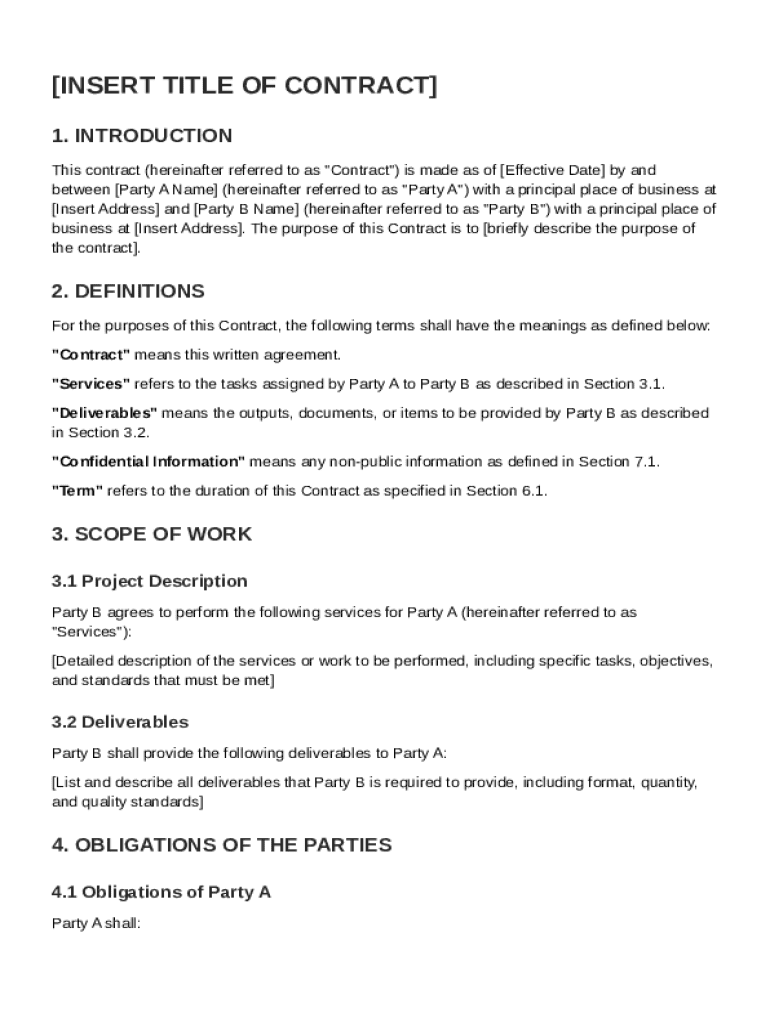







Definition and Meaning of Form Contract Template
A form contract template serves as a standardized agreement outline used in various business contexts. It encapsulates fundamental contractual elements like the identification of parties, scope of work, deliverables, compensation terms, confidentiality clauses, liability limitations, governing law, and termination conditions. The primary advantage of using a contract template is that it provides a uniform structure, ensuring consistency and completeness in contractual documentation. This pre-formatted document acts as a comprehensive framework, aligning the expectations and obligations of both parties involved, thus facilitating a smoother negotiation process.
Key Elements of the Form Contract Template
Form contract templates typically include several crucial components. Key elements comprise:
- Parties Involved: Detailed identification of the parties entering the contract, usually referred to as Party A and Party B.
- Scope of Work: A description outlining the specific tasks or services required by the contract.
- Payment Terms: Details regarding compensation, payment schedules, and any associated financial obligations.
- Confidentiality Clauses: Provisions that outline how sensitive information will be protected.
- Liability Limitations: Specifications on the extent and limitations of responsibility held by each party.
- Governing Law: Identification of the legal jurisdiction that will govern the contract.
- Termination Conditions: Conditions under which the contract can be terminated by either party.
By ensuring these elements are defined, contract templates can significantly reduce the chance of misunderstandings or disputes.
How to Use the Form Contract Template
Using a form contract template involves several steps designed to customize and finalize the document for your needs. Here are some basic steps to guide you through the process:
- Selection: Choose a template that aligns with the specific nature of your agreement.
- Customization: Modify the template to address the unique aspects of your situation, such as specific services, deliverables, and payment terms.
- Review: Carefully review the customized contract to ensure all necessary terms are included and clearly defined.
- Consultation: It is advisable to seek legal advice to verify that the adaptations meet your objectives and comply with applicable laws.
- Finalization: Once the contract is complete, both parties should review and agree to its terms before signing.
Attention to these steps ensures a more robust contract that suits your particular arrangements.
Steps to Complete the Form Contract Template
Completing a form contract template is a systematic process that warrants attention to detail. This step-by-step guide can aid in efficiently finishing the template:
- Input Information for Each Party: Enter the names, contact details, and roles of all parties.
- Define the Scope and Deliverables: Clearly describe the services or products, including timelines and milestones.
- Specify Payment Terms: Detail the payment methods, schedules, and any terms related to late payments.
- Include Confidentiality Provisions: Outline how shared information will be treated and any repercussions for breaches.
- Address Liability and Warranty: Explain any warranties, including limitations and liabilities for damages.
- Finalize Governing Law and Dispute Resolution: Assign the jurisdiction for legal matters and how potential disputes will be resolved.
- Set Termination Conditions: Explain under what conditions the contract can be terminated by either party.
Organizing these components carefully helps to ensure that the contract is comprehensive and enforceable.
Importance of Using a Form Contract Template
The significance of employing a form contract template lies in its capacity to safeguard the interests of the entities involved. It brings several essential benefits:
- Consistency: Establishes uniformity across different agreements, minimizing errors and omissions.
- Efficiency: Streamlines the contract creation process, reducing the time spent drafting agreements from scratch.
- Clarity: Provides clear definitions and terms, reducing the likelihood of disputes.
- Legal Compliance: Helps ensure that contracts include terms required by law, maintaining compliance across different jurisdictions.
By systematizing contract creation, a template enables robust legal documentation that can protect both parties from potential future disputes.
Who Typically Uses the Form Contract Template
Form contract templates are widely used across various industries by several types of stakeholders:
- Small Business Owners: To outline service agreements with clients or vendors.
- Freelancers and Consultants: For establishing contract terms with clients.
- Corporate Legal Teams: To prepare standardized contracts for multiple transactions.
- Real Estate Professionals: For lease agreements and property contracts.
- Educational Institutions: For agreements with vendors or service providers.
These templates cater to a broad range of users, offering a practical, adaptable solution to diverse contractual needs.


Digital vs. Paper Version of Form Contract Template
In today's digitized world, form contract templates are available both online and in conventional paper format. Choosing the right version can hinge on several factors:
- Digital Version: Offers easy customization and editing, often enhanced with features like e-signatures for rapid execution. It is ideal for quick, secure, and environment-friendly transactions.
- Paper Version: More traditional and sometimes preferable in circumstances where digital means are not accessible or in jurisdictions that demand physical signatures.
Many businesses now prioritize digital templates due to the convenience and efficiency of electronic processing, yet paper versions remain relevant for certain transactions.
Legal Use of the Form Contract Template
Using a form contract template legally requires adherence to specific guidelines and a thorough understanding of the contractual laws that apply. Here are several considerations:
- Compliance: Ensure that the template complies with applicable state and federal laws, including terms required by legislation.
- Custom Adjustments: The template must be adapted to meet specific contractual needs without altering mandatory legal provisions.
- Consultation with Legal Experts: Involving legal counsel in the customization process can prevent potential violations and strengthen contract enforceability.
- Inclusion of Critical Terms: All significant clauses, such as dispute resolution mechanisms and privacy protections, must not omit or inadequately cover required legal standards.
By ensuring templates are used in compliance with legal standards, organizations can mitigate risks and uphold contractual integrity.




