
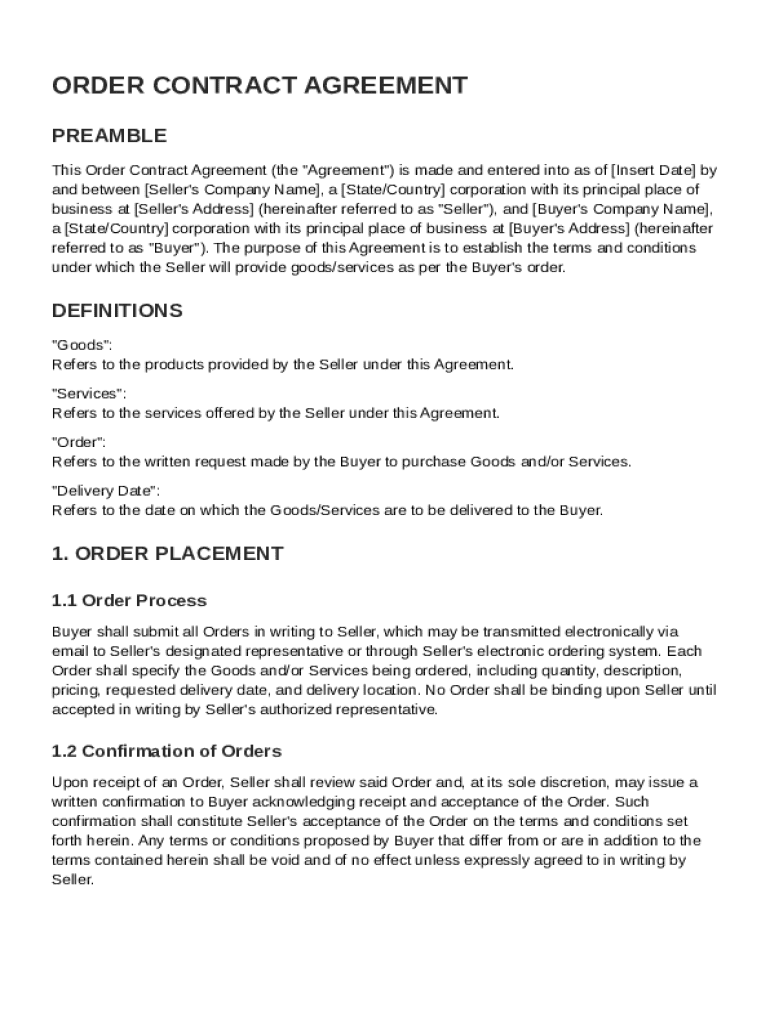







Definition and Significance of Order Contract Template
An Order Contract Template is a standardized document used to outline the terms and conditions between a seller and a buyer for the provision of goods and/or services. This legal instrument specifies critical elements such as pricing structure, payment terms, delivery obligations, return policy, warranties, and termination conditions. It serves as an essential tool for both parties to establish clear expectations and responsibilities, thereby minimizing misunderstandings and disputes. The template helps streamline the contract creation process by providing a comprehensive framework that can be tailored to specific needs and scenarios.
Key Elements of the Order Contract Template
An effective Order Contract Template includes multiple critical components, each serving a distinct function:
- Parties Involved: Clearly identifies the seller and buyer, including detailed contact information.
- Order Details: Enumerates the goods or services being provided, including descriptions, quantities, and any relevant specifications.
- Pricing and Payment Terms: Specifies the cost of the order, accepted payment methods, and timelines for payment.
- Delivery Schedules: Outlines deadlines and procedures for delivery, including responsibilities for shipping costs and processes for handling delays.
- Return and Refund Policy: Offers terms under which goods may be returned, including time frames, reasons for returns, and conditions for refunds or exchanges.
- Warranties and Guarantees: Establishes any promises made by the seller regarding the quality and performance of the goods or services supplied.
- Governing Law: Determines the jurisdiction and laws under which the contract will be interpreted and enforced.
Each of these elements ensures that all involved parties have a mutual understanding of their obligations and rights under the agreement.
How to Use the Order Contract Template
Utilizing the Order Contract Template effectively involves several steps:
- Customization: Adjust the template to fit the specific needs of the transaction. This includes inserting the relevant details for parties involved, and any terms specific to the goods or services.
- Review by Stakeholders: Allow all stakeholders, such as legal advisors, to review and provide feedback on the drafted contract to ensure completeness and compliance with applicable laws.
- Finalization: Amend any necessary changes based on feedback and secure agreement on the final draft from both parties involved.
- Execution: Once the contract is agreed upon, both parties should sign the document, marking it as legally binding.
This clear process ensures that the template is not only complete but also tailored to meet the individual requirements of each transaction.
Legal Use of the Order Contract Template
Order Contract Templates are legally viable documents that must adhere to local, state, and federal regulations. They are enforceable under contract law, provided they contain all essential elements of a contract and have been agreed upon by both parties. The terms of use typically require:
- Mutual Consent: Both parties must voluntarily agree to the terms set out in the contract, marking their consent with signatures.
- Capacity: Both parties must have the legal capacity to enter into the agreement, meaning they are not minors, mentally incapacitated, or otherwise legally restricted.
- Lawful Purpose: The contract must be for a legal purpose; any agreements involving illegal activities are not enforceable.
Understanding these legal constraints ensures that the Order Contract Template serves its purpose efficiently and is legally binding.
Steps to Complete the Order Contract Template
Completing an Order Contract Template involves a series of steps to ensure accuracy and legality:
- Gather Essential Information: Collect all relevant details about the parties involved and the specifics of the goods or services.
- Fill Out Template Sections: Input the gathered information into the respective sections of the template, ensuring clarity and precision.
- Review and Edit: Conduct a thorough review to make sure all details are correct and make necessary edits.
- Legal Consultation: If applicable, consult with a legal professional to review contract terms and confirm compliance with all laws.
- Secure Approval: Obtain approval from both parties. This may include negotiations and modifications as necessary.
- Signatures and Storage: Once the agreement is final, both parties should sign the document. Store the contract in a secure location for future reference.
These steps facilitate a comprehensive approach to drafting a legally sound order agreement.
Examples of Using the Order Contract Template
Order Contract Templates are versatile and can be used across various industries:
- Retail: For sellers to manage agreements for the delivery of merchandise to stores or customers.
- Manufacturing: To stipulate parts supplies and finished product deliveries.
- Consulting Services: Outlines terms for professional service provision, including scope of work and payment schedules.
- Technology Services: Arrangements concerning software licenses, maintenance, and updates.
Each industry may require specific modifications to the template to align with industry standards and practices, illustrating the template’s adaptability.
State-Specific Regulations Governing Order Contract Templates
State-specific regulations can impact the use of Order Contract Templates, and understanding these differences is crucial:
- Variations in Sales Tax Laws: Some states have particular requirements about how sales taxes are applied to goods and services, which can affect pricing clauses.
- Delivery and Shipping Rules: States may have specific rules on delivery guarantees and shipment terms, requiring certain disclosures in contracts.
- Consumer Rights Protections: State consumer protection laws might mandate particular language in return policies or warranties.
Navigating these variations is essential to ensure the contract is compliant with state regulations, underlining the importance of tailoring the template when necessary.
Benefits of Using the Order Contract Template
Implementing an Order Contract Template provides several benefits:
- Efficiency: Streamlines the contract creation process, saving time and reducing administrative overhead.
- Clarity: Ensures all parties have a clear understanding of their duties and rights, which prevents misunderstandings.
- Legal Protection: Offers both parties legal recourse in case of disputes, enhancing accountability and trust.
- Flexibility: Can be adapted to meet the specific requirements of different transactions or industries.
These advantages underscore the value of employing templates, highlighting their role in facilitating effective business transactions.




