






Definition & Meaning
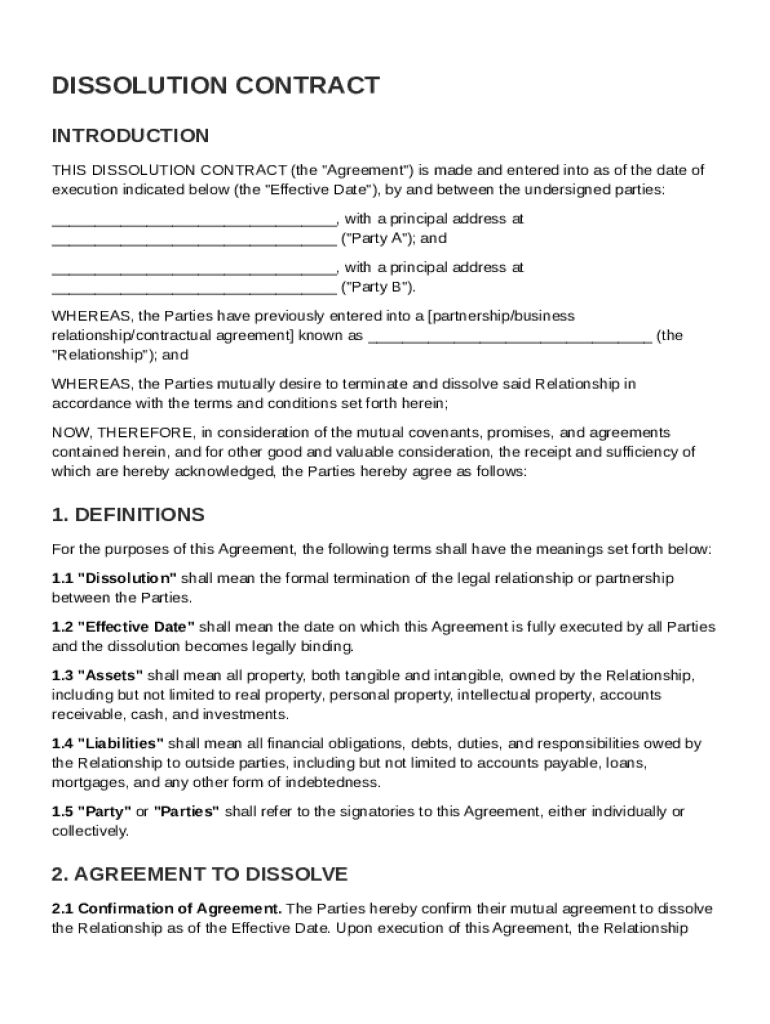
A dissolution contract is a legal document that formalizes the termination of a partnership or business relationship between two or more parties. It sets out terms and conditions under which the partnership will end, ensuring that all involved parties are aware of their rights and obligations post-dissolution. The primary aim of such a contract is to provide a clear framework that guides the process of unwinding the partnership, minimizing potential disputes by establishing agreed-upon terms regarding issues like asset division, debt settlement, and release of claims. This template becomes an invaluable tool for managing the dissolution process effectively, ensuring clarity and compliance with legal standards.
Key Elements of the Dissolution Contract Template
A comprehensive dissolution contract template includes several critical components that need to be carefully considered and completed by the involved parties. These elements ensure that the dissolution process is thorough and legally binding:
- Definitions and Parties Involved: Clearly outlines the parties terminating their relationship, referred to as Party A and Party B, along with definitions of essential terms.
- Division of Assets and Liabilities: Details how assets will be divided and how liabilities will be managed or allocated between the parties. This section helps prevent future disputes over financial matters.
- Payment Terms and Obligations: Specifies any financial obligations between parties, including settlement amounts for equitable distribution. These terms ensure transparent financial arrangements.
- Mutual Release of Claims: Provides for the waiver of future claims against each other by the parties, which is crucial for preventing ongoing legal issues once the partnership is dissolved.
- Confidentiality Obligations: Highlights any nondisclosure agreements that will continue past the dissolution, protecting sensitive information.
- Governing Law and Jurisdiction: States which state laws will govern the contract and outlines the jurisdiction for any legal proceedings.
- Miscellaneous Provisions: Covers any other relevant terms that parties need to agree upon for the dissolution process to be complete and binding.
Steps to Complete the Dissolution Contract Template
Filling out the dissolution contract template correctly is critical to its enforceability and effectiveness. The process includes several detailed steps that parties must follow:
- Identify the Parties: Clearly list the names and roles of all parties involved in the dissolution.
- Define Terms: Include definitions of critical terms used throughout the contract.
- Detail Asset and Liability Division: Specify each asset and liability, along with how they will be divided among the parties.
- Outline Financial Obligations: Clarify any payment terms, including deadlines and payment methods.
- Include a Mutual Release Clause: Show a detailed text that waives future claims between the parties.
- Specify Confidentiality Terms: If applicable, note any ongoing confidentiality obligations.
- Choose Governing Law: State the jurisdiction whose laws will govern the dissolution contract.
- Review and Sign: All parties should thoroughly review the terms and sign the contract to make it legally binding.
Legal Use of the Dissolution Contract Template
The dissolution contract template must comply with legal standards to be considered valid. The legal use of this template involves ensuring that all parts of the agreement adhere to relevant state laws and regulations. Parties should also be aware of certain legal stipulations:
- The contract must reflect a mutual agreement between all involved parties.
- Signatures of all parties are necessary for the contract to be enforceable.
- It must include clear terms and conditions that cover all aspects of the dissolution.
- It should outline a governing law clause, specifying which state laws the contract will follow.
- Legal counsel may be necessary to ensure all terms are compliant with current legal standards and do not violate any jurisdictional laws.
Important Terms Related to Dissolution Contract Template
Several important legal and business terms are crucial for understanding and drafting a dissolution contract:
- Dissolution: The process of officially ending a partnership or business entity.
- Equitable Distribution: Fair division of assets and liabilities among parties.
- Mutual Release: An agreement where parties waive any future claims against each other resulting from the business or partnership.
- Confidentiality Clause: Provision that keeps certain information protected from disclosure after the dissolution.
- Governing Law: Legal framework under which the contract is formulated and disputes are resolved.
Business Types That Benefit Most from Dissolution Contract Template
Various business entities may find the dissolution contract template particularly beneficial, as it provides a structured approach to ending partnerships:
- General Partnerships: Without a formal business structure, a detailed dissolution agreement is vital for orderly termination.
- Limited Liability Companies (LLCs): Should make sure members agree on terms before winding up the business.
- Corporations: When dissolving, they need clear agreements to handle asset distribution and shareholder relations.
- Joint Ventures: These transient partnerships require well-defined exit strategies that a dissolution template can provide.
Examples of Using the Dissolution Contract Template
To understand how the dissolution contract template can be applied, consider various scenarios where it proves beneficial:
- Ending a Small Business Partnership: When two friends decide to close a café they co-own, the template helps lay out the division of equipment and remaining debts.
- Terminating a Professional LLC: A group of architects winding down their firm can use the template to distribute project portfolios and client lists.
- Wrapping Up a Short-Term Collaboration: A tech startup and a marketing firm concluding their joint venture can rely on the template to ensure both parties are satisfied with the financial arrangements made.
Eligibility Criteria
Before committing to a dissolution contract, parties should ensure they meet specific eligibility criteria to enter such agreements:
- All involved parties must be of legal age and have the capacity to enter a contract.
- Parties must have a legitimate business or legal relationship covered by the contract.
- The relationship must not have unresolved legal issues preventing dissolution.
- Both parties should have mutual interest and agreement on dissolving the relationship.