
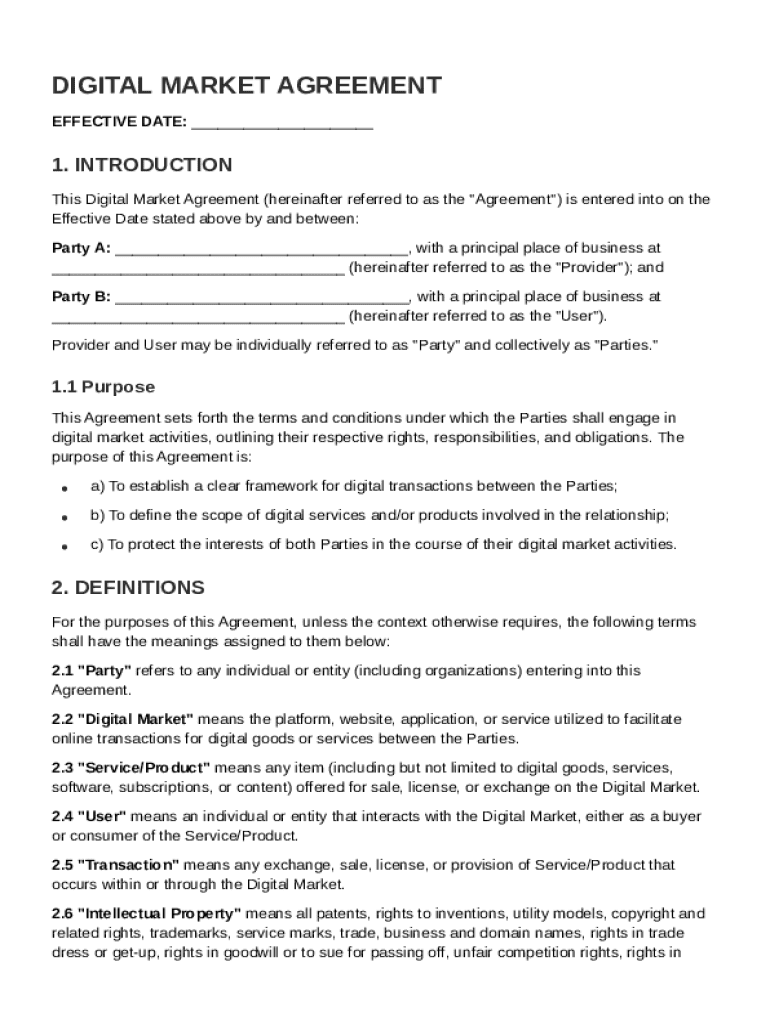







Definition & Purpose of the Digital Market Contract Template
The Digital Market Contract Template serves as a structured agreement used to define the terms and conditions of digital market transactions between a provider and a user. It establishes a comprehensive framework that governs the exchange of digital goods and services, delineating roles and responsibilities of both parties involved. Crucial components typically included are confidentiality clauses, intellectual property rights, fee structures, liability limitations, dispute resolution procedures, and conditions for agreement termination. This template is critical for ensuring that both parties' interests are safeguarded and that transactions are conducted smoothly and transparently.
How to Use the Digital Market Contract Template
Utilizing the Digital Market Contract Template involves several key steps to ensure that the agreement is comprehensive and legally sound. Users should begin by thoroughly reviewing the template to understand its scope and terms. Adjustments may be necessary to align the template with the specific needs of the transaction, such as modifying fee structures or inserting unique conditions that pertain to the digital goods or services provided. Importantly, the parties involved should clearly define their expectations and responsibilities within the document. Once the template customization is complete, both parties must review the final version carefully before signing to confirm mutual understanding and agreement.
Key Elements of the Digital Market Contract Template
The Digital Market Contract Template encompasses several essential elements to facilitate clear and effective agreements:
- Parties Involved: Clearly identifies the provider and user engaged in the transaction.
- Scope of Services: Details the digital goods or services being exchanged.
- Payment Terms: Outlines the agreed-upon fee structure and payment schedules.
- Intellectual Property Rights: Specifies ownership and rights concerning digital content or software.
- Confidentiality Obligations: Ensures protection of sensitive information shared between parties.
- Liability and Indemnification: Defines each party's liabilities and indemnification obligations.
- Dispute Resolution: Establishes procedures for resolving disagreements, including mediation or arbitration.
- Termination Conditions: States conditions under which the agreement may be terminated.
Important Terms Related to the Digital Market Contract Template
In navigating the Digital Market Contract Template, several legal and industry-specific terms are pivotal:
- Intellectual Property (IP): Encompasses rights to creations of the mind, such as inventions and trademarked content.
- Confidentiality: Obligates parties to prevent unauthorized disclosure of sensitive information.
- Indemnity: Provides a safety net, ensuring one party can recover losses from the other in cases of specific breaches.
- Arbitration: Refers to using a neutral third party to resolve disputes outside of court.
- Termination Clause: Details scenarios and processes for early contract cessation.
Legal Use of the Digital Market Contract Template
Legal adherence in using the Digital Market Contract Template ensures that the agreements made are binding and enforceable. To achieve this, users should employ clear, concise language in the document, explicitly outlining each party's rights and responsibilities. Adhering to relevant state and federal laws that pertain to digital transactions is crucial, as laws can vary significantly by jurisdiction, especially concerning data protection and privacy. Additionally, both parties should retain a copy of the signed document for their records, certifying the terms agreed upon and serving as a point of reference in the event of legal disputes.
State-Specific Rules for the Digital Market Contract Template
While the Digital Market Contract Template provides a foundation, state-specific regulations may influence its terms:
- California: Notable for stringent data privacy laws, such as the California Consumer Privacy Act (CCPA), impacting the confidentiality clauses.
- New York: Contracts may need to include specific language addressing digital tax implications for transactions.
- Texas: Consideration of electronic signature laws to ensure compliant execution of agreements.
Users must verify that their contract adheres to applicable state laws to maintain enforceability and mitigate legal risks.
Who Typically Uses the Digital Market Contract Template
The Digital Market Contract Template is mainly utilized by businesses and individuals engaged in digital commerce. This includes software development companies, digital marketing agencies, e-commerce platforms, and freelancers offering online services. These users require a robust framework to manage client relationships and transactions in the digital ecosystem. By using this template, businesses can standardize their agreements, ensuring consistency and clarity in their contractual dealings, thus reducing potential disputes.


Examples of Using the Digital Market Contract Template
Several scenarios illustrate the practical application of the Digital Market Contract Template:
- Software Development Agreements: Technology firms formalize the delivery and ownership of software solutions.
- E-Commerce Partnerships: Online retailers outline terms with service providers for web hosting or marketing.
- Digital Content Licensing: Media companies negotiate usage rights for digital assets.
Each example highlights the template's versatility in diverse digital market contexts, underscoring its value as a foundational contractual tool for ensuring transparent and equitable interactions.
Software Compatibility with the Digital Market Contract Template
The Digital Market Contract Template is compatible with various document editing and management software platforms, facilitating versatility in its use:
- TurboTax: Although primarily a tax preparation tool, this software can help understand the financial implications of agreements.
- QuickBooks: Integration for tracking invoiced amounts or payments outlined within contracts.
- DocHub: Enhances collaboration and editing functionality by allowing imports from Google Drive or Dropbox.
These tools support users in managing, editing, and accessing the template, streamlining their digital documentation processes.




