




Definition and Meaning
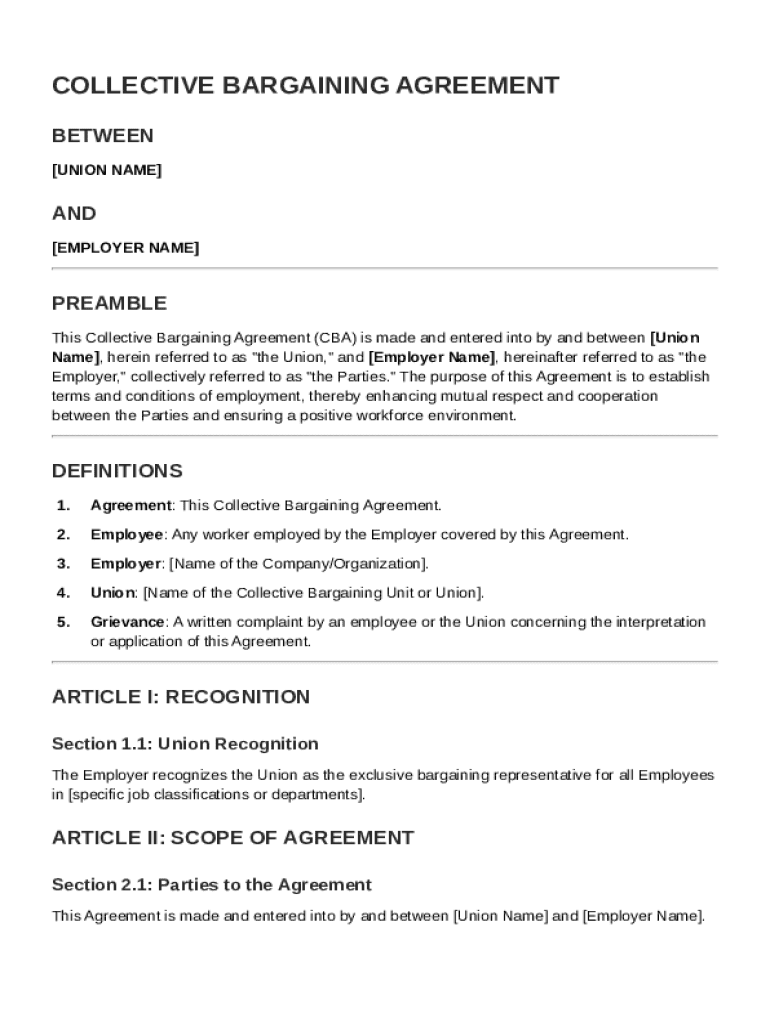
A Collective Bargaining Agreement (CBA) template serves as a foundational document outlining the terms and conditions of employment negotiated between a union and an employer. It typically includes clauses on wages, benefits, working conditions, and grievance procedures. The purpose of a CBA is to ensure mutual respect and cooperation, fostering a positive work environment. This template is essential for drafting an agreement that aligns the interests of both parties while safeguarding the rights of employees under union representation.
Key Elements of the Collective Bargaining Agreement Template
A Collective Bargaining Agreement template has several critical components that guide the negotiation process:
- Terms of Employment: Defines wages, hours, and other working conditions.
- Benefits: Details available benefits, such as health insurance, retirement plans, and paid leave.
- Job Security: Outlines procedures for layoffs, recalls, and other employment changes.
- Grievance and Arbitration Procedures: Provides a process for resolving disputes between employees and employers.
- Management Rights: Specifies the rights retained by management, including decision-making authority and operational control.
- No Strike/No Lockout Clause: Ensures continuity of business operations and labor stability.
How to Use the Collective Bargaining Agreement Template
Utilizing a Collective Bargaining Agreement template efficiently involves several steps:
- Customization: Tailor the template to reflect the unique needs and conditions of the specific workplace or industry.
- Consultation: Engage stakeholders, including union representatives and legal advisors, to review the draft.
- Negotiation: Conduct discussions between union and management to agree on terms.
- Finalization: Once terms are agreed upon, the document is finalized and signed by both parties.
Using a template streamlines this process by providing a structured format, reducing drafting time, and ensuring all critical elements are included.
Steps to Complete the Collective Bargaining Agreement Template
Completing a CBA template requires a focused approach:
- Identify Key Provisions: Determine which clauses are mandatory based on federal or state laws.
- Draft Initial Agreement: Use the template to prepare a preliminary draft.
- Gather Input: Collect feedback from union members and management to address any concerns or additional requirements.
- Negotiate Terms: Resolve differences through negotiation sessions to find mutually acceptable solutions.
- Revise Document: Make necessary changes based on feedback and negotiations.
- Approval and Signatures: Ensure both parties review the document for accuracy before signing.
This thorough process ensures that the final CBA reflects a fair and equitable agreement.
Legal Use of the Collective Bargaining Agreement Template
The legal aspects of using a Collective Bargaining Agreement template are critical for compliance and enforceability:
- Adherence to Labor Laws: The agreement must comply with federal and state labor laws, including the National Labor Relations Act (NLRA).
- Equal Employment Opportunity: Ensure no discriminatory practices are included, aligning with equal employment opportunity regulations.
- Contract Enforceability: It must meet all legal standards for contracts, such as clear terms and voluntary agreement by both parties.
Legal counsel should review the agreement to validate compliance and protect the interests of all stakeholders involved.
Who Typically Uses the Collective Bargaining Agreement Template
The CBA template is predominantly used by:
- Unions: To negotiate terms on behalf of their members.
- Employers: To outline obligations and expectations for unionized workers.
- Human Resources Professionals: To manage labor relations and ensure policy adherence.
- Legal Advisors: To provide guidance during the negotiation process and review for compliance.
These users rely on the template to facilitate structured negotiations and document agreements effectively.

Important Terms Related to Collective Bargaining Agreement Template
Understanding key terminology is vital for effective use of a CBA template:
- Collective Bargaining: A process of negotiation between employers and a group of employees aimed at agreements to regulate working conditions.
- Union Representation: The union acts as the representative of its members during negotiations with the employer.
- Arbitration: A method of dispute resolution involving a neutral third party who determines the outcome.
- Seniority: The length of time an employee has been with the employer, often used for determining perks and layoffs.
Familiarity with these terms helps both parties navigate and negotiate effectively using the template.
Digital vs. Paper Version
The choice between a digital and paper version of the Collective Bargaining Agreement template can have practical implications:
- Digital Version: Offers benefits such as ease of editing, electronic signatures, and efficient distribution via email or cloud storage. It is more sustainable and promotes a quick turnaround during the negotiation process.
- Paper Version: May be preferred for legal documentation and official records. It can be physically signed by stakeholders but requires additional resources for printing and distribution.
The decision should consider accessibility, convenience, and organizational policies for document management.
Software Compatibility
When using a Collective Bargaining Agreement template, it's advantageous to ensure compatibility with popular software solutions:
- DocHub: Supports various formats, enabling seamless editing, signing, and sharing of CBAs online.
- Google Workspace: Offers integration for editing and collaboration within Google Drive and Gmail.
- Microsoft Word: Provides tools for drafting and formatting agreements in a widely accepted format.
- PDF Readers: Necessary for viewing and finalizing agreements intended for distribution and sign-off.
Opting for compatible software streamlines the preparation and execution of the Collective Bargaining Agreement.