Definition and Meaning
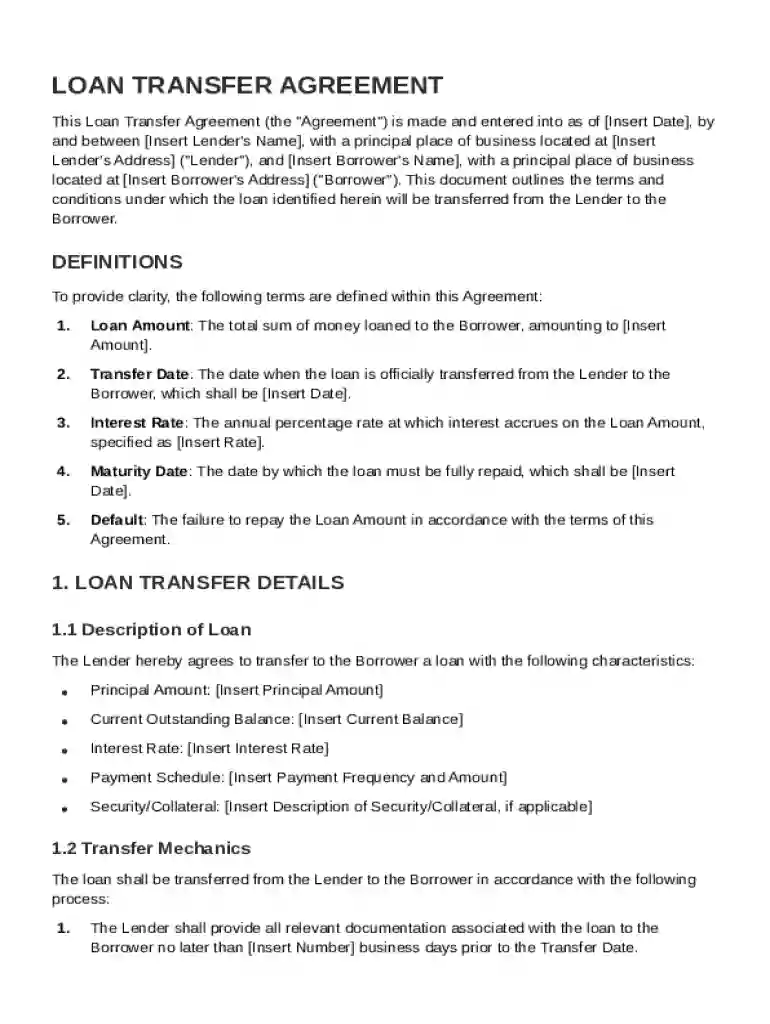
A Loan Transfer Agreement Template is a formal document defining the terms and conditions involved in transferring a loan from one party (the lender) to another party (the borrower). The agreement clearly outlines the specifics of the loan transfer process, integrating key terms and definitions that help both parties understand their obligations and rights. This comprehensive legal document ensures that all necessary elements for a smooth transaction are included and agreed upon, thus reducing the possibility of disputes or misunderstandings.
Key Elements of the Loan Transfer Agreement Template
The template encompasses several critical components, providing structure and clarity to the lending process:
- Loan Transfer Details: Specifies the amount, interest rate, and repayment schedule of the loan being transferred.
- Parties Involved: Clearly identifies both the lender and the borrower, including any third parties or institutions involved in the transfer.
- Representations and Warranties: Details the assurances provided by each party about their legal right to enter the agreement.
- Payment Terms: Outlines the payment schedule, methods, and any penalties associated with late payments.
- Default Provisions: Specifies actions to be taken if the borrower defaults on the loan.
- Governing Law: Indicates the jurisdictional law that governs the agreement, ensuring legal recognition and enforceability.
- Miscellaneous Provisions: Covers additional terms that may be relevant depending on the specific circumstances of the loan.
Steps to Complete the Loan Transfer Agreement Template
To effectively fill out the Loan Transfer Agreement Template, follow these steps:
- Review and Gather Information: Collect all necessary details about the loan, including the parties involved and the key terms.
- Input Loan Details: Fill in the loan transfer specifics, such as the loan amount, interest rate, and repayment terms.
- Specify Parties: Clearly list the names and contact information of the lender, borrower, and any third parties.
- Add Representations and Warranties: Include assurances from both parties regarding their legal standing and ability to enter into the agreement.
- Outline Payment Terms: Specify how payments will be made and highlight any penalties for late payments.
- Include Default Conditions: Clearly articulate what constitutes a default and the ramifications thereof.
- State Governing Law: Add the legal jurisdiction overseeing the agreement to ensure its enforceability.
- Final Review and Sign: Have both parties review the completed document thoroughly and sign it, making the agreement legally binding.
Legal Use of the Loan Transfer Agreement Template
This template serves as a legally binding contract that aligns with U.S. contract law. It is crucial that both parties fully understand the terms within and the associated legal implications. The document provides legal protection for both the lender and the borrower by ensuring that all terms are spelled out clearly and explicitly. Legal advice or consultation can be beneficial before signing to ensure compliance with applicable state laws and regulations.
Who Typically Uses the Loan Transfer Agreement Template
The Loan Transfer Agreement Template is primarily used by:

- Financial Institutions: Banks and lending agencies that are transferring loans to third parties.
- Private Lenders: Individuals or private companies providing loans who need to document the transfer process.
- Borrowers: Those receiving a transferred loan and needing to understand their new obligations.
- Legal Professionals: Attorneys creating or reviewing agreements for clients involved in loan transfers.
State-Specific Rules for the Loan Transfer Agreement Template
Each state in the U.S. may have unique regulations governing loan transfer agreements:
- California: Requires explicit adherence to state usury laws that cap interest rates.
- New York: Enforces strict terms on disclosures about loan terms and borrower rights.
- Texas: Implements specific rules about credit access businesses which can affect the transfer process.
- Being aware of and complying with state-specific laws is crucial to ensure the agreement's enforceability.
Examples of Using the Loan Transfer Agreement Template
Real-world scenarios help illustrate how this template is utilized:
- Transferring a Business Loan: A business that receives a loan may transfer it to a new owner when the business is sold. The template documents the process as part of the sales agreement, ensuring a smooth transition.
- Mortgage Assignments: When a mortgage lender sells a loan to another financial institution, the agreement template is used to formalize the transfer conditions.
- Personal Loans between Family Members: Family loans are often documented using a template to ensure clear communication and avoid potential misunderstandings about repayment terms.
Important Terms Related to the Loan Transfer Agreement Template
Understanding the terms within the agreement is paramount:
- Assignor and Assignee: The assignor is the party transferring the loan, and the assignee is the party receiving it.
- Novation: This denotes replacing an existing obligation with a new one, releasing the original party from the contract.
- Amortization Schedule: An outline detailing how loan payments are divided between interest and principal over time.
- Covenant: A clause in the agreement that requires one party to do or refrain from specific actions.
- A clear grasp of these terms ensures that both parties are fully informed before finalizing the agreement.
Eligibility Criteria
Eligibility for utilizing a Loan Transfer Agreement Template typically depends on:
- Creditworthiness: Evaluating the borrower's financial stability and ability to repay the loan.
- Legal Capacity: Ensuring all parties have the legal standing and authority to enter into a binding contract.
- Existing Loan Terms: Confirming that the original loan agreement allows for assignment and transfer under specified conditions.
Addressing these criteria helps ensure a smooth loan transfer process compliant with all necessary legal norms.