






Definition & Meaning
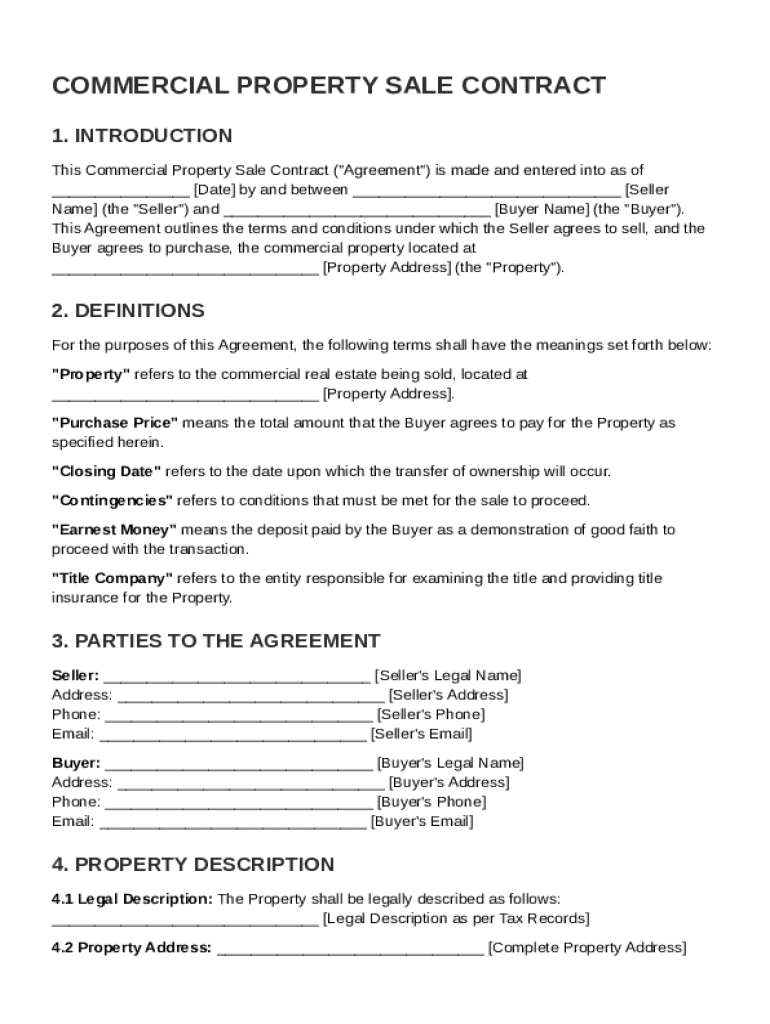
The "Commercial Property Sale Contract Template" serves as a legal document that outlines the specific terms and conditions involved in the sale of a commercial property. This template aims to ensure clarity and mutual understanding between the seller and the buyer. It covers critical details such as the parties involved, the property description, the purchase price, contingencies, and procedures related to closing the transaction. By using a structured template, both parties can ensure that all pertinent aspects of the commercial property sale are addressed comprehensively and legally. The template's structured format helps avoid potential disputes and misinterpretations by clearly defining responsibilities and obligations.
Key Elements of the Commercial Property Sale Contract Template
Parties Involved
- Seller and Buyer: Clearly identifies the individuals or entities participating in the transaction. This information ensures the legal contract binds the correct parties.
- Real Estate Brokers: If brokers are involved, their details, roles, and any commissions should be outlined.
Property Description
- Describes the commercial property being transacted. This section is crucial for confirming the property's legal and physical attributes, including its address, boundaries, and any notable features relevant to the purchase.
Purchase Price and Payment Terms
- Purchase Price: Specifies the agreed-upon price for the property.
- Payment Terms: Outlines the financial terms, including deposit amounts, payment schedules, and any financing arrangements.
Contingencies
- Includes conditions that must be met for the sale to proceed, such as inspections, financing approvals, or zoning clearance. Contingencies protect both parties by allowing specific conditions to be cleared before completing the transaction.
Closing Procedures
- Details the steps for completing the sale, such as the signing of documents, payment of funds, and transfer of ownership. These procedures ensure that the transaction concludes smoothly, with all legal formalities observed.
Legal Use of the Commercial Property Sale Contract Template
The template is designed to comply with U.S. legal standards for property transactions. It incorporates elements such as representations and warranties, indemnifications, and risk of loss. These clauses aim to reduce potential liabilities and clarify expectations for both parties. Utilizing a standardized contract template assures both parties of legal backing and adherence to statutory requirements, minimizing the chances of future legal disputes.
Steps to Complete the Commercial Property Sale Contract Template
- Fill in the Parties: Enter the full legal names and contact information for the buyer and seller.
- Describe the Property: Provide a detailed description of the property, including its address and any defining legal descriptions.
- Define Payment Terms: Clearly state the purchase price and describe any deposit or down payment arrangements.
- Outline Contingencies: Specify any conditions that need to be met before the sale can be finalized.
- Detail Closing Process: Describe the steps for finalizing the sale, including the date, location, and any necessary documentation.
- Include Additional Clauses: Add sections on representations and warranties, indemnifications, and dispute resolution as needed.
- Review and Sign: Have all parties read through the completed document, agree on all terms, and sign in the designated signature sections.
Important Terms Related to Commercial Property Sale Contract Template
Representations and Warranties
These terms assure that certain statements or conditions related to the property or transaction are true. They're essential for establishing trust and transparency between the parties.
Indemnification
A clause promising compensation for any losses or damages incurred due to specified actions, thus protecting both parties from unforeseen liabilities.
Time of Essence
This term emphasizes the importance of meeting deadlines within the contract. It signifies that any delays could lead to penalties or breach of contract.
State-Specific Rules for the Commercial Property Sale Contract Template
While the template provides a generalized approach, certain states in the U.S. may have additional requirements or variations in real estate laws. For instance, states like California and New York have specific disclosures and formalities due to their distinct regulatory environments. It's essential for parties to check local state laws and possibly consult a real estate attorney to ensure any specific state regulations are incorporated into the agreement.
Examples of Using the Commercial Property Sale Contract Template
Case Study 1: A Retail Space Transaction
A retail business owner uses the template to purchase a storefront in downtown New York. The contract includes contingencies for zoning approvals and detailed payment schedules due to required renovations. This example illustrates the template’s adaptability to various transaction conditions.
Case Study 2: Office Building Purchase
An investment company utilizes the template to acquire a multi-story office building in Chicago. Here, the key elements include detailed property descriptions and indemnification clauses to address potential tenant-related claims, showcasing the template’s utility for complex commercial properties.
By offering comprehensive insights into the Commercial Property Sale Contract Template, this content ensures stakeholders have a thorough understanding of the document's significance, features, and strategic uses in a property transaction.