




01. Edit your form online
Type text, add images, blackout confidential details, add comments, highlights and more.

Type text, add images, blackout confidential details, add comments, highlights and more.

Draw your signature, type it, upload its image, or use your mobile device as a signature pad.

Send it via email, link, or fax. You can also download it, export it or print it out.
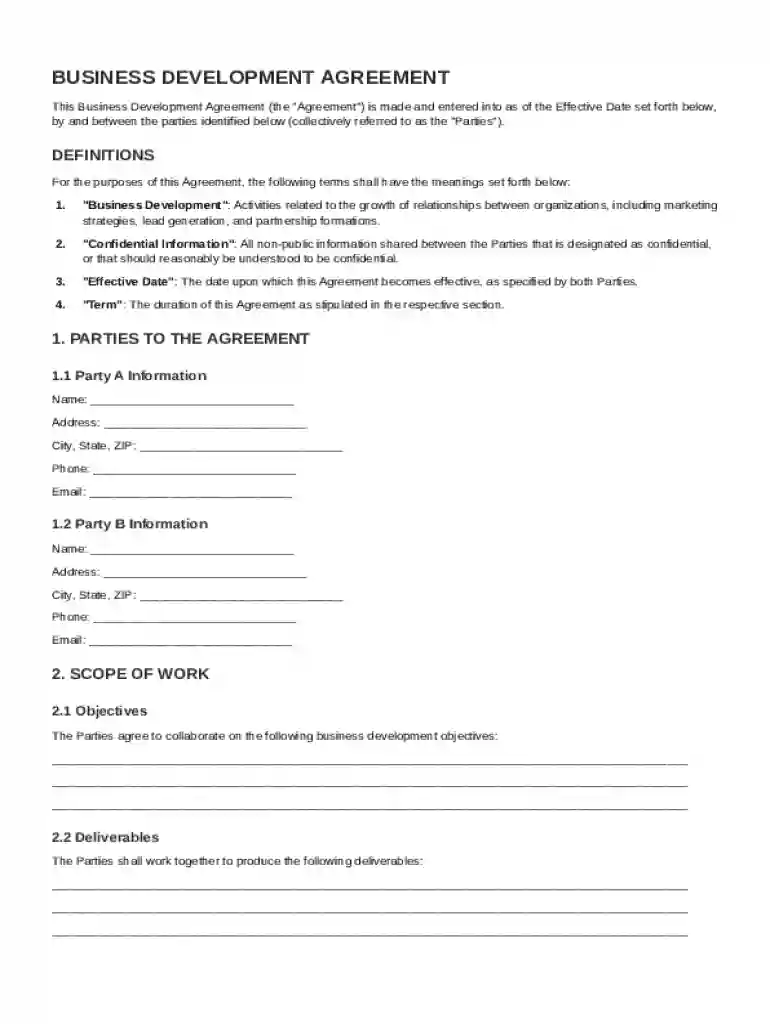
The business development contract template is a comprehensive document that outlines an agreement between two parties involved in business growth activities. It lays out the responsibilities, obligations, and entitlements of each party, ensuring that both sides are aligned in their objectives. This template serves as a foundational framework for establishing marketing strategies, partnership formations, and other business development tasks.
The business development contract template is composed of several crucial elements that define the scope of collaboration. These elements often include:
Utilizing the business development contract template involves understanding its structure and customizing it to meet the specific needs of the parties involved. Here are the steps to effectively use the template:
Ensuring legal compliance is essential when using a business development contract template. This involves considering state-specific laws and regulations to avoid potential legal issues. The agreement must adhere to general business law principles and any specific industry-related standards. Consulting with a legal expert can help navigate these complexities, ensuring that the contract respects the legal framework of the state in which it is executed.
Within the template, confidentiality obligations are vital for protecting proprietary information. By explicitly defining what constitutes confidential information and how it should be handled, both parties can prevent unauthorized disclosure and misuse. These provisions should outline the duration of confidentiality obligations, any exceptions, and the implications of a breach.
To understand the applicability of a business development contract, consider a scenario where a tech startup partners with a marketing agency. The template can establish clear terms for the agency to promote the startup’s new software product. Key components like intellectual property clauses will be crucial to delineate the ownership of marketing materials and proprietary software features.
Different states may have varying rules that could affect the application of a business development contract. Key considerations include:
Understanding these nuances is essential to ensure that the agreement is enforceable and respects state laws.
Typically, businesses of all sizes engaging in joint ventures, partnerships, or collaborations may utilize a business development contract template. These include:


The template is adaptable for various business entities, such as LLCs, corporations, and partnerships. Each type may have specific requirements for structuring the agreement, particularly regarding liability and governance.
The legal validity of a business development contract relies on its fulfillment of essential contract elements like mutual consent, consideration, and legal purpose. Additionally, certain industries may have regulatory requirements that must be incorporated into the agreement.
Understanding industry-specific terminology and commonly used legal phrases within the contract is crucial. This ensures both parties have a shared understanding and prevents misunderstandings or misinterpretations. Where necessary, these terms should be clearly defined within the contract's glossary.
The business development contract is often managed efficiently using digital platforms like DocHub, which allows for streamlined document editing, collaboration, and e-signatures. This approach facilitates:
The choice between digital and paper versions depends on the specific needs and capabilities of the parties involved. While digital forms offer ease of access and efficiency, some may prefer traditional paper versions for records or in compliance with specific policies.
When using the business development contract template, consider including additional clauses that address edge cases and variations, such as:
These enhancements can align the contract with both parties' strategic objectives and operational specifics.
At DocHub, your data security is our priority. We follow HIPAA, SOC2, GDPR, and other standards, so you can work on your documents with confidence.




Mar 24, 2022 A solid consulting agreement should include the nature of services, fee structure, duration, statement of work, terms and conditions, delivery
The contract outlines the terms of employment for a Business Development Manager, detailing the duration, duties, compensation, and conditions under which


