






Definition & Meaning
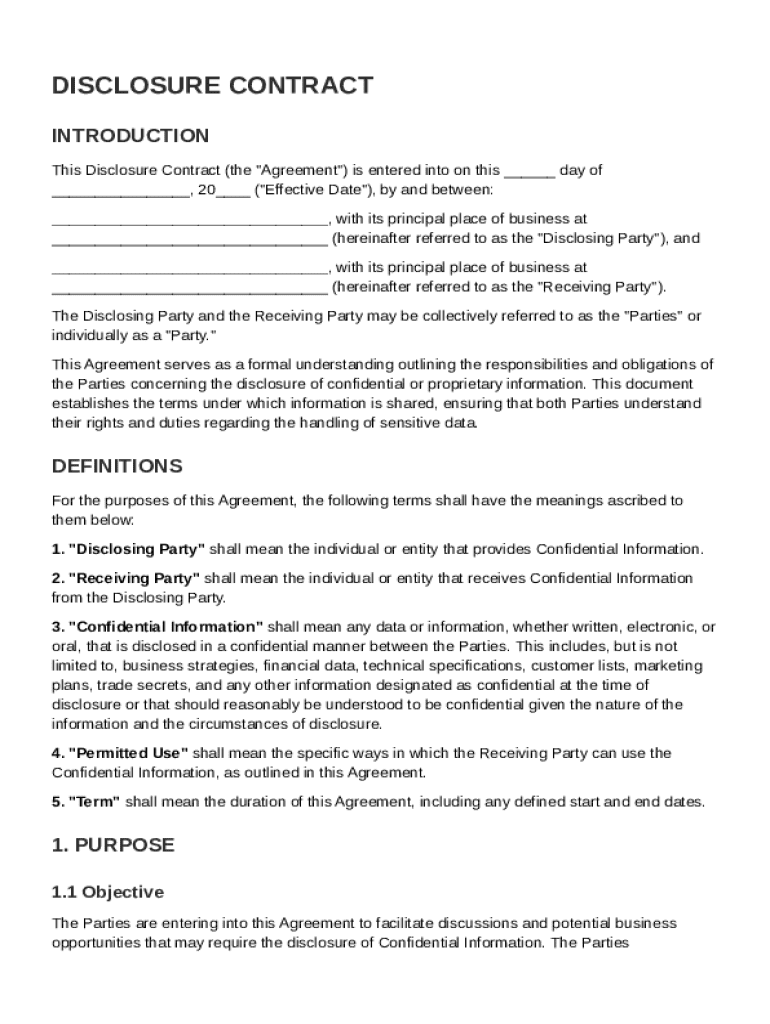
A Disclosure Contract Template is a legal document that establishes terms for sharing confidential information between two parties: the Disclosing Party and the Receiving Party. This contract is utilized primarily in business contexts to safeguard sensitive data when engaging in collaborations or negotiations. The agreement clearly defines key terms, outlines the purpose of the information exchange, and clarifies each party's responsibilities to prevent unauthorized use or disclosure of confidential information.
Key Elements of a Disclosure Contract
- Parties Involved: Identifies the Disclosing Party and Receiving Party.
- Confidential Information: Defines what is considered confidential and the manner of disclosure.
- Obligations: Specifies the duties of each party in protecting the confidential information.
- Duration: States the time frame during which the information must remain confidential.
- Termination: Details the conditions under which the agreement can be ended.
- Legal Governance: Outlines the legal jurisdiction governing the agreement.
Key Elements of the Disclosure Contract Template
The Disclosure Contract Template includes essential components that make it a robust legal tool for protecting confidential information. These elements ensure that both parties have a clear understanding of their roles, responsibilities, and the scope of confidentiality.
Essential Clauses and Provisions
- Confidentiality Obligations: Details the responsibilities of the Receiving Party to maintain the confidentiality of information disclosed.
- Use Limitations: Specifies how the information can be used and any limitations on use.
- Exceptions to Confidentiality: Lists situations where the disclosure of information might not be considered a breach, such as information that is already public.
- Legal Compliance: Ensures that the agreement complies with relevant legal standards and regulations.
- Remedies and Penalties: Outlines the consequences of any breach of the agreement.
Additional Elements
- Definitions: Clear definitions of terms used within the contract to avoid ambiguity.
- Integration Clause: States that the agreement is complete and supersedes any prior agreements.
- Amendment Process: Describes the process for making changes to the agreement.
Steps to Complete the Disclosure Contract Template
Completing the Disclosure Contract Template requires careful attention to detail to ensure all aspects of the agreement are accurately represented and legally binding.
Step-by-Step Process
- Identify the Parties: Fill in the names and contact information of the Disclosing and Receiving parties.
- Detail Confidential Information: Clearly describe what constitutes the confidential information to be protected.
- Specify Obligations and Limitations: Outline the responsibilities of each party and any restrictions on the use of the information.
- Determine the Duration: Set the time frame during which the confidentiality obligations will be in effect.
- Include Legal Clauses: Add any necessary legal provisions, including jurisdiction, dispute resolution, and any penalties for breach.
- Review and Finalize: Review the document for accuracy and completeness and ensure it is signed by both parties with legal counsel if necessary.
Legal Use of the Disclosure Contract Template
Using the Disclosure Contract Template appropriately is crucial to ensure it serves its intended purpose and remains enforceable in legal contexts.
Legal Considerations
- Enforceability: Ensure the contract complies with state laws and is enforceable by court standards.
- Legal Counsel: Involve legal professionals during the drafting to provide guidance and ensure compliance with legal requirements.
- Governing Law: Clearly state which jurisdiction’s laws will govern the agreement in case of disputes.
Practical Scenarios
- Mergers and Acquisitions: Protect sensitive information during negotiations.
- Joint Ventures: Define the scope and limitations of shared data.
- Employee and Contractor Agreements: Secure intellectual property and proprietary information shared with employees or independent contractors.
Important Terms Related to Disclosure Contract Template
Familiarity with key terms related to the Disclosure Contract Template can enhance understanding and ensure effective use of the document.
Common Terms
- Non-Disclosure Agreement (NDA): A legally binding contract establishing a confidential relationship.
- Breach of Contract: Legal term for breaking the terms set out in the contract.
- Proprietary Information: Data that a company considers confidential and exclusive to itself.
- Recipient: The individual or entity receiving confidential information.
- Discloser: The individual or entity providing the confidential information.
Explanation of Terms
- Mutual NDA: A type of agreement where both parties are restricted in their use of the shared confidential information.
- Unilateral NDA: An agreement where only one party agrees to keep the information confidential.
Who Typically Uses the Disclosure Contract Template
The Disclosure Contract Template is utilized by entities and individuals across various industries to safeguard sensitive business information.


Common Users
- Businesses: Protect information in mergers, partnerships, and vendor agreements.
- Startups: Secure intellectual property during early-stage development.
- Freelancers and Consultants: Maintain client trust by ensuring discretion in project handling.

Industry Applications
- Technology: Protect software code or development processes.
- Healthcare: Secure patient data shared with research partners or service providers.
- Manufacturing: Safeguard proprietary production methods or designs shared with suppliers.
Examples of Using the Disclosure Contract Template
Examining real-world use cases of the Disclosure Contract Template can illustrate its applicability and benefits in various scenarios.
Practical Examples
- Joint Research Projects: Academic institutions use the template to share research data while maintaining intellectual property rights.
- Collaborative Product Development: Companies jointly developing a product use the template to protect shared innovations and technical secrets.
- Investor Relations: Startups may employ the contract to share proprietary business plans with potential investors.
Scenario Analysis
- Confidential Negotiations: A tech company negotiating with a potential buyer can use a disclosure contract to keep details of the negotiations under wraps.
- Supplier Agreements: A manufacturing firm might use the template while discussing design specifications with a new supplier.
Software Compatibility with Disclosure Contract Template
Compatibility with various software platforms is vital for the seamless integration and use of the Disclosure Contract Template within existing digital workflows.
Supported File Formats
- PDF and DOC: Ensures modification and sharing across commonly used document formats.
- Integration with Google Workspace: Direct import and export from tools like Google Drive and Gmail.
- Cloud Storage: Compatibility with services like Dropbox and OneDrive for easy access and collaboration.
Platform Agility
- Desktop and Mobile Browsers: Allows editing and signing on multiple devices without needing additional software.
- Annotating Tools: Access comprehensive editing tools for annotations and modifications.
Digital vs. Paper Version of the Disclosure Contract Template
Determining whether to use a digital or paper version of the Disclosure Contract Template can depend on specific needs and preferences.
Advantages of Digital Version
- Convenience: Easily accessible and editable from any device with internet access.
- Integration: Syncs with digital signature platforms for seamless execution.
- Efficiency: Reduces physical storage needs and facilitates quick sharing and amendments.
Considerations for Paper Version
- Traditional Practices: Some industries or regions may still rely on paper for record-keeping.
- Legal Preference: Certain legal jurisdictions or contracts might necessitate paper formats for execution or archiving.
- Signing Preferences: Some parties might prefer the tangible aspect of pen-on-paper signing.