






Key Elements of the Delivery Contract Template
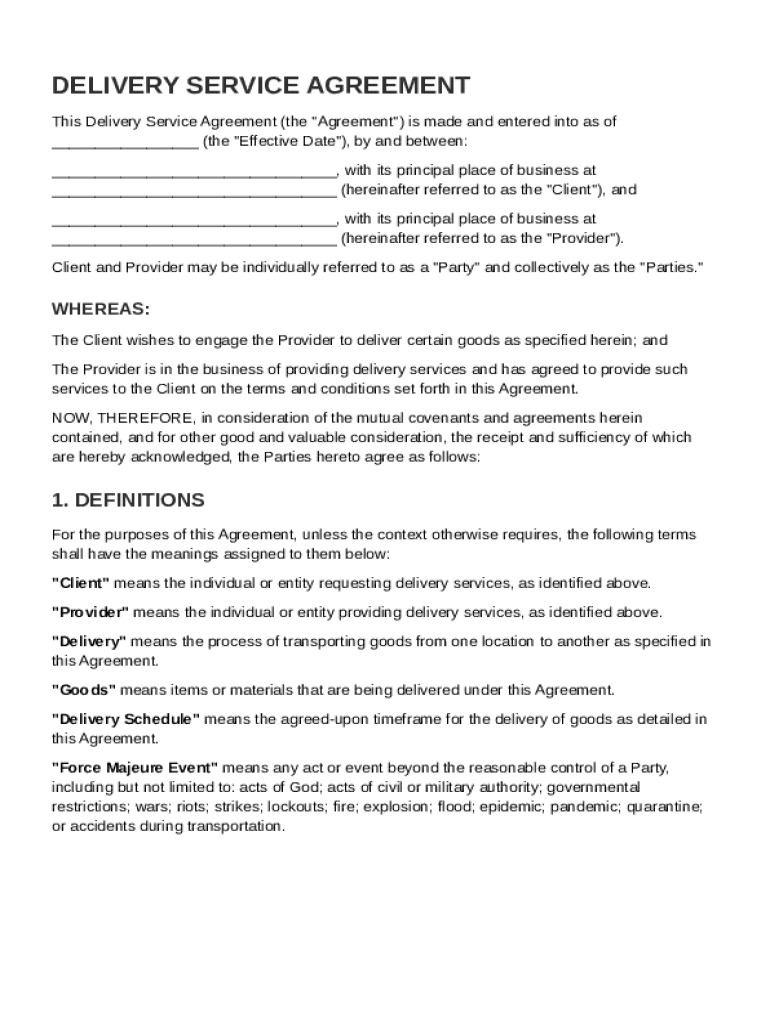
The Delivery Contract Template serves as a comprehensive resource, outlining essential components that establish the relationship between a client and a provider. This document typically includes definitions, scope of services, pricing and payment terms, delivery terms, responsibilities of both parties, liability provisions, and confidentiality obligations.
- Definitions: Clearly defines terms used within the contract to ensure mutual understanding.
- Scope of Services: Describes the specific services to be provided, ensuring clear expectations.
- Pricing and Payment Terms: Details how and when payments will be made, including any applicable fees.
- Delivery Terms: Specifies timelines, delivery methods, and related expectations.
- Responsibilities: Outlines duties and obligations of each party to avoid disputes.
- Liability Provisions: Establishes responsibility and recourse relating to damages or losses.
- Confidentiality: Ensures sensitive information remains protected.
These elements provide a structured framework for contractual agreements, helping prevent misunderstandings and disputes.
Steps to Complete the Delivery Contract Template
Completing a delivery contract involves several structured steps, crucial for ensuring the contract reflects the necessary requirements and specifics of the arrangement between the involved parties.
- Identify Parties: Clearly list the legal names and contact information of all parties involved.
- Define Terms: Specify the start and end dates for the contract, along with details of the services provided.
- Detail Services: Clearly describe the services rendered, using precise language to avoid ambiguity.
- Outline Payment Details: Include detailed information on how and when payments will be made.
- Establish Delivery Protocols: Describe delivery methods, timelines, and any conditions related to delivery services.
- Set Responsibilities and Liability: Clearly outline the duties of each party and specify liability for different scenarios.
- Review and Sign: Ensure all parties thoroughly review the contract, agree to its terms, and provide their signatures.
Every step must be executed carefully to create a legally binding and clear agreement that protects all involved parties.
Legal Use of the Delivery Contract Template
The delivery contract template provides a legally binding framework to articulate and agree upon the obligations of both parties in a delivery service transaction. Adhering to legal requirements ensures the contract is enforceable and protects parties' interests.
- Comply with Local Laws: Ensure the contract complies with state and federal regulations to be considered valid.
- Incorporate Specific Clauses: Include essential clauses such as indemnity, force majeure, and dispute resolution mechanisms.
- Be Mindful of Jurisdiction: Specify the jurisdiction under which any contract-related disputes will be resolved.
Legal adherence ensures that the contract holds up in court, fostering trust and reliability in the business relationship.
Important Terms Related to Delivery Contract Template
Understanding key terminology within a delivery contract is essential as these terms define the contract's legal and operational scope.
- Force Majeure: Circumstances that release parties from fulfilling obligations due to uncontrollable events.
- Indemnification: The act of compensating another party for loss or damage incurred.
- Non-Disclosure Agreement (NDA): A clause ensuring confidential information is not disclosed to unauthorized parties.
- Amendments: Modifications that can be made to the contract with the consent of both parties.
Grasping these terms aids in navigating and drafting contracts, ensuring all parties fully comprehend and agree on the contractual obligations.
Digital vs. Paper Version
Whether to use a digital or paper version of a delivery contract depends on specific business needs and operational preferences, each with its benefits and challenges.
- Digital Version:
- Accessibility: Easily shared and accessed by multiple parties.
- Storage: Saves physical space and enables easy retrieval and archiving.
- Edits and Updates: Simplifies making amendments or corrections.
- Paper Version:
- Formality: Sometimes perceived as more formal or traditional.
- Signatures: Provides a physical copy of signatures that may be necessary in some transactions.
Choosing between digital and paper formats should take into account factors such as accessibility, storage preferences, legal requirements, and formalities of the involved parties.
Who Typically Uses the Delivery Contract Template
Delivery contract templates are versatile tools employed by a range of businesses and individuals across different industries and sectors.
- Businesses: Retailers, e-commerce platforms, logistics companies, and manufacturers needing regular delivery services.
- Freelancers and Independent Contractors: Professional drivers or couriers providing delivery services for various clients.
- Event Planners: Need delivery services for event-related materials and equipment.
- Government Agencies: Require services for the transport of goods or materials between departments.
Having an established contract ensures all parties understand and meet the agreed terms, fostering successful partnerships.


State-Specific Rules for the Delivery Contract Template
State-specific rules may influence the structure and components of a delivery contract, ensuring compliance with local laws and standards.
- Contract Formalities: Some states may require additional formalities like notarization.
- Employment and Labor Laws: Different states have varying regulations affecting delivery personnel and vehicle operations.
- State-Specific Clauses: There may be required inclusions such as state tax provisions or disclosures.
Understanding the legal landscape of a particular state is critical for creating a contract that is both compliant and enforceable, minimizing legal risks.
Examples of Using the Delivery Contract Template
Real-world applications of delivery contracts illustrate their utility in various contexts, ensuring clarity and legal backing for the delivery arrangement.
- Retail Shipping: An online store uses a delivery contract to outline terms with their logistics provider, specifying conditions for delivery times, handling, and liability for lost items.
- Business Services: A consultancy outlines courier services within their delivery contract with specific timelines for client reporting or document delivery.
- Event Supplies: A wedding planner contracts a delivery service for transporting event essentials such as chairs, tables, and decorations, detailing the timing and handling conditions.
These scenarios highlight the necessity of robust delivery contracts in safeguarding interests and establishing clear service expectations among parties.