





Definition and Meaning
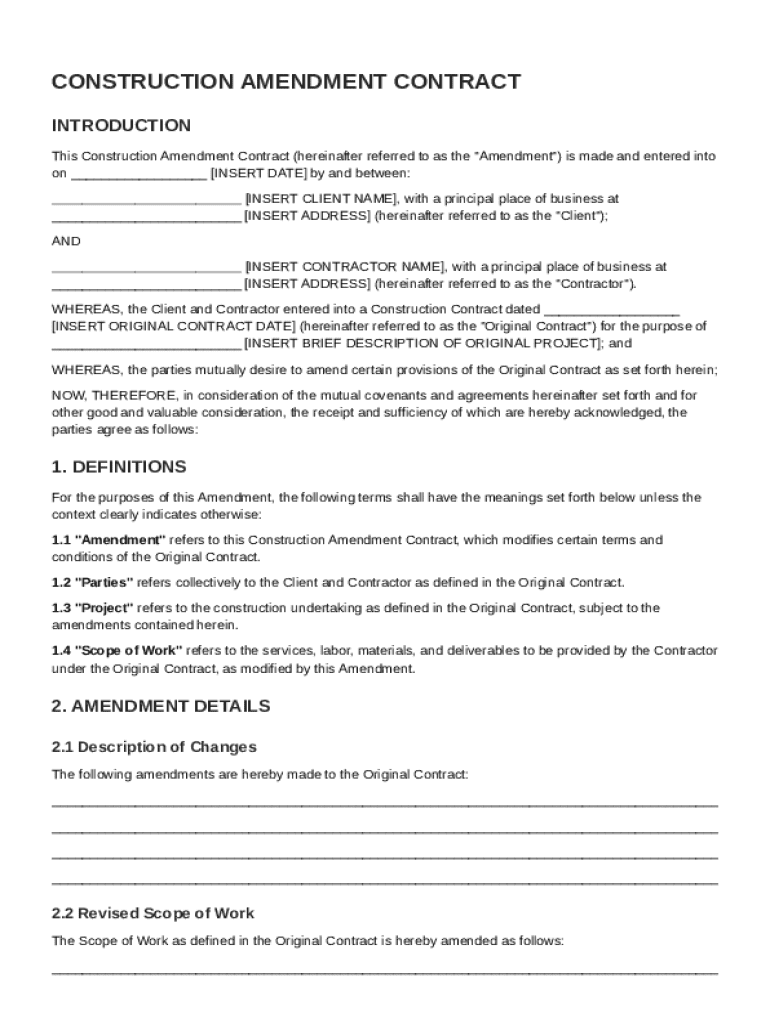
The Construction Amendment Contract Template is a document used to outline modifications to an existing construction agreement between a client and a contractor. This template specifies changes to various elements of the original contract, such as the project scope, schedule, and compensation terms. It serves to ensure that all parties are in agreement regarding the amendments while preserving the original contract's validity. For example, if additional work needs to be done or unforeseen circumstances alter project timelines, this template helps formalize those changes. By signing this amendment, both parties acknowledge and agree to the updated terms.
Key Elements of the Construction Amendment Contract Template
Understanding the structure and essential components of the Construction Amendment Contract Template is vital to ensure it serves its intended purpose effectively. The key elements typically include:
- Parties Involved: Clearly identify the client and contractor, ensuring there is no ambiguity about who is entering into the agreement.
- Amendment Details: Clearly state which parts of the original contract are being modified and describe the nature of these modifications.
- Revised Scope of Work: Outline any changes to the tasks, deliverables, or responsibilities originally set out in the contract.
- Updated Project Schedule: Include a revised timeline for project milestones and completion dates to reflect any scheduling changes.
- New Compensation Terms: Specify any adjustments to payment amounts, structures, or milestones resulting from the amendment.
- Remaining Contractual Terms: Clarify that all other provisions of the original contract remain in effect unless specifically altered by this amendment.
Steps to Complete the Construction Amendment Contract Template
Completing the Construction Amendment Contract Template requires a methodical approach to ensure accuracy and compliance:
- Review the Original Contract: Start by thoroughly reading the existing contract to understand the context of the changes.
- Identify Necessary Amendments: Determine what needs to be changed in the project scope, schedule, or compensation.
- Draft the Amendment: Use clear and concise language to articulate the modifications in the document.
- Consult Relevant Parties: Involve legal advisors or consultants if required to validate the legality and feasibility of the proposed changes.
- Present for Review: Share the drafted amendment with all parties involved for feedback and necessary adjustments.
- Obtain Signatures: Once agreed upon, have all parties sign the amendment for it to be effective.
How to Use the Construction Amendment Contract Template
To use the Construction Amendment Contract Template effectively, consider the following steps:
- Customization: Tailor the template to meet the specific needs of your project and industry, adding or modifying sections as necessary.
- Compliance Check: Ensure the template adheres to state laws and regulations relevant to construction contracts.
- Document Management: Use platforms like DocHub to edit, share, and store your amended contracts, ensuring secure and organized document handling.
- Use Cases: For example, use this template when unexpected site conditions require changes to the project's scope or when a client requests additional features.
Who Typically Uses the Construction Amendment Contract Template
The Construction Amendment Contract Template is primarily used by:
- Project Managers: To manage and document changes during construction projects.
- Contractors: To formally agree on alterations with clients.
- Clients: Individuals or businesses commissioning construction work who need to approve amendments.
- Legal Advisors: To draft and verify the legality of the revised contract terms.


Legal Use of the Construction Amendment Contract Template
Legal compliance is crucial when using the Construction Amendment Contract Template:
- Ensure Legitimacy: The amendment should be drafted with legal assistance to ensure it is enforceable.
- Binding Agreement: Every amendment becomes legally binding once all parties involved sign it.
- Resolve Disputes: This template can help prevent and solve disputes by providing documented evidence of agreed-upon changes.
- State Laws: Be aware of state-specific requirements or limitations that may affect contract amendments.
State-Specific Rules for the Construction Amendment Contract Template
Understanding how state-specific regulations can impact the Construction Amendment Contract Template is important:
- Varied Legal Requirements: States may have different rules regarding what constitutes a legal amendment.
- Contractual Provisions: Check state legislation for any specific language or clauses that need inclusion.
- Licensing and Permits: Amendments may affect required licenses or permits, depending on the nature of the changes.
Examples of Using the Construction Amendment Contract Template
Practical scenarios where the Construction Amendment Contract Template proves beneficial include:
- Scope Changes: Modifying project deliverables, such as incorporating additional design features.
- Timeline Adjustments: Extending the project completion date due to unforeseen delays like weather disruptions.
- Budget Revisions: Accounting for increased material costs, leading to changes in the compensation structure.