






Definition & Meaning
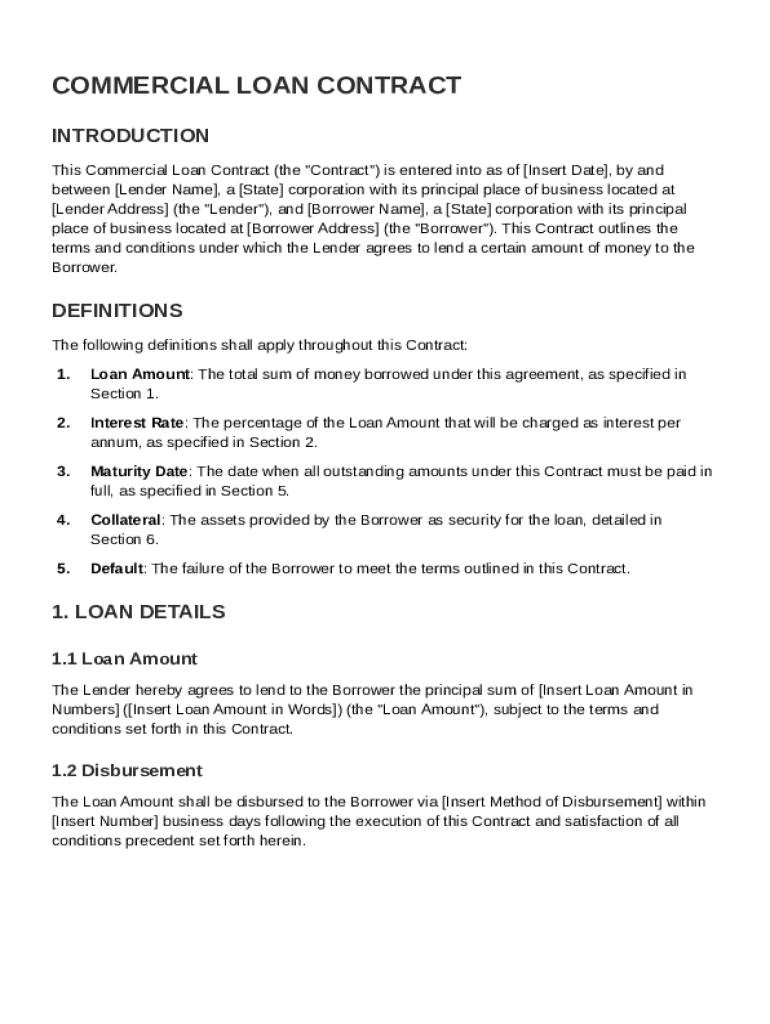
The Commercial Loan Contract Template is a legally binding document that formalizes the agreement between a lender and a borrower, outlining the terms of a loan. This template serves as a structured guide to detail critical aspects such as the loan amount, interest rate, and repayment schedule. It also specifies the permitted uses of the borrowed funds, any collateral requirements, and the conditions for default. Incorporating these elements, the template provides a comprehensive framework for ensuring the legal obligations of both parties are clearly established and understood.
Key Elements of the Commercial Loan Contract Template
The template includes several key elements essential for creating a robust loan contract:
- Loan Amount: This specifies the principal sum borrowed and forms the basis for interest calculation.
- Interest Rate: Details the percentage to be applied on the principal for calculating interest, which may be fixed or variable.
- Repayment Schedule: Outlines the timeline and structure for repaying the loan, including frequency of payments and final due date.
- Collateral Requirements: Specifies any assets pledged by the borrower to secure the loan, reducing the lender's risk.
- Conditions for Default: Lists the scenarios that would constitute a default and the lender’s rights in such events.
- Permitted Use of Funds: Details the agreed-upon purposes for which the loan can be utilized, ensuring alignment with business objectives.
How to Use the Commercial Loan Contract Template
Using the Commercial Loan Contract Template involves several steps to ensure all critical components are adequately captured:
- Review Template Structure: Familiarize yourself with the sections and ensure all relevant fields will be addressed.
- Input Relevant Information: Fill in details specific to the loan, such as principal amount, interest rates, and proposed repayment terms.
- Customize Terms: Adapt the template to include specific clauses or conditions unique to the agreement, such as state-specific legal requirements or specific business arrangements.
- Legal Review: Consult with legal counsel to ensure compliance with applicable laws and address any potential ambiguities.
- Finalize and Sign: Once all parties agree to the terms, the contract should be duly signed and dated to become enforceable.
Steps to Complete the Commercial Loan Contract Template
Completing the template requires careful attention to each section to ensure accuracy and completeness:
- Gather Necessary Information: Ensure all relevant financial and business details are on hand, including proof of collateral and business registration documents.
- Fill In Loan Details: Start by entering principal amount, term length, interest rate, and any fees associated with the loan.
- Outline Responsibilities: Clearly define the obligations of both lender and borrower, including any duty to disclose information or maintain collateral.
- Include Amendment Clause: Provide flexibility for future changes by incorporating a clause detailing how amendments to the contract will be handled.
- Review and Validate: Double-check all entries for accuracy and completeness, ensuring clarity in all stated conditions and terms.
- Execution: Obtain signatures from authorized representatives of both parties to validate the contract legally.
Important Terms Related to Commercial Loan Contract Template
Understanding the terminology used within the Commercial Loan Contract Template is crucial:
- Principal: The original sum of money borrowed or invested, excluding interest or other additional charges.
- Amortization: The process of gradually paying off a debt over time through regular payments.
- Covenant: A clause in the loan contract imposing certain conditions on the borrower or lender.
- Balloon Payment: A large, final payment that pays off the remaining balance of a loan at the end of the loan term.
- Lien: A legal right or interest that a lender has in the borrower's property, granted until the debt obligation is satisfied.
Legal Use of the Commercial Loan Contract Template
The template's legal enforceability stems from adhering to jurisdiction-specific regulations that govern commercial loans. Compliance with the Uniform Commercial Code (UCC) in the U.S. is essential, as it standardizes commercial transactions. Additionally, the template should adhere to the Truth in Lending Act (TILA), which requires disclosure of key loan terms to protect borrowers. Legal counsel is recommended for ensuring the template aligns with federal and state laws, which may impact specific provisions within the contract.
Who Typically Uses the Commercial Loan Contract Template
The template is widely utilized by:
- Financial Institutions: Banks and credit unions needing a standard form to offer business loans.
- Small and Medium Enterprises (SMEs): Businesses seeking to expand operations or finance large projects.
- Corporate Entities: Companies with complex financing needs for scalable growth or capital investments.
- Real Estate Developers: Professionals requiring loans for large-scale property development and construction projects.

State-Specific Rules for the Commercial Loan Contract Template
State laws can significantly influence the template’s content and clauses:
- Usury Laws: States impose limits on the interest rates that can be charged on loans, impacting the terms outlined in the contract.
- Regulatory Compliance: Some states have unique requirements for documenting and executing commercial loan agreements, necessitating additional legal language or documentation.
- Lien and Collateral Treatment: Variations in how different states treat liens and collateral should be reflected within the contract to ensure its enforceability in specific jurisdictions.
Legal advice should be sought to adapt the contract to reflect these state-specific considerations accurately.
Examples of Using the Commercial Loan Contract Template
The template can be tailored to fit diverse commercial scenarios:
- Construction Finance: It can facilitate loans for real estate development by detailing milestones and draws aligned with project phases.
- Expansion Loans: Businesses looking to grow their operations often use this template to negotiate favorable terms for acquiring new assets.
- Franchise Financing: Entrepreneurs can use the contract to secure funds needed to purchase and operate a franchise outlet, ensuring compliance with both franchisor and lender requirements.
Each example requires detailed adjustment to mirror specific business circumstances and maintain proactive risk management strategies.