
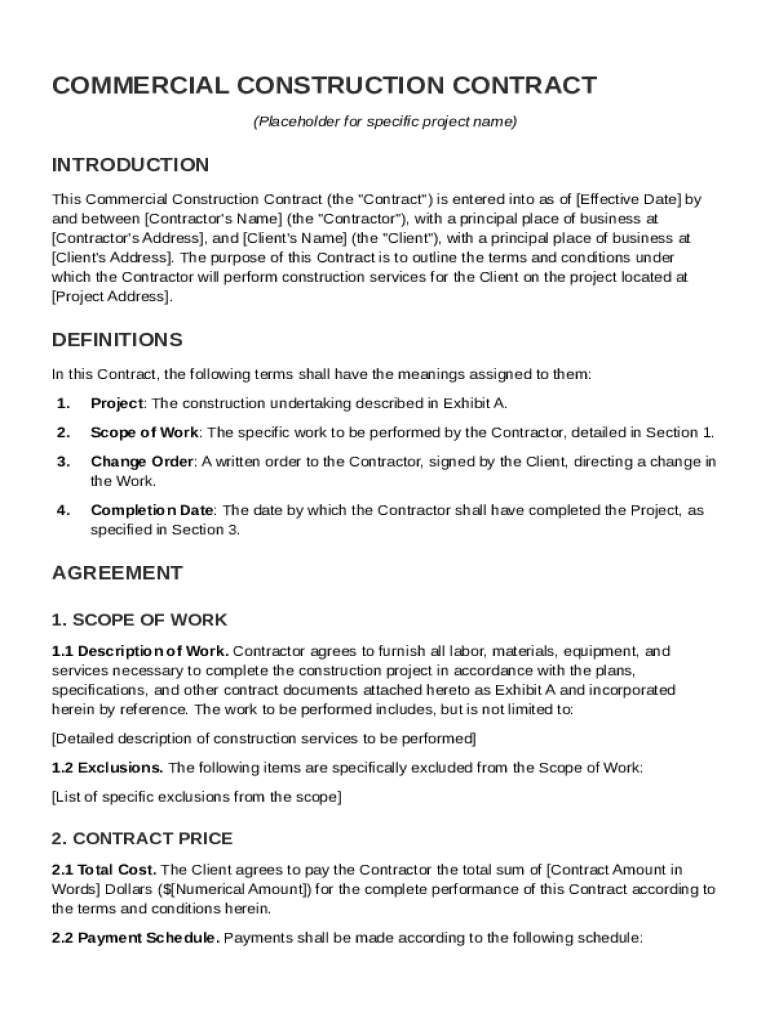







Definition and Purpose of Commercial Construction Contract Template
A commercial construction contract template serves as a foundational document outlining the agreement between a contractor and a client for construction services on a specific project. It is an essential tool to define the project scope, schedule, payment terms, responsibilities of both parties, and other legal aspects. This document ensures clarity and mutual understanding, minimizing the risk of disputes and delays. By establishing clear expectations from the outset, the template helps ensure that all parties are aligned regarding the project's execution.
How to Use the Commercial Construction Contract Template
To effectively use the commercial construction contract template, you need to customize it for your specific project. Begin by entering the project details, including the site location, parties involved, and the project description. Next, specify the scope of work and outline the contractor's obligations. Clearly detail payment terms, including milestones and any advance payments. Ensure that timelines are realistic and include provisions for potential changes. Incorporate sections for warranties, dispute resolution methods, and termination procedures. Collaborate with legal counsel to review the contract, ensuring compliance with applicable laws.
Key Elements of the Commercial Construction Contract Template
The commercial construction contract template includes several vital sections that define the agreement's framework:
- Scope of Work: Detailed description of work to be performed.
- Payment Terms: Outline of payment structure, milestones, and conditions.
- Timeline and Deadlines: Schedule with start and completion dates.
- Responsibilities: Distinct roles and obligations of contractor and client.
- Change Orders: Procedure for modifications to the original contract.
- Warranties and Guarantees: Terms regarding the quality and duration of warranties.
- Insurance Requirements: Necessary insurance coverage for the project.
- Dispute Resolution: Methods for resolving conflicts, including mediation or arbitration.
- Termination Clauses: Conditions under which the contract can be ended prematurely.
Legal Use of the Commercial Construction Contract Template
The legal application of the commercial construction contract template ensures that all project terms comply with state and federal laws. It provides a record of agreed terms and can serve as evidence in legal disputes. The contract should include clauses that address compliance with local building codes, zoning ordinances, and other regulatory requirements. Additionally, incorporating indemnity clauses can protect parties from liability. It is critical to consult legal professionals to tailor the document to local legal standards, ensuring its enforceability in case of disagreements.
Important Terms Related to the Commercial Construction Contract Template
Understanding key terminology in the commercial construction contract template is essential:
- Contractor: The entity or individual responsible for completing the construction project.
- Client: The party commissioning the work and agreeing to the terms set forth in the contract.
- Change Order: A formal modification to the original contract terms or scope of work.
- Indemnification: A provision in which one party agrees to compensate the other for certain damages or losses.
- Liquidated Damages: Predetermined compensation for delays or failure to meet contractual obligations.
- Substantial Completion: A stage when the project is sufficiently complete, allowing for its intended use.
State-Specific Rules for the Commercial Construction Contract Template
State regulations and requirements can significantly influence commercial construction contracts. Variations may include specific lien rights, notice requirements, and licensing standards for contractors. States may have unique statutes governing contract enforceability, payment schedules, and dispute resolution. It is crucial to research state-specific mandates and consult with a local attorney to ensure the contract complies with regional laws. This consideration helps avoid potential legal challenges that could arise from non-compliance.
Examples of Using the Commercial Construction Contract Template
Practical applications of the commercial construction contract template can be seen in diverse projects:
- A developer commissioning a new office building may use the template to define each phase's scope and timeline, ensuring all subcontractors adhere to agreed terms.
- A retail company expanding its store locations might rely on the template to manage multiple contractors, customizing it for each site to reflect unique project needs.
- A municipality undertaking infrastructure improvements could use the template to streamline bidding processes and standardize contractor agreements.
Who Typically Uses the Commercial Construction Contract Template
Commercial construction contract templates are predominantly utilized by businesses, government agencies, and contractors. Developers, real estate investors, and large corporations engaged in property development often rely on these templates to standardize their contracting processes. Contractors and subcontractors use the templates to clarify expectations, responsibilities, and payment agreements, fostering transparent business relationships. Additionally, legal professionals and construction managers might use these documents to advise clients on industry standards and protect their interests.


Obtaining and Customizing the Commercial Construction Contract Template
The commercial construction contract template can be accessed through legal service providers or document management platforms like DocHub. Upon obtaining the template, it should be customized to fit the project's specific parameters and jurisdictional requirements. Tailoring involves detailing project-specific information, adjusting legal clauses, and inserting any additional sections to address unique project challenges. It is advisable to have the modified template reviewed by legal counsel to ensure its suitability and to protect all parties' interests effectively.




