
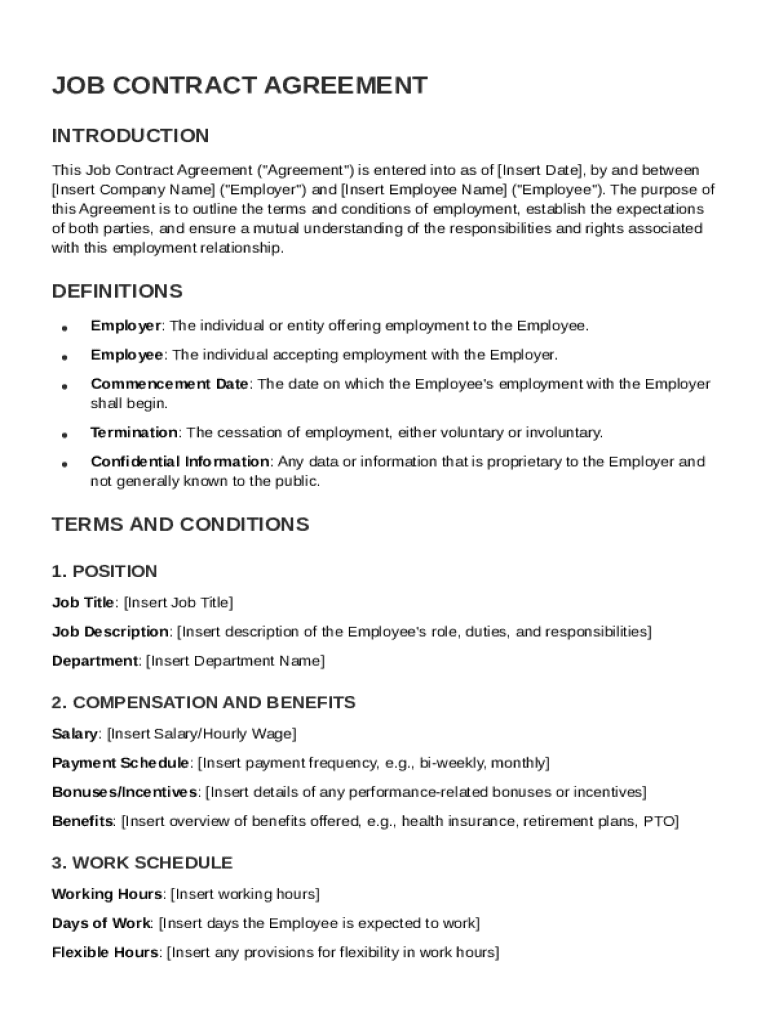







Definition and Meaning
The Job Contract Template serves as a foundational document that outlines the terms and conditions of employment between an employer and an employee. It encompasses various elements such as job title, compensation, work schedule, and other job-related details. The primary goal is to establish clear expectations and responsibilities for both parties involved. This template helps ensure that there is no ambiguity regarding each party's duties and rights, offering a structured framework that supports legal standing in case of disputes.
Core Components
- Job Title and Description: Specifies the role the employee will take on and a comprehensive description of the duties involved.
- Compensation Details: Includes salary, any bonuses, and stipends, providing clarity on payment frequency and method.
- Work Schedule: Outlines the expected work hours, breaks, and any flexibility in scheduling, accommodating both full-time and part-time roles.
Legal Implications
Having a legally binding job contract ensures that both parties are protected under employment law. It provides a formal record that can be referenced in the event of a disagreement or conflict, thus serving as a safeguard against potential legal issues.
Key Elements of the Job Contract Template
A well-structured job contract is comprised of several critical elements that ensure both clarity and comprehensiveness. These elements are vital for establishing a shared understanding between the employer and employee.
Compensation Structure
- Base Salary: Clearly states the agreed annual or hourly salary.
- Overtime Pay: Specifies the rate and conditions under which overtime pay is applicable.
Responsibilities and Duties
- Specific Tasks: Details the daily responsibilities and roles expected of the employee.
- Performance Metrics: Outlines the key performance indicators (KPIs) that the employee is accountable for.
Confidentiality and Non-Compete Clauses
- Protection of Information: Includes clauses to prevent the disclosure of sensitive company information.
- Non-Compete Agreement: Restricts the employee from engaging in activities that directly compete with the employer's business during and after employment.
Steps to Complete the Job Contract Template
Completing a job contract template requires careful attention to detail to avoid misunderstandings. Each step ensures a comprehensive agreement is formed that serves both parties' interests.
- Gather Information: Collect all necessary information from both the employer and employee, including full legal names, job titles, and necessary legal identification.
- Draft the Contract: Use the template to outline all critical components, keeping language clear and straightforward.
- Review Legal Terms: Ensure that all legal terms align with local employment laws and regulations.
- Discuss Changes: Allow both parties to review and suggest amendments to ensure mutual satisfaction and clarity.
- Final Review and Sign: Conduct a final review before both parties sign and date the document, making it legally binding.
Legal Use of the Job Contract Template
The legal use of the job contract template is crucial to its effectiveness as a tool for governance and protection within an employment relationship.
Ensuring Compliance
- Employment Laws: Must adhere to the Fair Labor Standards Act (FLSA) and other pertinent U.S. employment laws.
- Amendments: Any changes or addendums to the template should be documented and agreed upon in writing.
Providing Protection
- Dispute Resolution: Establishes processes for resolving disputes, whether through arbitration, mediation, or legal proceedings.
- Employee Rights: Reinforces employee rights concerning safe working conditions, equal opportunity, and non-discrimination.
Examples of Using the Job Contract Template
Employers and employees can utilize job contract templates in various ways to best suit their industry and specific employment agreements. Here are a few examples:
Example Scenarios
- Corporate Jobs: Often use comprehensive contracts detailing extensive responsibilities and benefits.
- Freelance Employment: Contracts may focus more on deliverables and payment schedules rather than ongoing responsibilities.
- Seasonal Work: Contracts highlight start and end dates clearly, as well as specific seasonal duties.
Practical Benefits
Using a template can help streamline the creation of a job contract, ensuring consistency and comprehensiveness across various roles and departments within an organization. It also aids in minimizing the time typically required to draft contracts from scratch.
Who Typically Uses the Job Contract Template
Various business entities and individuals can benefit from the systematic nature of a job contract template.


Primary Users
- Human Resources Departments: Often rely on templates to ensure uniformity in new hire processes and onboarding.
- Small Businesses: Use templates to formalize employment relationships and establish protocols as they scale.
- Freelancers and Contractors: Utilize templates to illustrate scope and terms of work agreed upon with clients.
Important Terms Related to Job Contract Template
Understanding the terminology used in a job contract template is vital for both parties to avoid misinterpretations.
Common Terms
- Probation Period: Refers to an initial period during which the employer can evaluate the employee’s performance.
- Resignation Requirements: Specific rules about how an employee should give notice of their departure.
- Severance Pay: Any compensation offered in the event of termination without cause.
Contextual Importance
Knowing these terms helps employees better understand their rights and obligations, facilitating a smoother working relationship and improved job satisfaction.
By grasping the nuances and practical applications of the job contract template, employers and employees can ensure a straightforward and beneficial employment relationship.




