






Definition & Meaning
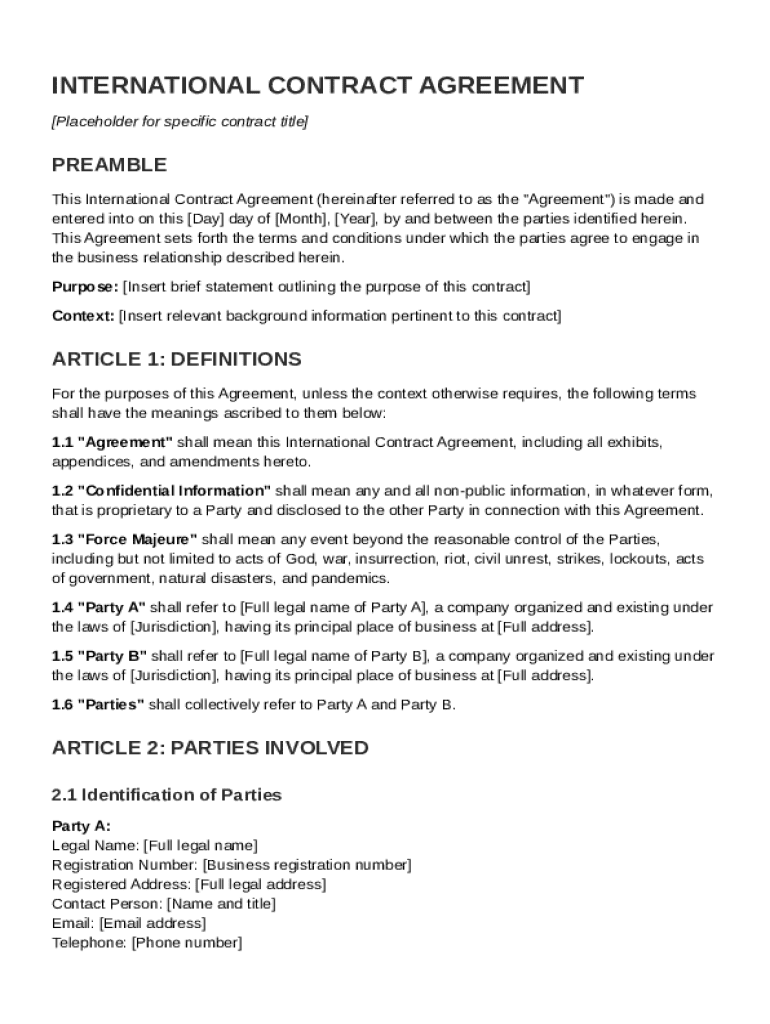
An International Contract Template serves as a standardized document designed to facilitate legal agreements between parties located in different countries. This template includes the basic framework necessary to address various legal aspects of international trade and business arrangements. It supports the delineation of commercial relationships by defining the roles, responsibilities, and expectations of each party involved. The aim is to streamline negotiations and formalize commitments, ensuring clarity and mutual understanding.
The scope of an international contract is extensive, covering elements such as products or services exchanged, terms of payment, delivery schedules, and jurisdiction for dispute resolution. Given the complexities of cross-border transactions, these templates often incorporate internationally accepted standards and conventions. By utilizing an international contract template, businesses can mitigate risks and avoid potential legal pitfalls associated with differing legal systems and business practices.
Key Elements of the International Contract Template
Creating a comprehensive international contract involves several critical elements that ensure clarity and protect the interests of all parties involved. Each section of the template plays a distinct role:
- Identification of Parties: Clearly outlines the legal names, addresses, and roles of the parties involved, often referred to as Party A and Party B.
- Scope of Work: Details the specific tasks, responsibilities, and deliverables expected from each party.
- Compensation and Payment Terms: Describes the payment structures, including amounts, payment schedules, and currency used.
- Duration and Termination: Establishes the contract's effective period and stipulates conditions under which the contract may be terminated or extended.
- Confidentiality Obligations: Defines information that must remain confidential, protecting trade secrets and sensitive information exchanged.
- Dispute Resolution Mechanisms: Outlines procedures for resolving conflicts, often specifying jurisdiction and applicable laws.
- Miscellaneous Provisions: Includes additional terms like force majeure, amendments, and assignment clauses, which cater to unforeseen events and procedural formalities.
Steps to Complete the International Contract Template
Completing an international contract template requires careful attention to ensure legal compliance and mutual satisfaction:
- Gather Information: Collect comprehensive data about the parties involved, the scope of work, and the terms of the agreement.
- Complete the Template: Fill in the template with specific details relating to the transaction, making sure each field accurately reflects the agreed terms.
- Review and Edit: Conduct a thorough review to ensure there are no omissions or errors. Consult with legal experts if necessary to ensure compliance with international and local laws.
- Finalize Terms: Communicate with the other party to confirm all terms are understood and agreed upon, making any necessary adjustments.
- Signatures: Obtain the signatures of authorized representatives from all parties to make the contract legally binding.
- Distribution: Share the executed contract with relevant stakeholders for their records and reference.
Legal Use of the International Contract Template
The international contract template is legally valid and designed to meet the requirements of global commerce. It underscores the importance of adhering to international regulations, such as treaties and conventions that govern cross-border trade. By leveraging a standardized template, businesses can ensure adherence to the United Nations Convention on Contracts for the International Sale of Goods (CISG), among other legal frameworks.
Each contract must reflect the specific legal systems and business contexts of the parties involved. This means understanding the implications of jurisdictional laws and ensuring that the contract respects the legal frameworks of all countries concerned. Including provisions for arbitration or forum selection can address potential legal disputes, steering them towards agreed-upon legal or arbitration bodies.
Who Typically Uses the International Contract Template
The international contract template is widely used across various sectors, particularly by businesses engaged in multinational trade and collaborations. Typical users include:
- Exporters and Importers: Organizations involved in the sale and purchase of goods and services across national borders.
- Multinational Corporations: Companies that operate in multiple countries, requiring standardized agreements for consistency and clarity.
- International Suppliers and Distributors: Entities that need clear terms for shipping, delivery, and service agreements internationally.
- Legal and Business Consultants: Professionals who draft, review, and advise on international agreements to ensure compliance and efficiency.
- Government and Non-Governmental Agencies: Often involved in international cooperative agreements and require standardized documentation for transparency and accountability.


Software Compatibility and Digital Use
The versatility of international contract templates is increased by their compatibility with various document editing platforms, including DocHub. This flexibility allows users to edit, sign, and distribute contracts digitally without conversion issues. With DocHub, users can seamlessly import and export documents to and from cloud services such as Google Drive, enabling collaborative editing and real-time synchronization across different devices.
Digital usage is gaining precedence due to its cost-effectiveness and ease of management. Electronic signatures, provided by platforms like DocHub, add validity and reduce the time required to conclude contracts. Accessibility via digital means ensures documents are easily stored, retrieved, and shared, facilitating smoother business operations.
Examples of Using the International Contract Template
Real-world applications of the international contract template are varied:
- Technology Transfer Agreements: Licensing agreements allowing one company to utilize the technology of another across borders, necessitating clear terms regarding usage rights and royalties.
- International Franchise Agreements: Contracts between franchisors and franchisees specify operation conditions and brand guidelines when expanding into new countries.
- Joint Ventures: Collaborative business initiatives between firms from different nations require detailed delineation of contributions, profit sharing, and management structures.
- Cross-Border Consulting Services: Engaging consultants from different countries often involves standardized contracts to stipulate deliverables, confidentiality, and payment terms.
These examples illustrate the diverse applications and critical importance of a robust international contract template across various sectors.