
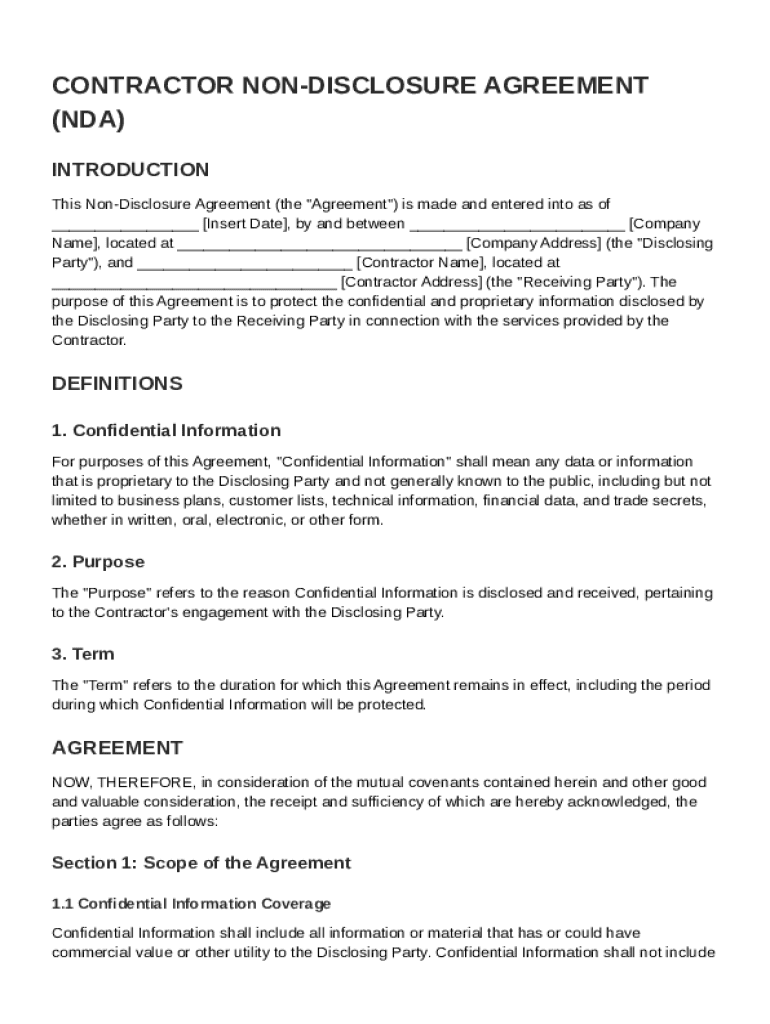







Definition & Meaning
A Contractor Non-Disclosure Agreement (NDA) Template is a legal document that establishes a binding contract between two parties: a company (Disclosing Party) and a contractor (Receiving Party). This agreement is crucial for protecting confidential and proprietary information shared during a business relationship. The NDA outlines the types of information deemed confidential, such as business strategies, trade secrets, and customer data, and sets the expectations for maintaining the confidentiality of this information. By clearly defining these terms, the NDA helps prevent unauthorized disclosure and misuse of sensitive information, thereby safeguarding the company's intellectual property and competitive advantage.
Key Elements of the Contractor Non-Disclosure Agreement Template
The Contractor NDA Template typically includes several key elements essential for ensuring comprehensive protection:
- Confidential Information Definition: Specifies what constitutes confidential information, covering all forms of communication, such as written, electronic, or verbal.
- Obligations of the Receiving Party: Details the responsibilities of the contractor to maintain the confidentiality of the disclosed information, including restrictions on sharing it with third parties.
- Duration of Confidentiality: Outlines the time frame during which the confidentiality obligations remain in effect, often continuing beyond the termination of the contract.
- Legal Remedies for Breaches: Provides the legal actions available to the disclosing party in the event of a confidentiality breach, such as monetary damages or injunctive relief.
- Intellectual Property Rights: Clarifies that the NDA does not grant any intellectual property rights to the receiving party.
- Governing Law and Jurisdiction: Establishes which state’s laws will govern the agreement and where legal disputes will be resolved.
Steps to Complete the Contractor Non-Disclosure Agreement Template
Completing a Contractor NDA Template involves several straightforward steps:
- Identify the Parties: Clearly list the full legal names and contact information of both the disclosing and receiving parties.
- Define Confidential Information: Specify the types of information considered confidential within the context of the business relationship.
- Detail Obligations: Outline the specific duties of the contractor regarding the handling and protection of confidential information.
- Determine Duration: Agree on the length of time the confidentiality obligations will last, including any extension beyond the contract period.
- Include Legal Provisions: Add sections detailing legal remedies for breaches, governing law, and jurisdiction.
- Review and Sign: Ensure that both parties thoroughly review the document for accuracy and completeness before signing.
Legal Use of the Contractor Non-Disclosure Agreement Template
Using a Contractor NDA Template legally binds the receiving party to protect and handle confidential information as per the agreement's terms. Compliance with the NDA is crucial to avoid legal action. NDAs are enforceable under U.S. law if they meet specific criteria, such as being reasonable in scope and not overly restrictive on the contractor's rights to work. In case of a breach, legal remedies, including seeking injunctive relief or damages, may be pursued. Companies should ensure their NDAs are drafted or reviewed by legal professionals to maintain compliance with applicable laws and regulations.
Examples of Using the Contractor Non-Disclosure Agreement Template
Contractor NDAs are used in various business scenarios, such as:
- Software Development: Protects proprietary code and algorithms during collaboration with freelance developers.
- Product Design: Safeguards design blueprints and engineering plans shared with manufacturing partners.
- Marketing Campaigns: Keeps confidential branding strategies and market research data under wraps when contracting external agencies.
- Consulting Services: Ensures strategic business insights and client lists remain confidential when engaging consultants.
- Hiring Processes: Secures sensitive company information shared during negotiations with potential contractors or vendors.
Who Typically Uses the Contractor Non-Disclosure Agreement Template
The Contractor NDA Template is commonly used by:
- Businesses: Companies across industries, such as technology, finance, healthcare, and manufacturing, routinely use NDAs to protect sensitive information shared with independent contractors or freelancers.
- Contractors: Freelancers and independent service providers who access sensitive client data or project details during their engagement.
- Legal Professionals: Lawyers and paralegals who assist businesses in drafting or reviewing NDAs to ensure legal compliance.
- Human Resources Departments: HR teams that manage contractual agreements with external vendors or contractors.

Software Compatibility
The Contractor NDA Template can be seamlessly used and edited on various platforms and software applications:
- DocHub: Integrates easily with Google Workspace, allowing users to import, edit, and manage documents directly from Google Drive or Gmail. Real-time collaboration features ensure efficient document processing.
- Microsoft Office: Compatible with Word, enabling users to make comprehensive edits and format the document according to specific requirements.
- Cloud Storage Services: Supports document management through cloud platforms like Dropbox and OneDrive, offering flexibility in accessing and sharing files.
State-by-State Differences
While an NDA is generally enforceable across the United States, certain state-specific nuances may impact the agreement:
- California: The state imposes strict regulations on non-compete clauses within NDAs, emphasizing employee freedom to work.
- New York: NDAs must comply with state-specific statutes on trade secrets and confidentiality to remain enforceable.
- Texas: Focuses on the reasonable scope and necessity of the NDA terms to ensure they align with business interests without overly restricting work opportunities for contractors.
Reviewing these state differences with legal counsel ensures compliance with local laws.




