






Definition & Meaning
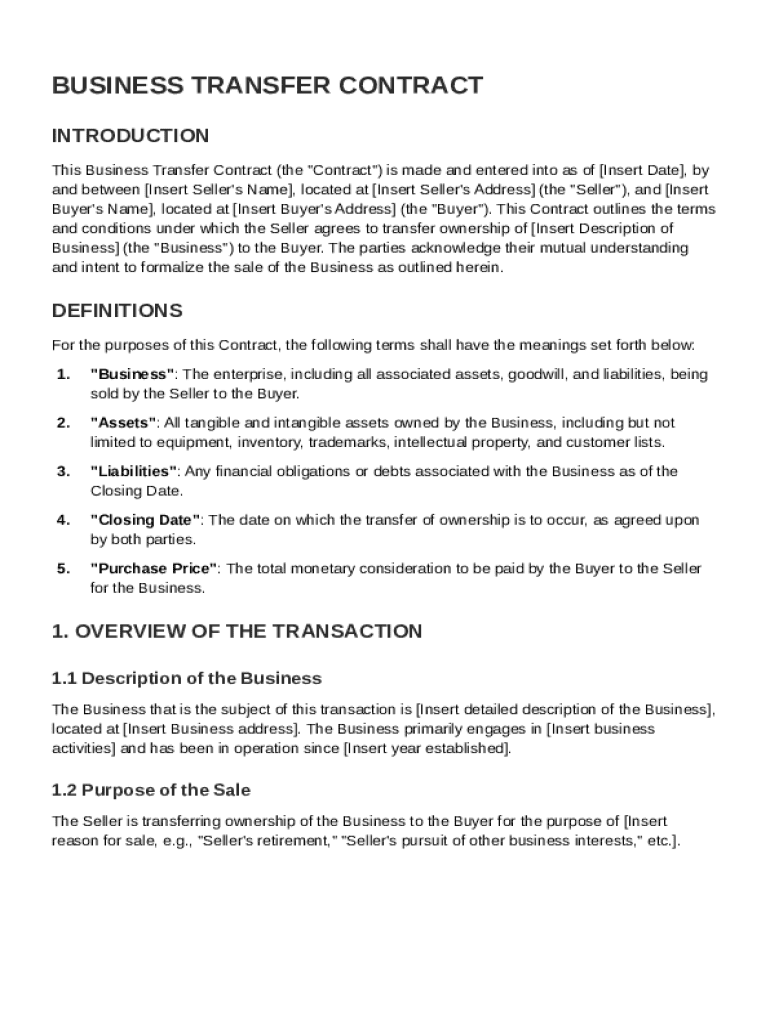
A Business Transfer Contract Template is a structured document that outlines the terms and conditions under which ownership of a business is transferred from the Seller to the Buyer. This contract establishes legal agreements, specifies the sale of both tangible and intangible assets, and delineates liabilities that are included or excluded in the transaction. The document ensures clarity and prevents misunderstandings by detailing all aspects necessary for a successful transfer of business ownership.
Key Elements of the Business Transfer Contract Template
The template typically includes several critical components, each serving a fundamental role in the transfer process. These elements often include:
- Parties Involved: Identifies the Buyer and Seller.
- Asset List: Details the assets included in the transfer, such as real estate, inventory, and intellectual property.
- Purchase Price: States the agreed upon financial consideration for the transaction.
- Payment Terms: Describes how and when payments are to be made.
- Representations and Warranties: Specifies assurances from both parties regarding the business.
- Closing Date and Conditions: Sets forth the date and requirements for closing the transaction.
Understanding these elements helps both parties engage effectively in the business transfer process.
How to Use the Business Transfer Contract Template
Using this contract template involves customizing it to fit the specifics of the business deal. Begin by clearly defining the parties involved. Accurately list all assets being sold, reflecting the current status and valuation. Detail payment structures that align with both parties' financial capabilities. Incorporate specific conditions under which the sale would be invalidated or warrant renegotiation. Ensure legal compliance by adapting clauses according to state laws and consulting legal professionals to validate customization.
Steps to Complete the Business Transfer Contract Template
Completing the Business Transfer Contract Template involves several steps, each crucial for ensuring the effectiveness of the document:
- Initial Discussion: Negotiations between Buyer and Seller to agree on principal terms.
- Drafting: Customizing the template with specific business details.
- Review: Each party, possibly with legal assistance, reviews the contract for accuracy.
- Amendments: Incorporate any necessary changes following the review.
- Signatures: Upon agreement on all terms, both parties sign the contract.
Following these steps promotes a smooth transaction and minimizes potential disputes.
Important Terms Related to Business Transfer Contract Template
Understanding common terms within the context of the Business Transfer Contract Template is vital:
- Due Diligence: A comprehensive appraisal of the business to evaluate assets and liabilities.
- Non-Compete Clause: An agreement that restricts the Seller from starting a competing business within a certain time frame.
- Escrow: A financial arrangement where a third party holds funds until specified conditions are met.
Familiarity with these terms ensures parties can negotiate and manage the contract more effectively.
Legal Use of the Business Transfer Contract Template
Legally, the Business Transfer Contract Template must comply with regulations governing business sales. It requires alignment with both state laws where the business operates and federal laws, particularly if interstate trade is involved. It should explicitly state that the transaction does not infringe on any existing contracts, creating a legitimate transfer recognized by law.
Who Typically Uses the Business Transfer Contract Template
This template is primarily used by business owners seeking to sell their operations. Potential Buyers, investors, and legal professionals involved in business transactions also utilize it. It provides a foundational document for those looking to transition their business either as a strategy for growth or as part of a retirement plan. Additionally, corporate entities engaging in mergers and acquisitions often rely on such templates to facilitate the transfer process efficiently.

State-by-State Differences
The application of a Business Transfer Contract can vary significantly across different states. Each state may have specific requirements regarding:
- Business Licensing: Some states require additional documentation to transfer business licenses.
- Taxation: Variances in state taxes can affect the net proceeds of the sale.
- Regulatory Compliance: Certain states mandate disclosure of environmental or employment concerns as part of the sale process.
Understanding state-specific rules ensures compliance and anticipates potential legal hurdles during the transfer.
Practical Examples of Using the Business Transfer Contract Template
Businesses of varying sizes and sectors employ this template when changing ownership. For example, a local restaurant owner selling her business includes a list of kitchen equipment and existing lease agreements. A tech startup transferring ownership might highlight software licenses and pending patents. Such practical applications demonstrate the template's versatility across different industries and transaction types, providing clarity and legal protection to the parties involved.