
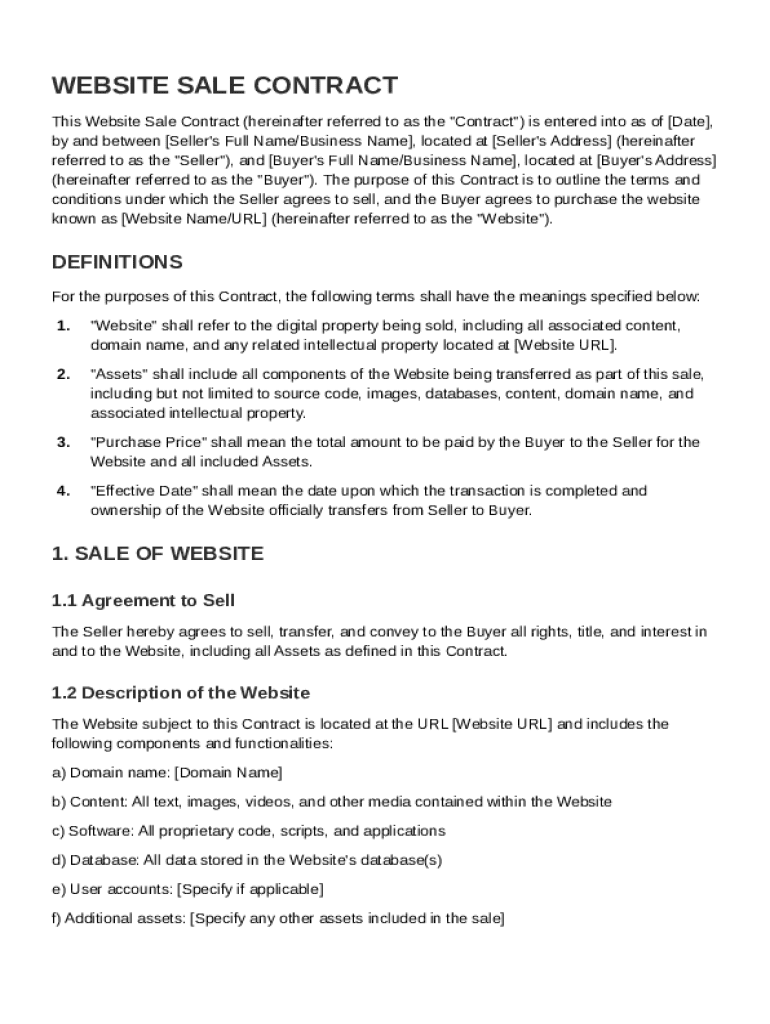







Key Elements of the Website Sale Contract Template
The Website Sale Contract Template is a comprehensive legal document ensuring clarity and protection for both buyer and seller during the transaction of a website. The contract typically covers several critical elements to facilitate a smooth transfer, including:
- Identification of Parties: Clearly outlines the seller's and buyer's identities, including their legal names and contact details. This section establishes the legally binding nature of the agreement.
- Description of the Website: Provides a detailed description of the website being sold, including its domain name, content, and any associated intellectual property or trademarks.
- Purchase Price and Payment Terms: States the agreed purchase price and outlines the payment structure, such as lump-sum payment or installments. It may specify currency and payment methods accepted.
- Representations and Warranties: Both parties declare their legal rights and obligations concerning the website, ensuring the seller owns the website and the buyer has the necessary funds.
- Closing Procedures: Details the steps and timeline for finalizing the transaction, including transfer of ownership and access to website assets.
- Confidentiality Obligations: Both parties agree to keep transaction details private, protecting sensitive business information from unauthorized disclosure.
- Governing Law: Specifies the state's laws that will interpret and govern the agreement, often aligned with the seller's location or the business base.
- Miscellaneous Provisions: Covers various additional terms essential to the contract's context, such as severability, assignment clauses, and possible amendments.
Steps to Complete the Website Sale Contract Template
Successfully completing the Website Sale Contract Template requires adherence to specific steps:
- Gather Necessary Information: Compile all relevant details about the website and both parties involved in the transaction.
- Customize Terms and Conditions: Adapt the template to reflect specific terms agreed upon, such as the purchase price, payment methods, and transaction timeline.
- Review Representations and Warranties: Ensure clarity and completeness of the legal declarations about ownership and legal rights regarding the website.
- Consult Legal Professionals: It is advisable to have legal counsel review the contract to verify compliance with applicable laws and the protection of both parties' interests.
- Mutual Agreement and Signing: Both parties should review and agree to the contract terms before signing. It is important to collect legally binding electronic signatures for secure and verifiable consent.
Definitions and Key Terms Related to Website Sale Contract Template
Understanding the essential definitions and terms within the Website Sale Contract Template ensures clarity and prevents legal disputes:
- Seller: The party that currently holds ownership rights to the website being sold.
- Buyer: The party acquiring ownership of the website.
- Domain Name: The web address that represents the site and serves as its permanent identifier on the internet.
- Intellectual Property: Rights associated with the website's design, content, trademarks, and logos.
- Escrow Payment: A method where payment is held by a third party until the transaction is successfully completed.
Legal Use of the Website Sale Contract Template
Using the Website Sale Contract Template legally involves careful consideration of relevant laws and regulations:
- Compliance with Contract Laws: Ensures that all terms align with local and federal contract laws, providing a valid and enforceable agreement.
- Intellectual Property Transfer: Accurately reflects the transfer of all associated intellectual property rights, avoiding future legal complications.
- Confidentiality and Data Protection: Maintains stringent data protection measures to safeguard confidential information during and after the transaction.
Who Typically Uses the Website Sale Contract Template
The template is widely used by different stakeholders involved in the buying and selling of website assets:
- Entrepreneurs and Online Businesses: Often engage in buying and selling websites as part of business expansion or divestiture strategies.
- Domain Investors: Regularly acquire domain names or websites with potential value for future development or resale.
- Legal Professionals: Attorneys may customize and use the template for clients involved in website transactions.


State-Specific Rules for the Website Sale Contract Template
While the template provides a generalized framework, state-specific regulations might influence certain terms or protocols:
- State Jurisdiction: The location of the seller or buyer can determine which state’s legal jurisdiction applies, affecting contract enforcement and dispute resolution.
- Sales Tax Considerations: Some states may require sales tax on the transaction, necessitating compliant documentation within the contract.
Examples of Using the Website Sale Contract Template
Several practical scenarios illustrate the application of the Website Sale Contract Template:
- Startup Acquisition: A tech entrepreneur sells a popular blog to a media company using the contract to transfer ownership and retain confidentiality around transaction details.
- E-commerce Exit Strategy: An online retailer uses the template to sell its e-commerce site to a larger competitor, ensuring the seamless handover of business operations and customer data.
- Digital Marketing Agency Spin-Out: A marketing firm offloads a portfolio website to another agency, effectively transferring domain rights, content, and accompanying digital assets.
Digital vs. Paper Version
The Website Sale Contract Template can be executed in digital or physical formats, each with distinct advantages:
- Digital Version: Offers convenience and efficiency with electronic signatures and remote access. Platforms like DocHub enable secure editing and signing, facilitating a seamless online workflow.
- Paper Version: Provides a tangible document that some parties may prefer for traditional record-keeping needs, though less flexible in edits and distribution compared to digital formats.




