







Definition and Key Elements
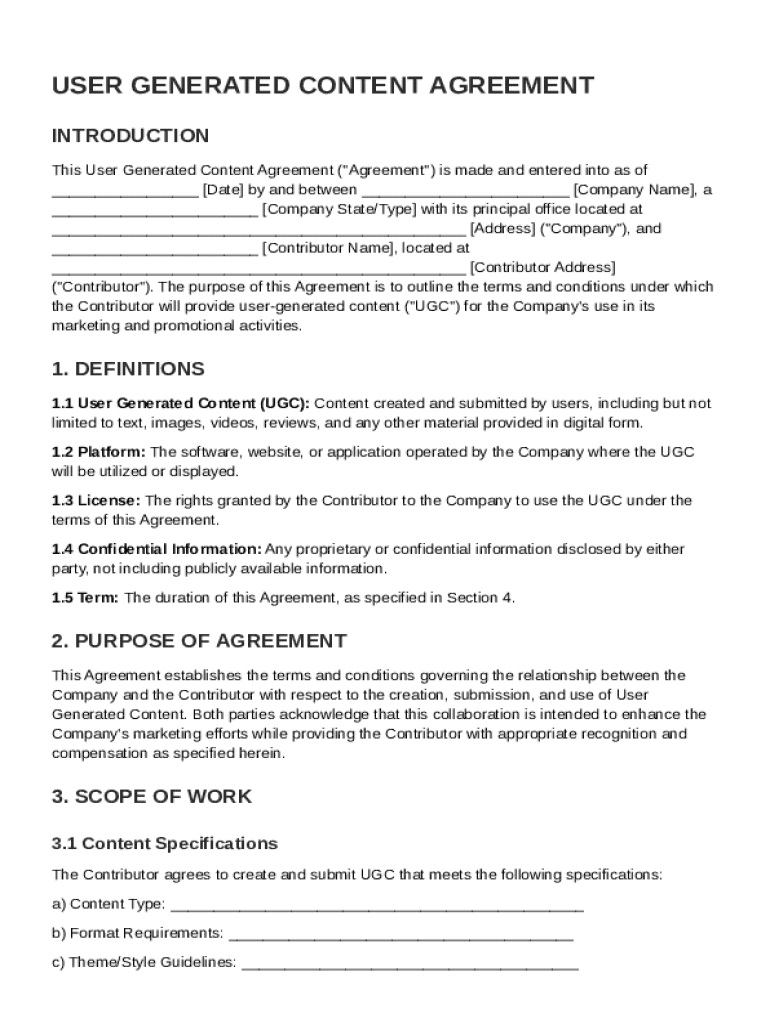
A User Generated Content Contract Template is a legal document that outlines terms and conditions between a company and a contributor regarding the creation and use of user-generated content (UGC) for promotional purposes. This template serves as a framework to formalize the contribution while ensuring that rights and responsibilities are clearly delineated for both parties involved.
Key Components of the Contract
- Scope of Work: Defines the specific content to be created by the contributor, including types of media and platforms for publication.
- Licensing Rights: Details the permissions granted to the company for using the UGC, which may include rights to modify, distribute, and display the content.
- Compensation: Outlines any payments or considerations given to the contributor. This could include direct payments, royalties, or other forms of non-monetary compensation.
- Confidentiality Obligations: Ensures that both parties protect sensitive information disclosed during the collaboration.
Core Legal Provisions
- Indemnification Responsibilities: Addresses who is accountable for legal claims arising from the content, protecting both parties from potential liabilities.
- Ownership of Intellectual Property: Specifies who retains the intellectual property rights of the content, and how these rights transfer under certain conditions.
- Dispute Resolution: Establishes mechanisms for handling disagreements, which may include mediation or arbitration clauses.
How to Use the Template
Using the User Generated Content Contract Template involves customizing it to fit the specific agreement between a company and a contributor. This ensures legal enforceability and relevance to the particular project or campaign.
Steps for Customization
- Identify the Parties Involved: Clearly list the names and contact information of the company and the contributor.
- Detail the Content Requirements: Specify the form, media, and creative guidelines for the content to be produced.
- Define Payment Terms: Incorporate details of any financial or other compensation agreements, including timelines for payment.
- Incorporate Legal Clauses: Customize confidentiality, indemnification, and dispute resolution clauses to reflect the specifics of the relationship.
Legal Use and Compliance
Ensuring the User Generated Content Contract Template complies with legal standards is crucial for its enforceability.
Legal Considerations
- Jurisdiction: The contract should specify which state’s laws govern the agreement, as this affects interpretation and enforcement procedures.
- Compliance with Digital Media Laws: Include clauses that ensure both parties adhere to applicable digital media regulations, such as intellectual property rights and copyright laws.
- ESIGN Act Compliance: If the document is executed digitally, make sure it complies with the Electronic Signatures in Global and National Commerce Act, ensuring that electronic signatures are legally recognized.
Who Uses this Template
The User Generated Content Contract Template is commonly used by various entities involved in content creation and digital marketing.
Typical Users
- Marketing Agencies: Utilize this template when engaging influencers or content creators to produce UGC for campaigns.
- Brands and Companies: Implement the contract to secure licensing rights for content that features their products or services.
- Content Creators and Influencers: Use it to formalize agreements with companies for the use of their creative work.
Business Types
- E-commerce Companies: Rely on UGC to promote products through authentic customer experiences.
- Media and Entertainment Firms: Frequently need contracts for collaborations involving videos, music, or other media.
Steps to Complete the Template
Completing the User Generated Content Contract Template requires careful attention to detail to ensure all pertinent information is included.
Process Breakdown
- Gather Information: Collect all necessary details from both the company and contributor.
- Draft Initial Agreement: Use the template to create a draft, incorporating all specific terms and clauses agreed upon by both parties.
- Review and Revise: Have legal professionals review the draft for compliance with applicable laws and completeness.
- Finalize and Sign: Once both parties are satisfied, finalize the contract and proceed with signatures, either physically or electronically.
Software Compatibility and Integration
DocHub offers seamless compatibility for accessing and managing the User Generated Content Contract Template across various platforms.
Supported Formats
- DocHub supports a wide range of formats including DOC, PDF, and TXT, facilitating easy import and export of the template.
- It integrates well with cloud storage services such as Google Drive and Dropbox, allowing for efficient workflow management.
Digital Signature Tools
- Utilize DocHub’s electronic signature features to facilitate quick and legally binding contracts through direct mouse, trackpad, or touchscreen inputs.
Examples of Template Usage
Real-world examples illustrate the template’s versatility and utility in different scenarios.
Scenario Applications
- Collaborative Marketing Campaigns: A fashion brand uses the contract to formalize an agreement with a renowned stylist contributing style tips and photos for social media promotion.
- Influencer Partnerships: An electronics company engages a technology influencer using the template to create and share reviews of their gadgets.
- Contest Submissions: A food company runs a recipe contest with entrants agreeing, via the contract, to allow use of submitted recipes in promotional materials.
Important Terms Explained
Understanding critical terms within the User Generated Content Contract Template can help parties navigate and enforce the agreement effectively.
Essential Terms
- Perpetual License: A type of licensing agreement allowing the company ongoing use of the content without expiry.
- Attribution Requirement: Rules governing how and when the contributor's name or brand is credited in conjunction with the content.
By following these guidelines and utilizing the User Generated Content Contract Template effectively, parties can secure a mutually beneficial agreement that protects their interests and fosters successful collaboration.




