




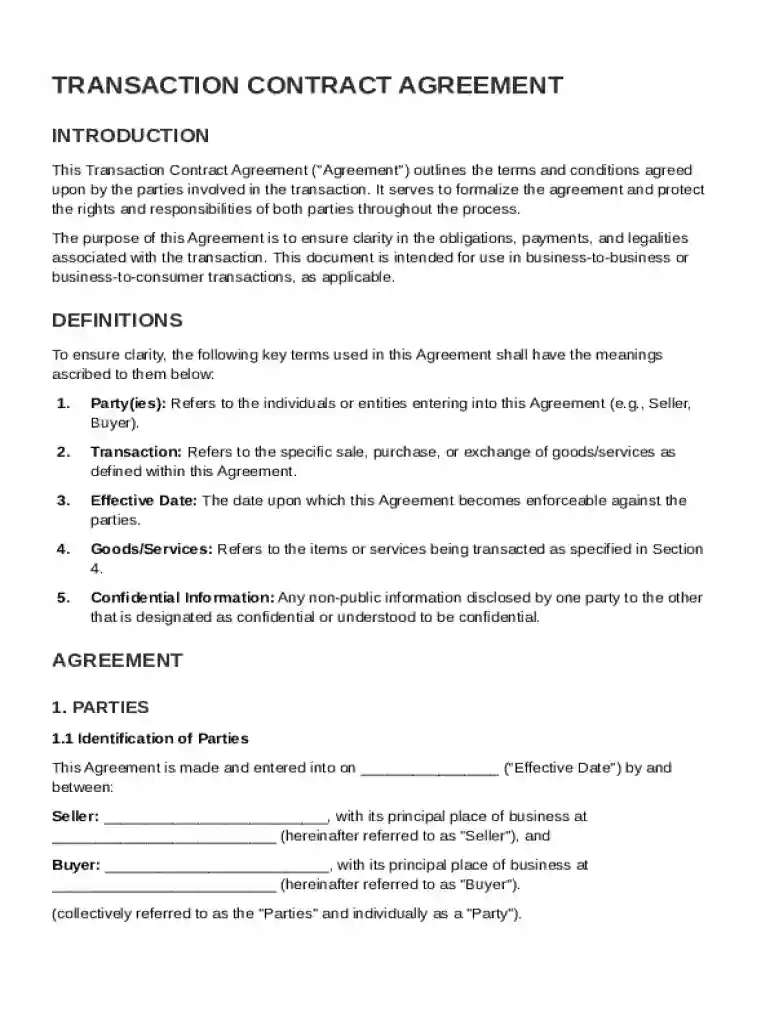
01. Edit your form online
Type text, add images, blackout confidential details, add comments, highlights and more.

Type text, add images, blackout confidential details, add comments, highlights and more.

Draw your signature, type it, upload its image, or use your mobile device as a signature pad.

Send it via email, link, or fax. You can also download it, export it or print it out.
A Transaction Contract Template serves as a structured framework document that outlines the terms and conditions governing a transaction between two parties, generally a Seller and a Buyer. This template is instrumental in specifying each party's rights, duties, and obligations. It typically encompasses definitions of critical terms, payment and delivery terms, warranties, confidentiality obligations, indemnification clauses, and governing law. The primary purpose is to formalize the agreement to ensure clarity, foster understanding, and provide legal protection for both parties involved. Having a standardized template helps mitigate potential misunderstandings or disputes arising from vague agreements.
Utilizing a Transaction Contract Template effectively involves a series of strategic steps:
Customization: Tailor the template to fit the specific details of your transaction, including party names, transaction details, and applicable terms.
Clarification of Terms: Define key terms clearly, ensuring both parties understand and agree on each definition.
Detail Payment and Delivery: Specify payment terms, methods, schedules, and conditions for delivery or fulfillment.
Review of Legal Obligations: Ensure all legal obligations, including warranties, indemnities, and confidentiality clauses, are appropriately addressed.
Consulting Legal Experts: If needed, involve legal professionals to validate the agreement's comprehensiveness and alignment with applicable laws.
By adhering to these steps, the template becomes a reliable tool to formalize transactions comprehensively and legally.
Completing a Transaction Contract Template requires adherence to detail and due diligence. Follow these detailed steps to ensure accuracy and completeness:
Collect Essential Information: Gather all necessary details about the parties involved, the transaction specifics, and any pertinent terms or conditions.
Fill Out Party Details: Input the full names, addresses, and contact details of the Seller and Buyer.
Identify Governing Law: Specify the state laws that will govern the contract, ensuring both parties are aware of the applicable legal jurisdiction.
Outline Key Clauses: Properly document payment terms, warranties, indemnification clauses, and dispute resolution mechanisms.
Ensure Clarity and Precision: Use clear language to articulate the rights and responsibilities of each party, avoiding ambiguous terms or phrases.
Review and Revise: Conduct a thorough review and revise any sections to enhance clarity and mutual understanding.
Sign and Execute: Upon agreement, both parties should sign the document, thus executing the contract legally.
Completing these steps helps ensure that the contract accurately reflects the intended agreement of the parties involved.
The Transaction Contract Template is composed of several key elements that ensure its effectiveness:
These elements are fundamental to drafting a comprehensive contract that is both legally sound and equitable to all parties.
The Transaction Contract Template is primarily employed for its legal utility, providing a bedrock for enforceable agreements:
For maximum benefit, it is advisable that parties have the completed contract reviewed by legal experts who can verify compliance with regional laws and regulations.
Practical use cases of the Transaction Contract Template extend across various sectors, demonstrating its versatility:
These examples showcase the template's applicability across diverse contexts, emphasizing its role in enabling clear, legally-defensible agreements.
Understanding several essential terms is pivotal when engaging with a Transaction Contract Template:
Familiarity with these terms is essential to effectively negotiate and utilize the template, ensuring that both parties understand their rights and commitments.
While the fundamental principles of a Transaction Contract Template are consistent nationwide, certain state-specific rules may influence its applicability:
Understanding and adapting to these variations ensures the contract remains compliant and enforceable across different jurisdictions. Legal consultation is recommended to navigate these intricacies effectively.
At DocHub, your data security is our priority. We follow HIPAA, SOC2, GDPR, and other standards, so you can work on your documents with confidence.



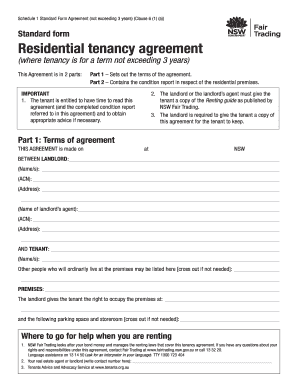
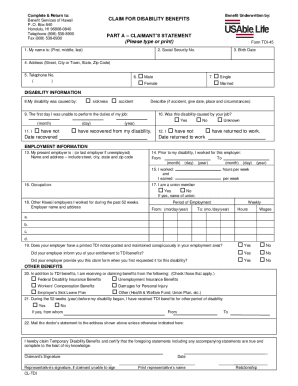
May 31, 2016 This agreement governs electronic exchange of purchasing information between Norfolk Southern and a vendor, using an electronic data
Contract Templates. Services Agreements Interagency Cooperation Contracts Terms and Conditions. Hotel Agreement Business Services Agreement Proposed


