




Definition & Meaning
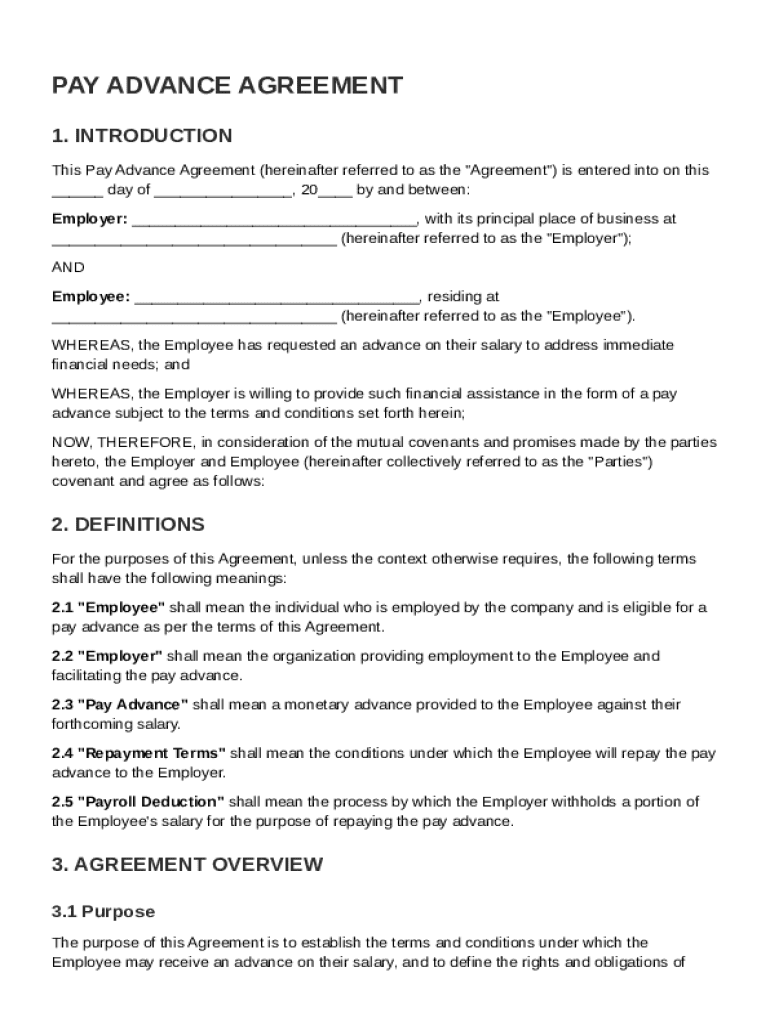
A Pay Advance Agreement Template is a formal document that outlines the conditions under which an employee can request a salary advance from their employer. This kind of advance is often used to address unexpected financial needs, providing financial relief before the scheduled pay date. The agreement clearly defines the terms of the advance, including how much the employee is eligible to borrow, the repayment schedule, and any interest or fees that may apply. It ensures that both parties understand their responsibilities, offering legal protection in case of disputes.
Components of a Pay Advance Agreement
- Advance Amount: Specifies the maximum amount an employee can request.
- Repayment Schedule: Details the timeline for reimbursing the advance.
- Interest and Fees: Lists any additional costs tied to the advance.
- Eligibility Criteria: Defines which employees can apply for an advance.
- Employer and Employee Obligations: Outlines duties and responsibilities.
How to Use the Pay Advance Agreement Template
To effectively utilize the template, both employers and employees must follow a structured approach.
Step-by-Step Instructions
- Download the Template: Access the template via a document management platform like DocHub.
- Customize the Agreement: Modify the template to reflect specific terms agreed upon by the employer and employee.
- Review Terms: Both parties should carefully review the terms to ensure clarity and mutual understanding.
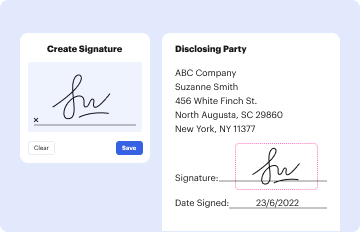
- Sign and Save: Use electronic signature tools to sign the document, ensuring legality and commitment.
- Distribute Copies: Save and share signed copies with all stakeholders.
Legal Use of the Pay Advance Agreement Template
The Pay Advance Agreement Template serves a legal function by creating a binding contract between the employer and employee. Utilizing this template helps protect each party's interests and clarifies expectations.
Legal Considerations
- Comprehensiveness: The agreement should cover all essential terms to prevent disputes.
- Compliance: Ensure the document adheres to state and federal laws governing wage advances.
- Secure Signatures: Use legally binding electronic signatures to validate the agreement.
- Data Protection: Personal information must be securely handled in compliance with privacy laws.
Key Elements of the Pay Advance Agreement Template
The template should encompass specific sections to ensure thoroughness and usability.
Core Components
- Employee Details: Name, position, and employee ID.
- Employer Information: Company name, address, and representative contact.
- Advance Details: Total amount, purpose, and repayment mechanism.
- Repayment Terms: Deductions method and timeline.
- Signatures Section: Spaces for both employer and employee signatures.
State-Specific Rules for the Pay Advance Agreement Template
Each state may have distinct laws impacting the drafting and enforcement of salary advance agreements.
Common State Variations
- Maximum Advance Amounts: Some states cap the maximum advance amount.
- Interest Rates: Legislation may limit interest or fees charged on advances.
- Repayment Rules: States may dictate allowed repayment durations or deductions from wages.
- Notification Requirements: Employers might need to notify employees about changes in advance policies.
Examples of Using the Pay Advance Agreement Template
Real-world applications of the Pay Advance Agreement Template demonstrate its utility in various scenarios.
Practical Scenarios
- Emergency Expenses: Employees use salary advances to tackle unexpected medical bills.
- Relocation Costs: Employees moving for work can use the agreement for upfront moving expenses.
- Family Emergencies: The agreement supports cash flow during urgent family situations.
Who Typically Uses the Pay Advance Agreement Template
The template serves a diverse range of businesses and organizational structures.

Typical Users
- Small Businesses: Enable quick financial support for employees.
- Large Corporations: Offer standardized procedures across departments.
- Non-Profit Organizations: Assist employees while maintaining financial accuracy.
- Government Agencies: Implement regulated financial assistance.
Eligibility Criteria
Determining eligibility to use the Pay Advance Agreement is critical to ensuring fairness and preventing abuse.

Common Criteria
- Employment Status: Full-time and permanent positions typically qualify.
- Job Tenure: Certain length of service might be required for eligibility.
- Financial Needs: Verification of financial emergency might be necessary.
- Past Advance History: Monitoring of previous advances granted to the employee.
By understanding these structured components, employers and employees can effectively manage salary advances through clear and legally sound agreements.