




Definition and Meaning of a Facility Lease Agreement Template
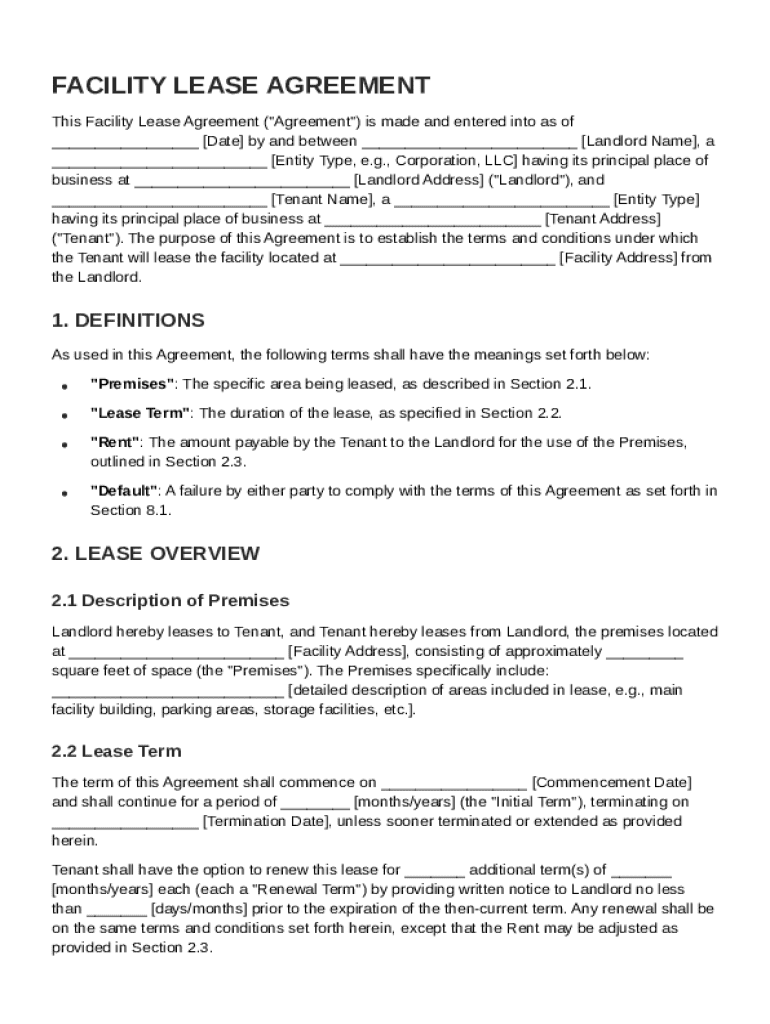
A Facility Lease Agreement Template is a pre-formatted document that outlines the terms and conditions under which a tenant leases a specified facility from a landlord. This template serves as a legal framework that details various aspects of the leasing process, ensuring that both parties have a clear understanding of their rights and responsibilities. The document includes specific information on the leased premises, the duration of the lease, rent payments, and any permitted uses of the facility. It is designed to protect both the tenant and the landlord by establishing clear guidelines and expectations on various operational and financial matters.
Key elements covered in the agreement typically include:
- Premises Description: Detailed information about the physical space being leased, including size, location, and any included amenities.
- Lease Duration: Start and end dates of the lease term, along with provisions for renewal or termination.
- Rent and Payment Terms: Amount of rent, payment schedule, acceptable payment methods, and any associated late fees or penalties.
- Permitted Use: Clearly defined allowable uses of the facility, ensuring that the tenant adheres to zoning laws and property regulations.
How to Use the Facility Lease Agreement Template
Using a Facility Lease Agreement Template is a straightforward process, but it requires attention to detail to ensure that all pertinent information is accurately recorded. To effectively use the template, follow these steps:
- Review Template Sections: Familiarize yourself with the structure and content of the template to understand where specific information needs to be inputted.
- Customize for Specific Needs: Tailor the template to fit the unique circumstances of the lease, such as inserting the correct names of the landlord and tenant, specifying the lease term, and detailing the rental amount.
- Legal Compliance Check: Ensure that the completed agreement complies with local laws and regulations to avoid potential legal issues.
- Consult Professionals: If needed, consult with legal professionals or real estate advisors to verify that the agreement is comprehensive and legally binding.
- Finalize and Sign: Once all parties agree on the terms, sign the document to make it legally binding, and provide copies to both the landlord and tenant for their records.
Steps to Complete the Facility Lease Agreement Template
Completing the Facility Lease Agreement Template involves multiple steps to ensure all necessary information is detailed accurately. Here is a step-by-step guide:
- Input Basic Information: Start by filling out the names and contact details of the landlord and tenant.
- Define Terms and Conditions: Include specifics on the start and end dates of the lease, rent amount, payment frequency, and any security deposit requirements.
- Specify Use Restrictions: Clearly outline any limitations or specific conditions regarding how the tenant can use the facility.
- Detail Maintenance Responsibilities: Allocate responsibilities for upkeep and repairs, specifying which party is responsible for what aspects of maintenance.
- Include Legal Clauses: Add clauses relating to termination rights, events of default, and remedies available to the landlord.
- Finalize with Signatures: Obtain signatures from both parties to validate the agreement and ensure legal enforceability.
Key Elements of the Facility Lease Agreement Template
The Facility Lease Agreement Template includes several essential components that provide a comprehensive understanding of the leasing arrangement:
- Lease Duration and Renewal Terms: Defines the timeline of the lease and outlines options and conditions for lease renewal or extension.
- Security Deposit: Details the amount, conditions for withholding or returning it to the tenant, and how it will be used toward potential damages.
- Alterations and Improvements: Establishes rules regarding any modifications the tenant may wish to make to the leased premises and the approval process from the landlord.
- Insurance and Liability: Specifies insurance requirements for both parties and assigns liability for damage or injury occurring on the premises.
- Indemnification Clause: Protects the landlord from any liabilities or claims that might arise due to the tenant's actions or negligence during the lease term.
State-Specific Rules for the Facility Lease Agreement Template
State-specific regulations can significantly impact the terms and enforceability of a Facility Lease Agreement. Important considerations include:
- Landlord-Tenant Laws: Each state has unique landlord-tenant laws that govern security deposits, eviction procedures, and notice periods.
- Zoning and Use Regulations: Ensure compliance with local zoning laws that may dictate permissible uses of the facility.
- Health and Safety Standards: Adhere to state-mandated health and safety codes to avoid fines or legal disputes.
- Disclosure Requirements: In some states, landlords must disclose certain information to tenants, such as the presence of lead paint or past flooding incidents.
Legal Use of the Facility Lease Agreement Template
The Facility Lease Agreement Template must be used in compliance with applicable laws to ensure that it remains enforceable. This includes:
- Contractual Obligations: Both parties must perform according to the stated obligations in the agreement. Failure to do so can result in legal ramifications.
- Governing Law Clause: The document should specify the state laws that will govern any disputes that arise from the agreement.
- Legal Representation: It is advisable for both parties to seek legal advice to ensure they fully understand and consent to the terms outlined in the template.
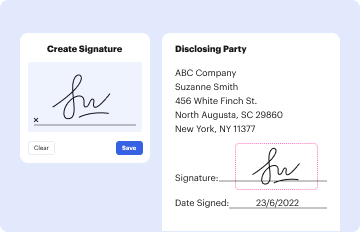
- Electronic Signatures: Utilize platforms like DocHub to capture electronic signatures, ensuring they meet the requirements set by the ESIGN Act for legality in electronic formats.
Important Terms Related to Facility Lease Agreement Template
Understanding key terms related to a Facility Lease Agreement is crucial for interpreting the document correctly:
- Premises: The physical space being rented, including any specified fixtures or amenities.
- Lessee and Lessor: The lessee is the tenant who rents the property, while the lessor is the landlord who owns the property.
- Covenant: A formal pledge or commitment made in the agreement, often related to maintenance or usage.
- Net Lease: A lease arrangement where the tenant is responsible for all property-related expenses in addition to rent, such as utilities, maintenance, and insurance.
By integrating these terms within the lease agreement, both parties can better understand their roles and responsibilities throughout the lease period.
Examples of Using the Facility Lease Agreement Template
Facility Lease Agreement Templates can be leveraged in various situations, with real-world scenarios highlighting their practical application:
- Business Expansion: A retail company seeking additional space for operations can use the template to lease a new storefront.
- Educational Institutions: Schools or universities renting facilities for extracurricular activities can formalize their arrangements with this template.
- Event Halls: Event planners looking to rent large venues for weddings or conferences can utilize lease agreements to ensure facility access is clearly defined.
- Short-term Pop-up Shops: Entrepreneurs launching temporary retail locations during holidays can secure space through this type of agreement.
These examples demonstrate how a Facility Lease Agreement Template can be customized for diverse needs, providing a robust framework for smooth operation and mutual understanding between the contracting parties.