






Definition & Meaning
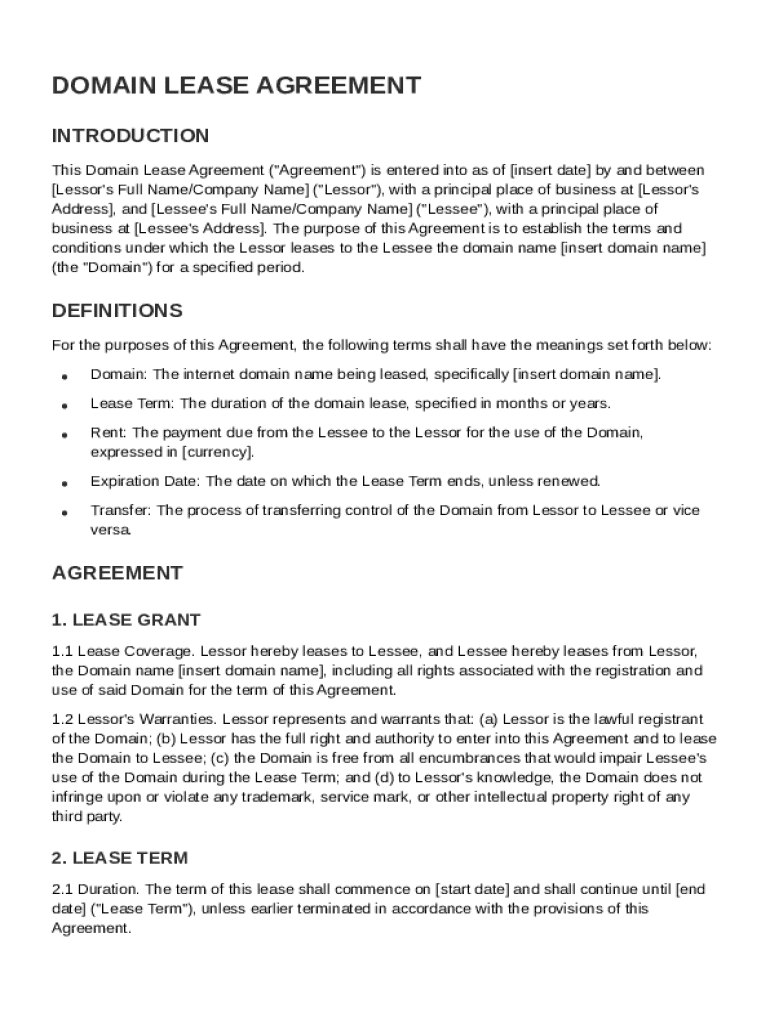
A Domain Lease Agreement is a legally binding document that outlines the terms and conditions under which a lessor leases a domain name to a lessee for a specified period. It specifies the rights and obligations of each party, including financial commitments, usage rights, and restrictions. The agreement is pivotal for ensuring both parties understand their roles and the scope of the lease, thereby minimizing potential disputes. By defining critical terms, it provides a framework that supports both legal compliance and smooth operation of the lease. Understanding the intrinsic details of the lease agreement is essential for both parties to align their expectations and responsibilities.
How to Use the Domain Lease Agreement Template
Using the Domain Lease Agreement Template requires careful attention to detail to ensure all relevant aspects are covered adequately. Start by entering basic information such as the names and contact details of both the lessor and the lessee. Follow this with a clear description of the domain name being leased. Next, outline the financial terms, including payment schedule and lease duration. Be sure to address expectations for domain usage, such as content restrictions or maintenance responsibilities. Additionally, specify procedures for renewal or termination, ensuring to include any notice periods required. Review for accuracy and completeness before finalizing the document.
Steps to Complete the Domain Lease Agreement Template
-
Collect Information: Gather all necessary details, including the domain name's specifications, parties involved, and financial terms.
-
Fill in Basic Details: Enter the names, addresses, and contact information of both the lessor and the lessee.
-
Specify Financial Terms: Clearly outline the payment structure, including amount, frequency, and acceptable methods of payment.
-
Define Usage Rights: Elaborate on how the domain can be used, including any restrictions or operational guidelines.
-
Address Renewal and Termination: Set terms for renewing or terminating the lease, including any prior notice requirements.
-
Include Miscellaneous Provisions: Add any additional clauses that may be necessary, such as confidentiality agreements or dispute resolution procedures.
-
Review and Sign: Both parties should thoroughly review the agreement to ensure accuracy and mutual understanding before signing.
Key Elements of the Domain Lease Agreement Template
-
Parties Involved: Clearly define the roles of the lessor and lessee, including their legal names and contact information.
-
Domain Description: Provide a precise description of the domain name being leased, including any relevant attributes or properties.
-
Payment Terms: Include detailed information about rental fees, payment schedules, and methods.
-
Duration of Lease: Specify the start and end dates of the lease and any conditions for extension or renewal.
-
Usage Conditions: Outline permissible uses of the domain, any content restrictions, and maintenance responsibilities.
-
Renewal and Termination: Detail the process for renewing or terminating the lease, including notice periods and conditions that may trigger termination.
-
Liability and Indemnification: Address potential liabilities and indemnities to protect both parties from unforeseen damages or legal issues.
Legal Use of the Domain Lease Agreement Template
The legal use of a Domain Lease Agreement Template involves ensuring compliance with applicable laws and regulations governing leasing agreements. The template should be customized to align with local regulations, and it must include legally binding clauses to ensure enforcement. Legal provisions, such as governing law and dispute resolution mechanisms, should be clearly articulated. The inclusion of indemnity clauses and liability limitations can offer additional protection. It is advisable to consult with legal counsel to ensure that the agreement fully complies with jurisdictional requirements and adequately protects all parties' interests.
Important Terms Related to Domain Lease Agreement Template
-
Lessor and Lessee: The lessor is the party leasing out the domain, while the lessee is the party receiving the lease.
-
Domain Name: Refers to the specific web address being leased under the agreement.
-
Lease Term: The duration for which the domain name is leased, which can include options for renewal.
-
Indemnity: A provision that provides legal protection, ensuring one party does not suffer a loss due to another party's actions or failure to act.
-
Governing Law: The jurisdiction's laws that will be applied for interpreting or enforcing the agreement.
-
Dispute Resolution: Methods such as mediation or arbitration outlined in the agreement to settle conflicts between the parties.
State-Specific Rules for the Domain Lease Agreement Template
State-specific rules can influence the terms and enforceability of a Domain Lease Agreement. Regulations may vary regarding electronic signatures, disclosure requirements, and lease renewal practices. For instance, some states may have particular rules about automatic renewals or require specific language to be included in agreements concerning consumer protection laws. It's crucial for parties involved to conduct due diligence by reviewing state laws or consulting with a legal expert to ensure the agreement is compliant with local regulations. Adjustments may be necessary to align with such state-specific rules for the agreement to be valid.
Examples of Using the Domain Lease Agreement Template
-
Startups Initiating Online Operations: A tech startup leasing a catchy domain name from a domain holder to enhance their online presence.
-
Established Businesses Rebranding: A well-known company that temporarily leases a new domain name to align with its marketing campaign before acquiring the domain permanently.
-
Individual Entrepreneurs Expanding Reach: An independent contractor leasing a domain name that matches their personal brand to attract a broader audience.
-
Non-Profits Promoting Campaigns: A nonprofit organization leasing an easy-to-remember domain associated with a specific fundraising campaign to boost online donations.
-
Educational Institutions Offering Online Courses: A university leasing a specialized domain to host an online learning portal separate from its primary website.