




01. Edit your form online
Type text, add images, blackout confidential details, add comments, highlights and more.

Type text, add images, blackout confidential details, add comments, highlights and more.

Draw your signature, type it, upload its image, or use your mobile device as a signature pad.

Send it via email, link, or fax. You can also download it, export it or print it out.
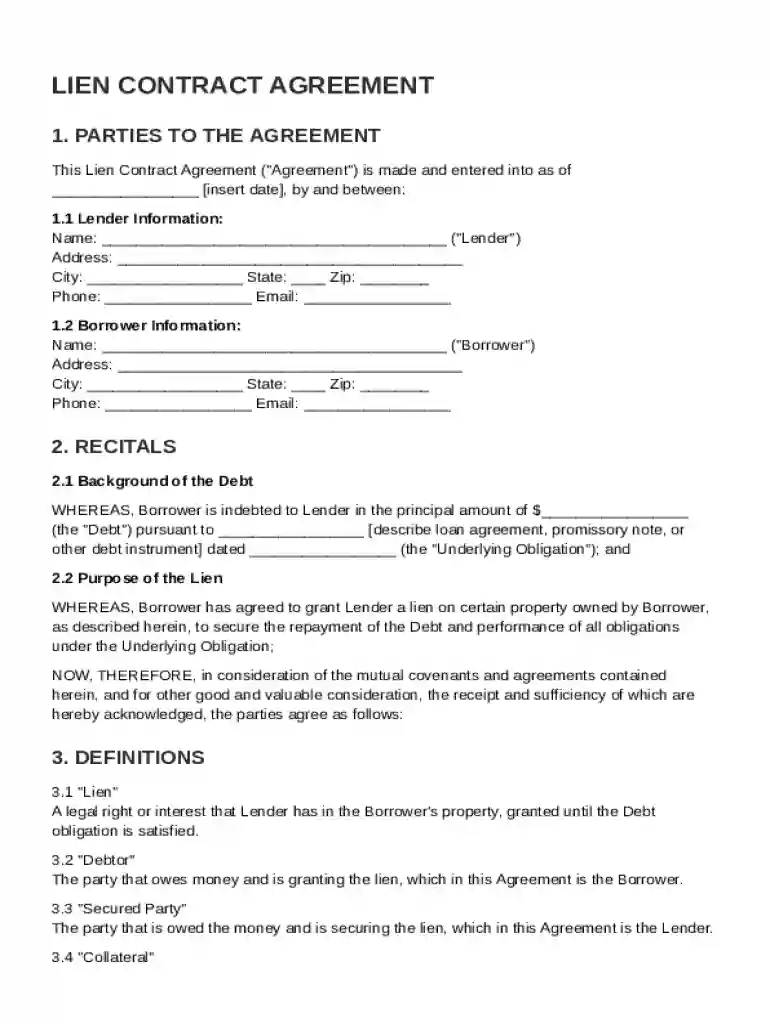
The Lien Contract Template is a legal document used to detail an agreement where a borrower pledges collateral to a lender as security for a debt. This type of contract grants the lender a lien or legal claim on the borrower's property, ensuring the lender's interests are protected until the debt is repaid. This framework is crucial for situations where the lender requires assurance that they will be compensated, even if the borrower defaults on their obligations. By formalizing this agreement, both parties clarify the terms, reducing misunderstandings and providing legal recourse should disputes arise.
A comprehensive Lien Contract Template includes several key components:
By including these elements, parties ensure that all critical aspects of the agreement are clearly documented and legally enforceable.
Gather Basic Information: Collect details about both the lender and borrower, along with specific property details if applicable.
Outline Debt Terms: Draft the financial terms of the loan, including amounts, interest, and repayment plans.
Describe Collateral: Offer a precise description of the asset securing the lien, ensuring that it can be easily identified.
Detail Lien Clauses: Specify the rights granted to the lender over the collateral in case of default.
Define Default Conditions: Clearly state what actions or lack thereof would breach the agreement, allowing the lender to exercise lien rights.
Legal Review: Engage a legal professional to review the template to confirm compliance with local laws and completeness.
Finalization: Both parties should sign the completed document, and it should be notarized if required, to enhance its legal validity.
Using a Lien Contract Template starts with identifying the transaction's purpose and the nature of the collateral involved. From there, the lender and borrower can collaboratively negotiate and fill in the template, ensuring each section accurately reflects their understanding and intentions. The completed form should clearly articulate the rights, responsibilities, and liabilities of each party, along with any conditions of the lien. Once finalized, the document serves as a reference and legal instrument throughout the duration of the loan.
In the United States, using a Lien Contract Template is a common practice to secure loan agreements. It provides a standardized way to document liens, aligning with state laws regulating such agreements. Ensuring that the contract complies with relevant legal standards is crucial, as it affects the enforceability of the lien. The contract should be executed following all required formalities, such as notarization or witness signing, based on the governing state's requirements. Observing these legal protocols safeguards the lender's ability to make legal claims against the collateral if necessary.
State laws can significantly impact the execution and enforcement of lien contracts. While many states adhere to similar frameworks, variations may exist in areas such as:
For precise compliance, parties should research the specific laws in the state where the property is located or consult with a local attorney.
The Lien Contract Template is widely used by various stakeholders, including:


Consider these typical scenarios to understand the application of the lien contract:
Each situation highlights the flexibility and necessity of a well-drafted lien contract to safeguard both lender and borrower interests.
At DocHub, your data security is our priority. We follow HIPAA, SOC2, GDPR, and other standards, so you can work on your documents with confidence.



The Agreement constitutes the entire understanding of the parties related to the subject matter hereof. The Agreement supersedes all prior agreements,.
The undersigned further agrees to defend, indemnify and hold harmless the Owner for any losses or expenses. (including without limitation reasonable attorneys


