






Definition & Meaning
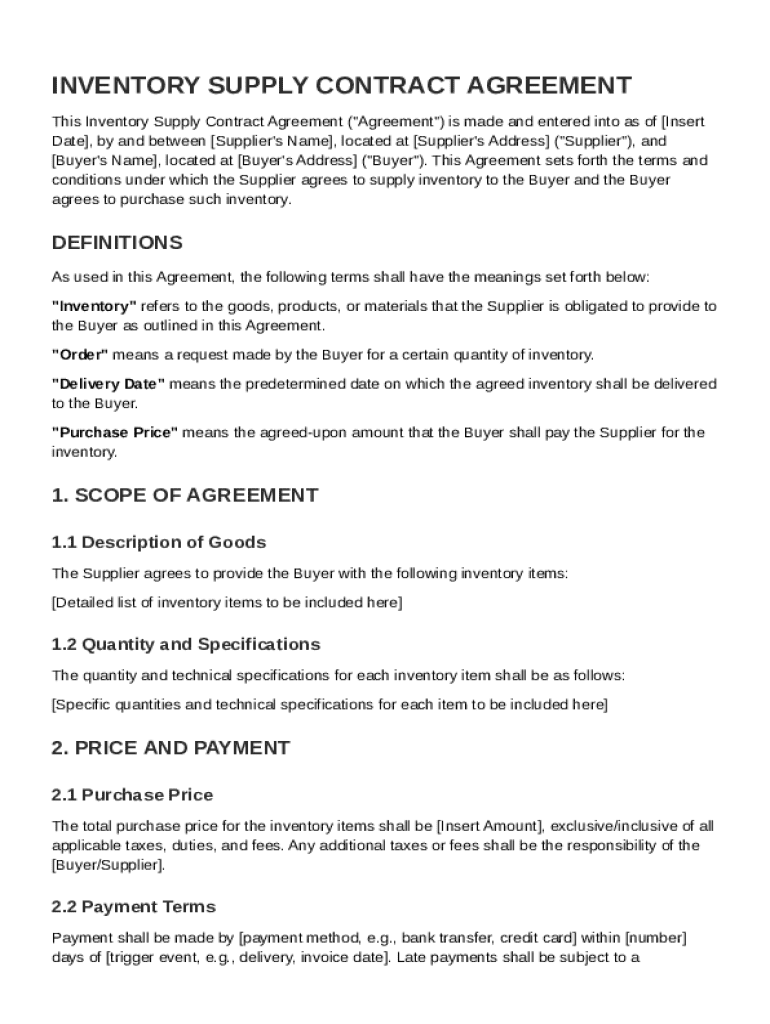
The Inventory Contract Template serves as a vital document in commercial transactions, delineating the terms and responsibilities between the Supplier and the Buyer regarding inventory supply and purchase. This template is structured to outline key details such as pricing, delivery schedules, inspection rights, and confidentiality agreements, ensuring both parties have a mutual understanding and requirement fulfillment. For businesses in the United States, using such a contract addresses specific legal and cultural expectations within the business environment, providing a standardized approach to managing inventory-related agreements.
Key Elements of the Inventory Contract Template
An Inventory Contract Template encompasses several critical components essential for capturing the complete agreement between the parties involved. These elements typically include:
- Definitions and Scope: Clearly defines the types of inventory covered and the extent of services provided.
- Pricing and Payment Terms: Specifies the cost of goods, payment schedule, and acceptable methods for payment.
- Delivery Schedule: Outlines the expectations around delivery times, locations, and responsible parties for shipping logistics.
- Inspection and Acceptance: Establishes the right of the buyer to inspect goods upon delivery and processes for handling non-conformities.
- Warranties and Liability: Details any warranties provided by the supplier and limits on liability in case of disputes or failures.
- Confidentiality Clause: Includes provisions to protect sensitive business information shared between parties.
- Governing Law and Dispute Resolution: Identifies the legal framework under which the contract falls and the methods to resolve disputes.
Steps to Complete the Inventory Contract Template
To effectively complete an Inventory Contract Template, follow these carefully detailed steps:
- Identify Parties: Clearly state the names and contact information of the Supplier and the Buyer.
- Define Inventory Specifications: Detail the types, quantities, and qualities of inventory to be supplied.
- Specify Payment Terms: Include precise payment schedules and conditions, ensuring mutual agreement on terms.
- Establish Delivery Terms: Set out the where, when, and how the inventory will be delivered, including logistics responsibilities.
- Outline Inspection Procedures: Describe the process for inspecting delivered goods and steps if issues arise.
- Include Warranties and Liabilities: State any warranties offered and limitations on liabilities.
- Address Confidentiality Needs: Add clauses to protect proprietary business information.
- Set Governing Laws: Specify which state laws govern the agreement and preferred methods for dispute resolution.
Each step ensures the contract is comprehensive and legally sound, providing clarity and protection for both parties involved.
Legal Use of the Inventory Contract Template
Legally, the Inventory Contract Template acts as a binding agreement intended to protect the interests of both the Supplier and the Buyer in inventory transactions. It serves to establish clear legal obligations regarding product deliveries, risk of loss, and compliance with commercial regulations. Within the United States, this document is governed by the Uniform Commercial Code (UCC), which ensures enforceability in legal disputes. By adhering to the template’s structure, parties mitigate the risk of misunderstandings and protect themselves against potential legal disputes, ensuring each party's expectations and rights are clearly stated and enforceable.
Who Typically Uses the Inventory Contract Template
The Inventory Contract Template is predominantly used by businesses involved in the sale and purchase of goods, particularly those that require consistent inventory management. This includes:
- Manufacturers who supply products to retailers.
- Retailers securing consistent supply lines from distributors.
- Wholesalers and Distributors managing bulk transactions.
- Logistics and Supply Chain Managers ensuring delivery terms and inventory specs are met.
These entities benefit from the structured nature of the template to ensure smooth operations, compliance, and accountability.


Examples of Using the Inventory Contract Template
Real-world applications of the Inventory Contract Template can be seen in various business scenarios. For instance:
- A retail clothing company might use the contract to secure summer inventory from multiple domestic and international suppliers, ensuring timely delivery and adherence to quality standards.
- A technology firm engaging in bulk electronic purchases may leverage the template to manage supplier relationships effectively, negotiate pricing, and establish warranty conditions for tech components.
- In food supply chains, a grocery distributor would employ similar contracts to standardize agreements with farmers and processing facilities, focusing on delivery timeliness and product freshness.
Such examples highlight the template's versatility and importance in simplifying complex business transactions.
Software Compatibility
For businesses utilizing digital platforms, the Inventory Contract Template is designed to be fully compatible with a suite of document management software, ensuring seamless integration into existing processes. Notably:
- DocHub: This platform allows users to edit, sign, and send the contract digitally, offering features like text addition, image insertion, and electronic signature integration, streamlining document handling and collaboration.
- Google Workspace: With deep integration, users can import templates from Gmail or Google Drive, edit them, and save them back to their cloud storage, eliminating redundant file handling steps.
- PDF Editors and DOCX Readers: Ensures accessibility on software like Adobe Acrobat and Microsoft Word, permitting offline editing and adjustments.
This flexibility caters to varying software preferences, ensuring ease of use across different technological environments.
State-Specific Rules for the Inventory Contract Template
Given the diverse legal frameworks across the United States, specific states may impose unique requirements regarding commercial contracts. While the Inventory Contract Template serves as a universal base, businesses often need to adjust details, such as:
- Governing Laws: Each state may have distinct laws governing contract terms, impacting enforceability.
- Sales Tax Policies: Differences in tax regulations necessitate inclusion of state-specific tax obligations and exemptions.
- Disclosure Obligations: Certain states require specific disclosures regarding product quality and sourcing, influencing contract terms.
By tailoring contracts to meet state-specific regulations, businesses ensure compliance and protect against legal vulnerabilities.