
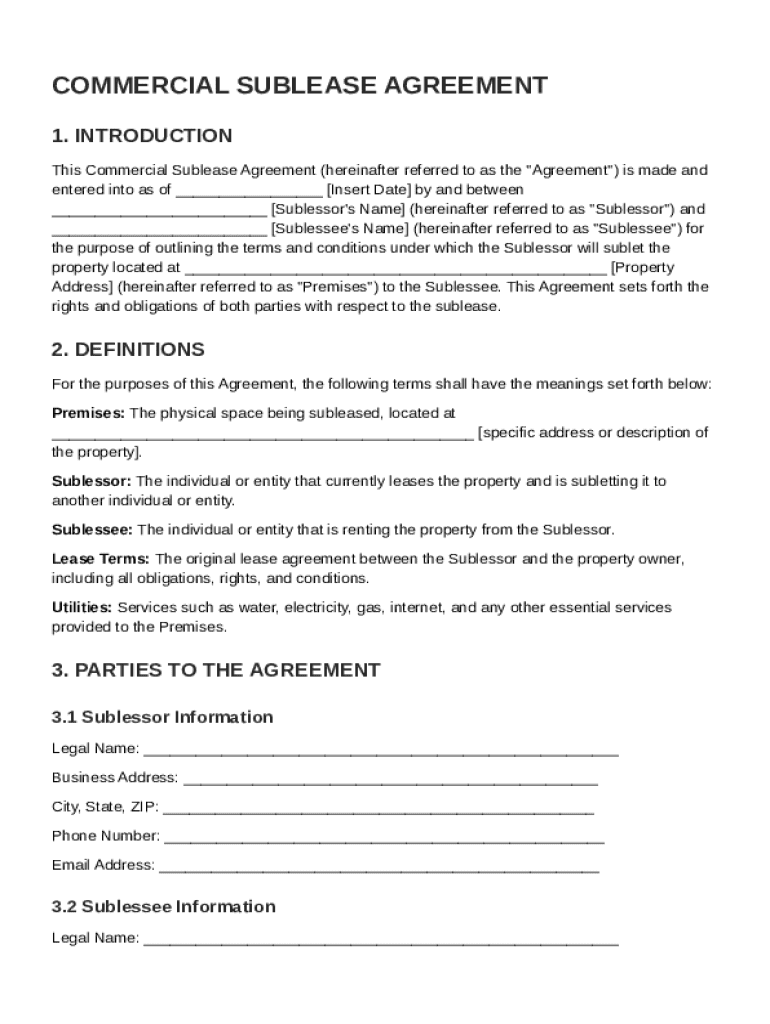







Definition & Meaning
A Commercial Sublease Agreement Template serves as a contract between a sublessor and a sublessee, detailing the conditions under which a commercial property is sublet. This agreement allows the original tenant, or sublessor, to rent out part or all of their leased space to a third party, the sublessee. This arrangement is crucial in commercial real estate as it provides flexibility for businesses to optimize their use of rented spaces, often easing financial burdens. Important elements included are the description of the leased premises, duration of the sublease, and rent obligations. By defining the responsibilities of both parties, it ensures compliance with the original lease terms and streamlines the relationship between all involved parties.
Key Elements of the Commercial Sublease Agreement Template
The Commercial Sublease Agreement Template contains several key components that ensure clarity and protect both parties:
- Premises Description: Detailed information on the area or portion of the property being sublet.
- Term of Sublease: Start and end dates of the sublease agreement, along with renewal options if applicable.
- Rent and Payments: Rent amount, payment schedule, and methods of payment.
- Maintenance and Utilities: Responsibilities concerning property upkeep and utility costs.
- Indemnification Clauses: Protection of both parties from liability claims related to property use.
- Legal Compliance: Assurance that the sublease conforms to state and federal laws.
A thorough understanding and accurate completion of these components are essential for a legally sound agreement.
How to Use the Commercial Sublease Agreement Template
Utilizing the Commercial Sublease Agreement Template from DocHub can streamline your documentation process:
- Access the Template: Download from the DocHub platform or import directly from your cloud storage accounts like Google Drive.
- Review the Template: Familiarize yourself with the structure and each section to ensure all necessary details are captured.
- Fill Out the Template: Enter specific information about the property, terms, and both parties involved. Use digital tools provided by DocHub to fill text fields, checkboxes, and add signatures.
- Review for Accuracy: Ensure all information is correct and that all clauses reflect agreed-upon terms.
- Electronic Signature: Use DocHub's electronic signature feature to legally sign the document.
- Save and Share: Once completed, save the agreement and share it with the sublessee and any other relevant parties through secure channels.
Steps to Complete the Commercial Sublease Agreement Template
Completing the Commercial Sublease Agreement Template involves several steps to ensure accuracy and compliance:
- Identify the Parties: Clearly list the names and contact details of the sublessor and sublessee.
- Describe the Property: Input specific details about the part of the property that will be sublet.
- Specify the Sublease Term: Enter the exact dates for the duration of the sublease.
- Detail Rent Obligations: Include the amount of rent, due dates, and any additional costs.
- Outline Responsibilities: Define who is responsible for maintenance, repairs, and utilities.
- Legal Considerations: Ensure compliance with both original lease terms and local laws.
- Sign and Date: Execute the agreement by digitally signing through DocHub.
Following these steps ensures a comprehensive and enforceable sublease agreement.
Who Typically Uses the Commercial Sublease Agreement Template
This template is a useful tool for various business entities and individuals:
- Small Business Owners: Seeking to reduce expenses by subletting unused space.
- Startups: Needing temporary office space without long-term commitments.
- Commercial Brokers: Assisting clients in navigating sublease opportunities.
- Legal Professionals: Drafting and reviewing sublease agreements on behalf of clients.
These users benefit from the clarity and legal framework provided by the template.


Legal Use of the Commercial Sublease Agreement Template
When using the template, legal compliance is crucial. The document must:
- Adhere to Original Lease Terms: Ensure all sublease conditions align with the original lease.
- Include Required Disclosures: Provide necessary information as per state and local laws.
- Be Signed Correctly: Use DocHub’s tools for obtaining legally binding signatures.
- Store and Share Securely: Use protected channels for document exchange to maintain confidentiality.
Consider consulting with a legal professional to tailor the agreement to specific requirements and ensure it meets all legal standards.
State-Specific Rules for the Commercial Sublease Agreement Template
Different states may have unique provisions and considerations:
- Landlord Approvals: Some states require documented consent from the landlord before a sublease can commence.
- Rent Control Laws: Certain areas may impose restrictions on rental amounts in subleased spaces.
- Notice Requirements: Timelines for notifying the original landlord of the sublease vary across states.
Understanding these state-specific regulations is critical for the enforceability of the sublease agreement.
Examples of Using the Commercial Sublease Agreement Template
Here are practical scenarios where this template proves beneficial:
- Retail Businesses: Subletting part of their space to complementary businesses to maximize foot traffic.
- Professional Services: Consulting firms sharing office space for reduced costs and increased networking opportunities.
- Event Spaces: Leasing out unused time slots or areas to other event planners or organizations.
Each scenario demonstrates how subleasing can be a strategic financial and operational decision for businesses.




