






Definition & Meaning
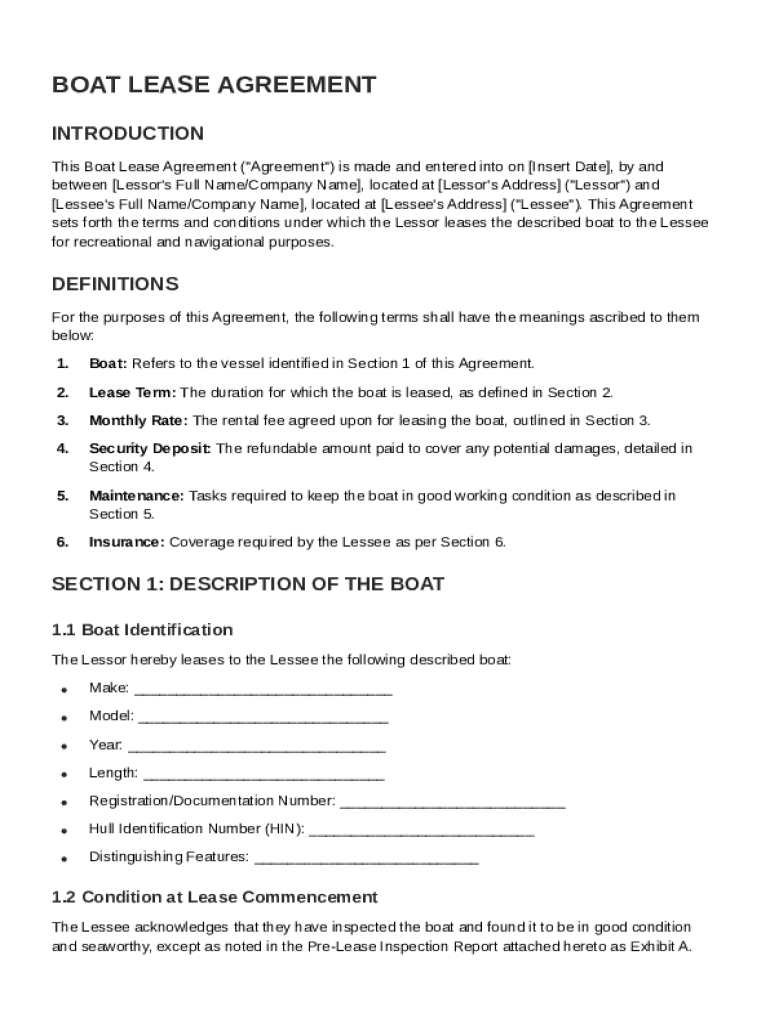
A Boat Lease Agreement Template is a legal document used to outline the terms and conditions under which a lessor (the owner of the boat) leases their boat to a lessee (the person or entity renting the boat) for recreational purposes. This agreement includes specific details such as the boat's description, the lease period, payment obligations, and the responsibilities of both parties involved. The document serves to protect both the lessor and the lessee by clearly defining each party's rights and obligations, thereby minimizing potential disputes.
The form generally includes sections covering payment structure, which details rent amount, due dates, and methods of payment. It also includes maintenance responsibilities, specifying which party is responsible for routine maintenance and repairs. Additionally, it outlines security deposit requirements and insurance obligations to safeguard against potential damages or liabilities.
Key Elements of the Boat Lease Agreement Template
-
Parties Involved: This section identifies the lessor and lessee, including their full names and contact information.
-
Boat Details: A description of the boat, including the make, model, year, and registration number.
-
Lease Duration: Specifies the start and end dates of the lease, outlining whether it's a fixed-term or renewable agreement.
-
Payment Terms: Details rental fees, payment schedule, late fee penalties, and accepted payment methods.
-
Security Deposit: Stipulates the deposit amount required to secure the lease, including terms for its return and conditions under which it may be withheld.
-
Maintenance and Repairs: Clarifies responsibilities for regular maintenance, repairs, and any maintenance costs.
-
Insurance Requirements: Specifies the type of insurance needed, the party responsible for obtaining it, and proof of insurance documentation.
-
Usage Terms: Defines acceptable boat use, geographical restrictions, and any bans on specific activities.
-
Termination Conditions: Outlines conditions under which the agreement can be terminated, such as breach of contract or mutual agreement.
Steps to Complete the Boat Lease Agreement Template
-
Review the Template: Thoroughly read through the entire document to understand all terms and sections.
-
Fill in Party Information: Enter the complete names and addresses of both the lessor and lessee in the designated sections.
-
Detail the Boat Information: Input all necessary details about the boat as indicated in the template, ensuring accuracy.
-
Specify Lease Duration: Clearly state the intended start and end dates of the lease period.
-
Outline Payment Details: Include information on the rental amount, due dates, and preferred payment methods.
-
Outline Security Deposit Terms: Specify the security deposit amount, conditions for refunds, and circumstances under which deductions can be made.
-
Clarify Maintenance Responsibilities: Define who is responsible for which aspects of the boat's maintenance and any associated costs.
-
Detail Insurance Obligations: Indicate the insurance needed and attach a copy of the policy as proof of coverage.
-
Define Termination Conditions: Clearly specify under what conditions the lease may be terminated ahead of schedule.
-
Finalize and Sign: Both parties should read the completed document carefully, sign, and date it to affirm their agreement.
Important Terms Related to Boat Lease Agreement Template
-
Lessor: The owner of the boat who is leasing it out.
-
Lessee: The individual or entity renting the boat.
-
Lease Duration: The agreed-upon period for which the boat is rented.
-
Security Deposit: A refundable deposit held against potential damages.
-
Insurance: Protection against potential liabilities or damages.
-
Termination Clause: Provisions for ending the lease agreement prematurely.
State-Specific Rules for the Boat Lease Agreement Template
Boat lease agreements may have state-specific rules affecting their provisions. Some states may require specific language regarding liability, insurance, or safety regulations. It's essential for both the lessor and lessee to consult local laws to ensure compliance. This might include mandatory safety inspections or region-specific registration requirements. An awareness of these variations ensures that the agreement is enforceable and aligned with state laws.
Legal Use of the Boat Lease Agreement Template
The Boat Lease Agreement Template has legal standing as a contract, provided it is executed properly, with signatures from both participating parties. The template must reflect an accurate and truthful representation of terms agreed upon. For the agreement to hold up in any potential legal dispute, all parties should have entered into it voluntarily, fully understanding its stipulations. Keeping a copy of the executed document ensures that both the lessor and lessee have a reference for their rights and obligations.
Who Typically Uses the Boat Lease Agreement Template
-
Boat Owners / Lessors: Individuals or businesses renting out their vessels for recreational purposes.
-
Individuals/Lessee: Anyone seeking to lease a boat for leisure or specific recreational events.
-
Marina Operators: Facilitating boat rentals on behalf of vessel owners.
-
Boat Clubs: Providing members with temporary access to boats.
-
Charter Services: Offering boats as part of their fleet for private use.
These entities utilize the template to ensure clarity and formalize the terms of their rental transactions.


Examples of Using the Boat Lease Agreement Template
-
Recreational Rentals: A family wishing to lease a boat for a weekend getaway would engage with a boat rental company, using the agreement to define terms and protect both parties' interests.
-
Chartered Events: When organizing a corporate retreat on a rented yacht, this document details the responsibilities of both the company renting the boat and the boat owner, including event-specific provisions.
-
Lease-to-Own Arrangements: Some agreements might include clauses allowing for conversion of the lease into a purchase, detailing conditions for this transaction.
In each case, the precise terms and customized provisions ensure that both lessor and lessee have clear expectations, reducing the likelihood of disputes.