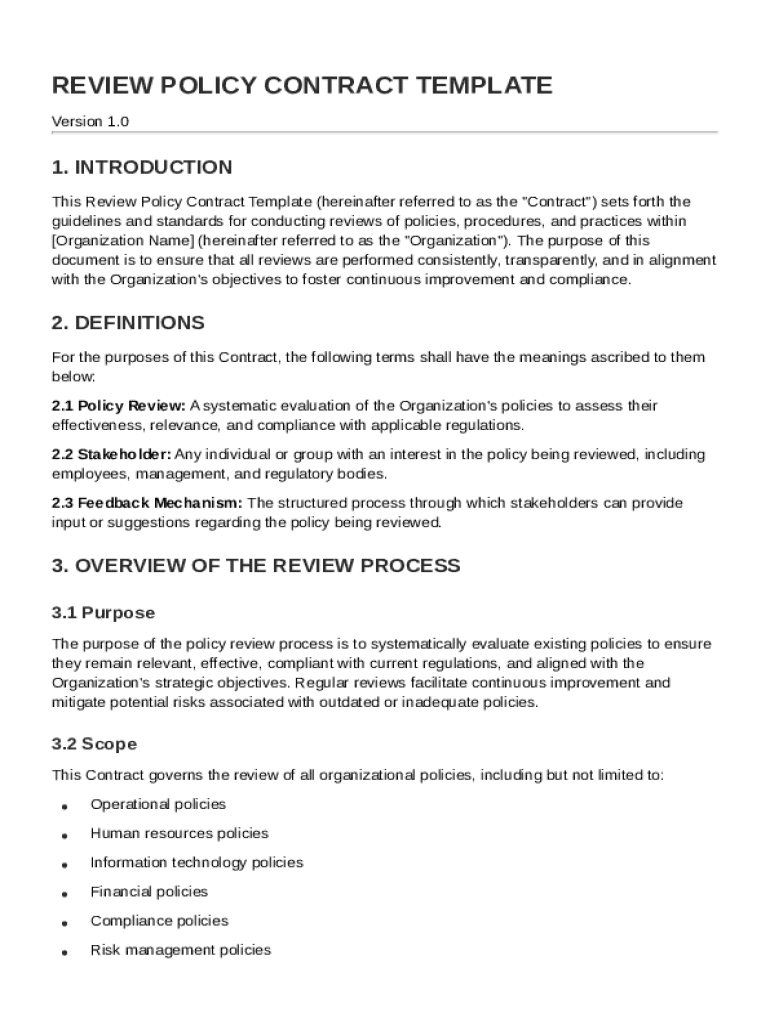







Definition & Meaning
The Review Policy Contract Template is a foundational document designed to outline the procedure for systematically reviewing organizational policies. It is intended to standardize how reviews are conducted, ensuring consistency and transparency. The template typically includes key definitions, roles, responsibilities, criteria for evaluation, and reporting methods. By using this structured framework, organizations can maintain alignment with their objectives, promote continuous improvement, and ensure compliance.
How to Use the Review Policy Contract Template
To effectively utilize the Review Policy Contract Template, follow the outlined guidelines step by step:
-
Identify Key Terms: Familiarize yourself with the definitions provided, as these establish a common understanding crucial for accuracy and consistency.
-
Designate Roles: Clearly assign responsibilities to the Review Committee, Policy Owners, and other stakeholders to ensure accountability and clear communication channels.
-
Outline the Review Process: Establish the frequency of reviews and the criteria that will be used to assess the effectiveness and relevance of policies.
-
Collect Feedback: Use the template to specify methods for gathering insights from various stakeholders to inform the review process.
-
Report Outcomes: Define how the results of the review will be documented and communicated to ensure transparency and facilitate decision-making.
Key Elements of the Review Policy Contract Template
The Review Policy Contract Template includes several critical components that form the backbone of an effective policy review process:
-
Roles and Responsibilities:
- Review Committee: Tasked with overseeing the review process and ensuring that it aligns with organizational goals.
- Policy Owners: Responsible for providing necessary documentation and context for the policies under review.
- Stakeholders: Provide input and feedback based on their experience and needs concerning the policies.
-
Review Frequency and Criteria:
- Specify how often policies will be reviewed and the benchmarks for assessing policy performance.
-
Feedback Collection: Methods for gathering input should include surveys, interviews, and focus groups to capture diverse perspectives.
-
Reporting Methods: Establish the format and channels for communicating findings and recommendations to management and relevant parties.
Legal Use of the Review Policy Contract Template
The Review Policy Contract Template serves as a legal framework that ensures the organization remains compliant with regulatory requirements. The document details procedures that help prevent non-compliance and mitigate legal risks. By documenting responsibilities, criteria, and processes, the template supports accountability and can serve as evidence of due diligence during audits or legal evaluations.
Important Terms Related to Review Policy Contract Template
- Systematic Review: A structured process of evaluating policies based on predefined criteria.
- Policy Owner: An individual responsible for managing and updating a specific policy.
- Stakeholder Feedback: Contributions from individuals or groups affected by the policy, essential for a comprehensive review.
- Compliance: Confirming that policies adhere to legal and organizational standards.
Examples of Using the Review Policy Contract Template
Many organizations have successfully implemented the Review Policy Contract Template to enhance their policy management:
- Education Sector: Universities use the template to ensure that academic and administrative policies remain current and applicable.
- Healthcare Industry: Hospitals utilize the framework to regularly update safety and operational procedures in line with regulatory requirements.
- Corporate Environments: Corporations employ the template for evaluating corporate policy compliance and alignment with strategic goals.
Examples & Practical Scenarios
-
In Practice: For instance, a hospital may apply the Review Policy Contract Template to streamline its annual review of patient privacy policies, ensuring that all changes in healthcare regulations are applied and communicated effectively.
-
Customization: A technology company may tailor the template to focus on security protocols by incorporating technical assessments and employee feedback to enhance cybersecurity measures.
-
Outcome Reporting: Organizations often utilize the reporting section to share result summaries with stakeholders, thereby maintaining transparency and fostering trust within the organization.
Steps to Complete the Review Policy Contract Template
Follow these steps to complete the Review Policy Contract Template efficiently:
-
Gather Policy Documents: Collect existing policy documents for review under the template guidelines.
-
Assign Roles: As prescribed in the template, assign roles and ensure all participants understand their responsibilities.
-
Conduct the Review: Use the criteria outlined in the template to evaluate the policies systematically.
-
Collect Feedback: Gather input from stakeholders as described in the template, ensuring all viewpoints are considered.
-
Compile Findings: Document the outcomes following the reporting guidelines within the template.
-
Implement Changes: Based on the findings, amend policies as necessary to improve their effectiveness and compliance.
-
Communicate Results: Share the findings and actions taken with relevant stakeholders.
Who Typically Uses the Review Policy Contract Template
The template is primarily used by:
- Human Resources Departments: For managing employee-related policies.
- Legal and Compliance Teams: To ensure policies meet legal standards.
- Management Teams: For strategic alignment of policies with business goals.
- Quality Assurance Teams: To enhance and ensure the effectiveness of organizational processes and procedures.