
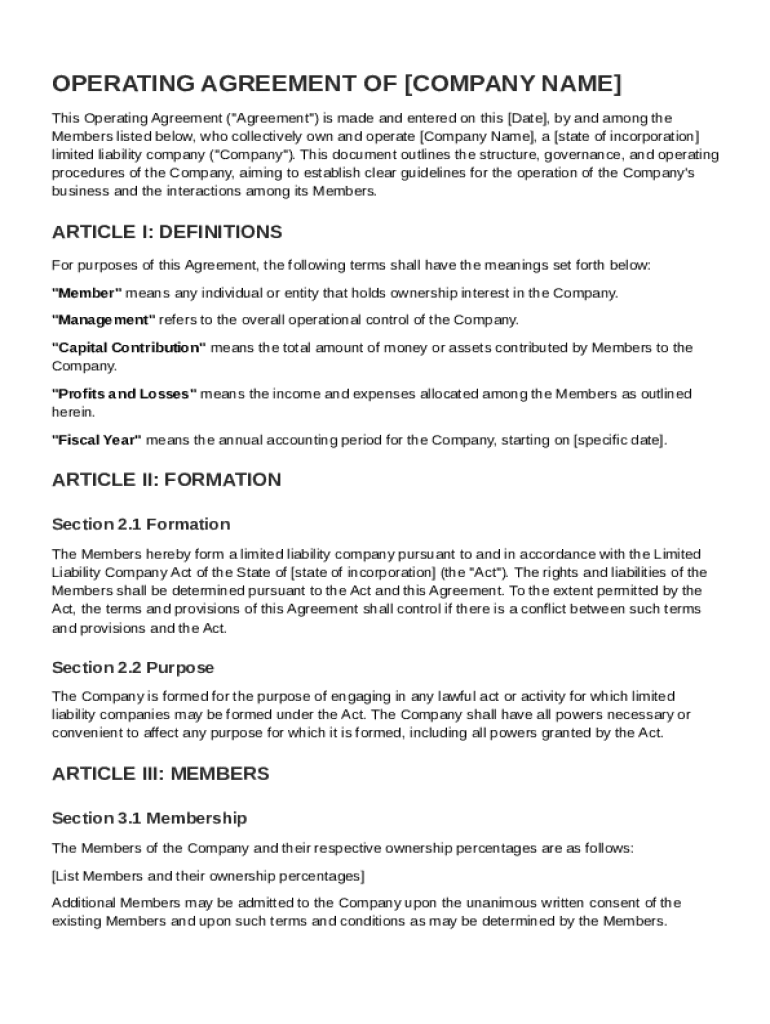







Definition & Meaning
An "Operating Agreement Template" serves as an essential document for limited liability companies (LLCs) to outline the structure, governance, and operations of the business. This template provides a framework for defining key aspects such as membership rights, voting procedures, and management roles. It ensures all members are clear about the company's formation, purpose, and operational guidelines, offering a unified approach to managing the LLC's activities.
Key Elements Defined
- Membership Rights: Describes the rights and responsibilities of each member within the LLC.
- Voting Procedures: Outlines how decisions are made, including voting rights and procedures.
- Management Structure: Details how the company will be managed, whether by members or appointed managers.
- Operational Guidelines: Establishes rules for everyday operations and interactions among members.
Using an operating agreement template helps in preventing misunderstandings by clearly documenting each aspect of the company's structure and management.
Key Elements of the Operating Agreement Template
The Operating Agreement Template is comprised of several core elements crucial for effective LLC management.
Structural Components
- Capital Contributions: Details the financial contributions of each member and their impact on ownership interests.
- Allocation of Profits and Losses: Defines how profits and losses are distributed among members, based on their ownership percentages.
Governance Features
- Meeting Protocols: Sets guidelines for how and when meetings are conducted.
- Record-Keeping Requirements: Establishes procedures for maintaining accurate records of meetings and decisions.
Legal Considerations
- Indemnification Provisions: Protects members and managers from certain liabilities.
- Amendment Processes: Describes how modifications to the agreement can be made.
- Dissolution Conditions: Outlines the process for dissolving the LLC, if necessary.
Understanding these elements is crucial for creating a comprehensive and functional operating agreement that reflects the unique needs and expectations of the business and its members.
Steps to Complete the Operating Agreement Template
To efficiently complete an Operating Agreement Template, follow these structured steps:
-
Gather Essential Information:
- Identify the LLC's name, primary office address, and state of registration.
- List all members along with their respective contributions and ownership percentages.
-
Membership and Management Details:
- Document the roles and responsibilities of members and managers.
- Define the management structure, whether member-managed or manager-managed.
-
Financial Arrangements:
- Detail capital contributions and the distribution of profits and losses.
- Establish rules for additional capital contributions if necessary.
-
Operational Guidelines:
- Set protocols for meetings, voting procedures, and record-keeping.
- Define processes for amending the agreement or admitting new members.
-
Complete Legal Sections:
- Include indemnification provisions for members and managers.
- Outline conditions and procedures for dissolving the LLC.
-
Review and Finalize:
- Have all members review the document to ensure consensus.
- Finalize by having all parties sign and date the agreement.
Following these steps ensures the operating agreement is comprehensive, legally sound, and reflective of the LLC's goals.
Legal Use of the Operating Agreement Template
An Operating Agreement Template is significant for legal and strategic reasons. It acts as an internal document to:
- Establish Governance Rules: Setting clear rules for how the LLC will be governed enhances operational efficiency and decision-making.
- Protect Members' Rights: Legally binds members to the terms and provides a basis for resolving disputes.
- Demonstrate Legal Validity: While not always required by state law, an operating agreement can serve as legal evidence of the LLC's legitimacy.
Legal Safeguards
- Protection Against Liability: Helps protect members' personal assets by clearly separating business affairs from personal finances.
- Dispute Resolution: Provides a predefined method for resolving disputes without costly litigation.
It's essential to draft the operating agreement in compliance with state-specific LLC laws to ensure its enforceability.
State-Specific Rules for the Operating Agreement Template
Operating agreements can differ significantly based on state regulations. Here are some examples:
State Variations
- California: Requires LLCs to have an operating agreement, though it need not be filed with the state.
- New York: Mandates an operating agreement but allows verbal or written formats.
- Texas: Does not require an operating agreement by law, but it is highly recommended for clarity.
Adaptation to State Laws
- Compliance with State Requirements: Ensure the template aligns with state laws concerning LLC operating agreements.
- Update for Legal Changes: Regularly update the agreement to reflect any changes in state legislation affecting LLCs.
Understanding state-specific rules is crucial to ensure the enforceability and effectiveness of the operating agreement within that jurisdiction.
Importance of the Operating Agreement Template
Drafting and adhering to an Operating Agreement Template is vital for several reasons:
Strategic Benefits
- Provides Clear Operational Guidelines: Clearly defined roles, responsibilities, and procedures promote efficient LLC management.
- Facilitates Decision-Making: Establishes a structured approach for making major business decisions.
Risk Mitigation
- Minimizes Disputes: Having a written agreement minimizes misunderstandings and potential conflicts among members.
- Reduces Legal Risks: Provides legal protection for members’ interests by clearly delineating each party’s obligations and rights.
By utilizing an operating agreement template, LLC owners can enhance the operational and strategic efficiency of their business.
Business Types That Benefit Most from the Operating Agreement Template
While operating agreements are essential for all LLCs, certain businesses gain particular advantages:
Ideal Candidates
- Multi-Member LLCs: Ensures clarity and agreement on governance and profit-sharing among members.
- Family-Owned LLCs: Assures transparent succession planning and management guidelines.
- Joint Ventures: Provides a clear framework for operation and decision-making in joint business endeavors.
Benefits for Specific Entities
- Startups: Establishes structured agreements for new businesses, crucial during early growth stages.
- Real Estate LLCs: Facilitates complex transactions by predefined financial and operational structures.
Recognizing the distinct advantages for various business types can aid businesses in maximizing the utility of operating agreements for strategic management.




