






Definition & Meaning
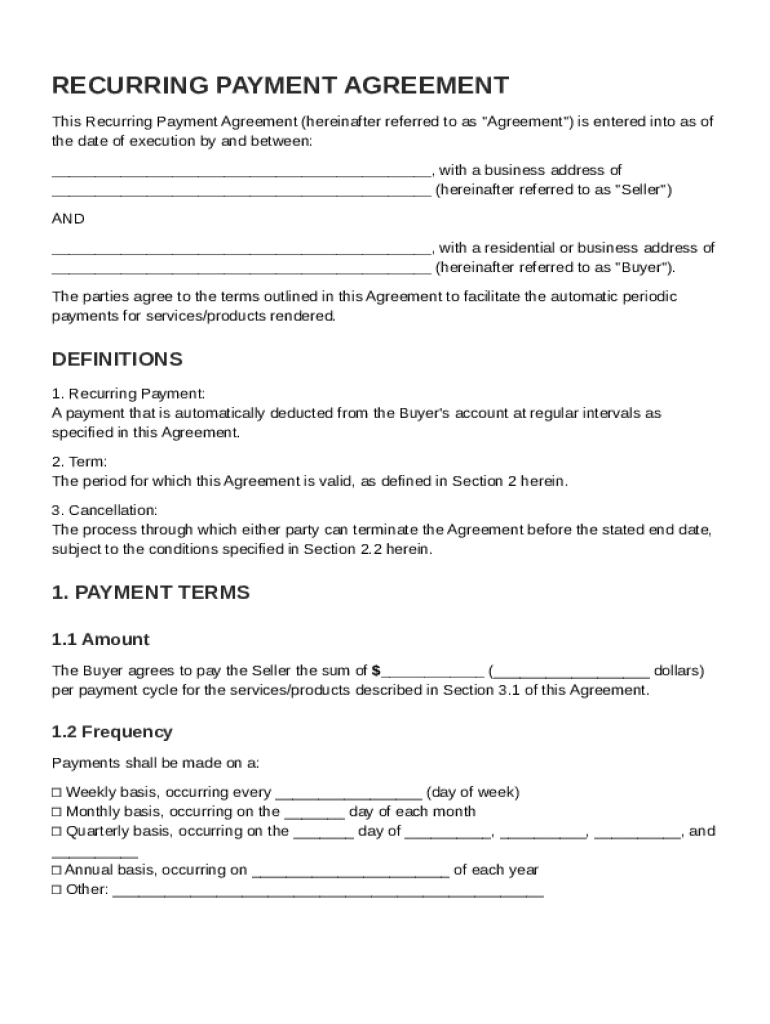
The "Recurring Payment Contract Template" is a structured document designed to facilitate automatic periodic payments between a seller and buyer for services or products. This form provides clarity and legal structure, helping both parties understand their responsibilities and rights. Key concepts covered include recurring payments, payment terms, duration of the agreement, liability limitations, and governing law, making it essential for businesses offering subscription-based services.
Key Elements of the Recurr Payment Contract Template
Payment Terms and Frequency
- Payment Amounts: Clearly specifies how much each recurring payment will be.
- Frequency: Defines how often payments are to be made (e.g., weekly, monthly).
- Payment Methods: Outlines acceptable methods like credit cards or bank transfers.
Agreement Duration
- Start and End Dates: Details when the agreement begins and ends.
- Renewal Options: Includes any automatic renewal conditions or procedures for amendment.
Responsibilities and Liabilities
- Seller's Duties: Describes services or products to be provided by the seller.
- Buyer's Obligations: Details the buyer's responsibilities to ensure payment and compliance.
Legal Use of the Recurr Payment Contract Template
Compliance with the ESIGN Act
The template supports electronic signatures, ensuring they are legally binding and compliant with the ESIGN Act. This feature allows secure electronic agreement execution, streamlining the signing process and maintaining legal validity.
Governing Law and Venue
- Law Applicable: Identifies the state laws governing the contract.
- Dispute Resolution: Provides mechanisms for resolving any potential disputes, including mediation or arbitration.
Steps to Complete the Recurr Payment Contract Template
- Download the Template: Obtain the template from trustworthy sources, such as legal document platforms.
- Fill in Essential Information:
- Enter buyer and seller details, payment terms, and service descriptions.
- Customize Terms:
- Modify clauses to fit specific needs while adhering to legal standards.
- Review and Revise:
- Have legal professionals review for accuracy and compliance.
- Sign the Agreement:
- Utilize digital signatures to finalize the contract legally.
Important Terms Related to the Recurr Payment Contract Template
Recurring Payments
- Definition: Payments scheduled at regular intervals for ongoing services or products.
- Common Usages: Utilized by subscription services, membership clubs, and installment plans.
Indemnification Clauses
- Purpose: Protects parties against losses resulting from breaches or claims.
- Example: A clause stipulating that the seller is not liable for buyer errors.
State-Specific Rules for the Recurr Payment Contract Template
Variations in Consumer Protection Laws
- California: May have additional requirements for automatic renewals or cancellations.
- New York: Could require disclosure statements for buyer's protection.
Understanding state-specific nuances is crucial for ensuring full compliance and avoiding legal issues.
Digital vs. Paper Version
Advantages of Digital Templates
- Speed and Efficiency: Faster execution and distribution through electronic formats.
- Storage and Retrieval: Easier organization and access to signed documents.
Considerations for Paper Versions
- Legal Precedents: Some clients might prefer paper due to familiarity and established practices.
- Traditional Compliance: Certain jurisdictions may still require paper contracts for specific situations.
Business Types That Benefit Most from Recurr Payment Contract Template
Subscription-Based Businesses
- Software as a Service (SaaS): Tech companies offering digital services benefit from structured, recurring billing.
- E-Commerce Subscriptions: Businesses offering product deliveries on a regular schedule use these contracts.
Professional Services
- Consulting Firms: Regular consultancy services require pre-defined payment agreements.
- Maintenance Providers: Offers for ongoing support and technical maintenance also leverage recurring contracts.
These contracts not only ensure consistent cash flow but also simplify financial forecasting and management for businesses.