
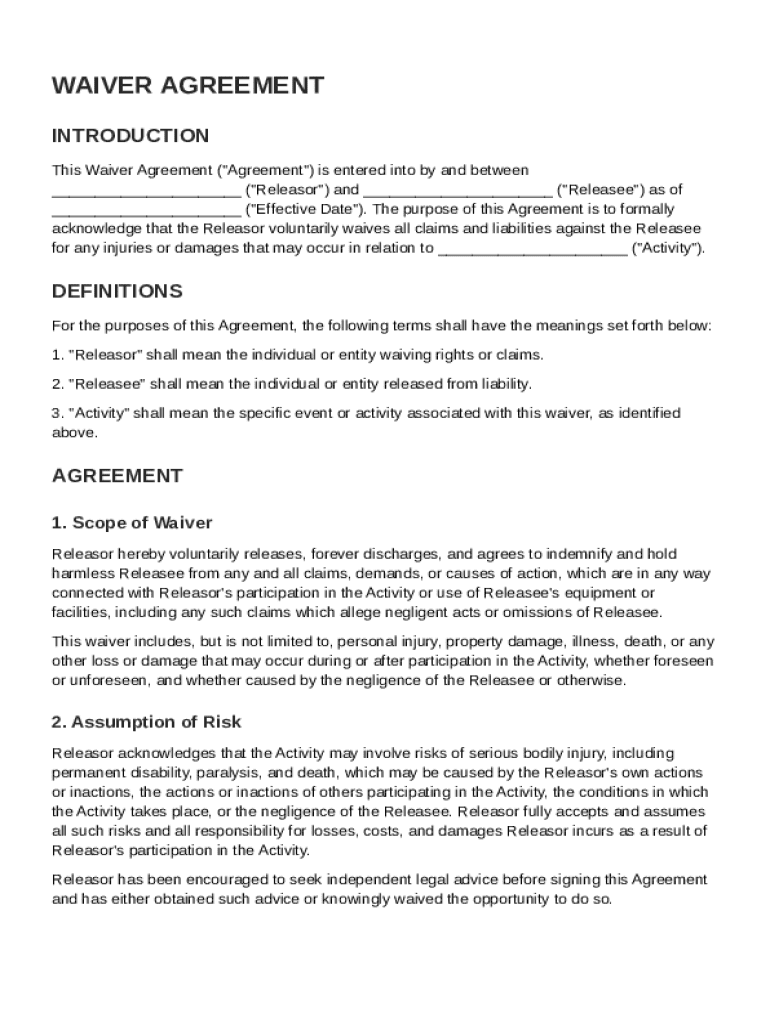







Definition & Meaning
A Waiver Agreement is a legal document between two parties: the Releasor, who gives up certain claims, and the Releasee, who is protected from those claims. This agreement is used to voluntarily relinquish rights, such as the right to sue, pertaining to a specific activity. Within the agreement, the Releasor acknowledges awareness and acceptance of the risks involved while also agreeing to indemnify the Releasee against any potential liabilities. Structured to protect both parties, the agreement ensures clear communication of all terms, responsibilities, and understandings, making it an essential tool for minimizing legal exposure.
Components of the Agreement
- Releasor and Releasee Information: Names and roles of the involved parties.
- Specified Activity: Description of the event or situation the waiver covers.
- Assumption of Risk: The Releasor acknowledges any risks associated with the activity.
- Indemnification: The Releasor agrees to compensate the Releasee for any claims arising from the agreement.
- Governing Law: The legal jurisdiction governing the agreement.
Key Elements of the Waiver Agreement Template
The Waiver Agreement Template includes several critical parts needed for a complete and functional document. These elements establish the framework that ensures the waiver is enforceable and legally binding.
Identification of Parties
The template starts by clearly identifying the parties involved, including names and any relevant identifiers, ensuring there is no ambiguity about who is participating in the agreement.
Activity Description
A detailed description of the activity or event that the waiver applies to is essential. This prevents misunderstandings and specifies the exact scope of the waiver, providing a solid reference for future disputes.
Waiver Clause
This clause covers the actual waiver of rights and includes language that clearly states the rights the Releasor is giving up. It explains the extent of the waiver and any limitations to those waivers.
Signature Block
To confirm mutual understanding and agreement with the terms, both parties must sign the document. The signature block includes spaces for signatures and dates, cementing the agreement's enforceability.
How to Use the Waiver Agreement Template
Using the Waiver Agreement Template involves several straightforward steps that ensure its proper completion and understanding. This process helps both parties create a solid and legally enforceable agreement.
Reviewing the Template
Before filling it out, carefully review the entire template to understand its provisions. Ensure that it aligns with the intended use and specific circumstances of the activity it covers. Seek legal counsel if any terms are unclear.
Customizing the Template
Customization involves filling in specific details related to the parties and the activity. Modify any sections that require specific wording to match your particular needs, paying special attention to the risks associated with the activity.
Executing the Agreement
To execute the agreement, both parties should sign and date it. Electronic signatures can be used to streamline this process, provided they comply with local electronic signature laws.
Legal Use of the Waiver Agreement Template
The legal validity of a waiver agreement depends on adherence to specific criteria, ensuring it is enforceable and compliant with relevant laws.
Compliance with State Laws
Confirm that the waiver agreement aligns with the governing laws of the state in which the activity takes place. State-specific regulations can impact enforceability, so it is crucial to consider legal nuances.
Meeting Legal Standards
A waiver must be clear and unambiguous, ensuring both parties fully understand the rights being waived. The agreement should use straightforward language to avoid possible misinterpretations, making it a robust legal document.
Examples of Using the Waiver Agreement Template
The Waiver Agreement Template finds application in a variety of scenarios, showcasing its flexibility as a legal tool.
Sports and Recreation
In sports and recreational activities, waivers are frequently used to protect organizations from liability for participants' injuries. This is particularly important in high-risk sports, where participants knowingly assume risk.
Event Hosting
Event organizers often use waivers for participants and attendees, limiting the hosts' liability for accidents or incidents during the event. This allows for smoother event management and risk mitigation.
Volunteer Activities
Organizations often require volunteers to sign waivers to protect against claims arising from injuries sustained while volunteering. This protects the organization while allowing volunteers to engage with clear expectations.
State-Specific Rules for the Waiver Agreement Template
Waiver agreements are subject to state laws, which can vary significantly, affecting how they are crafted and enforced.
Notable Variations
- California: Places strict requirements on waivers related to inherent risks associated with an activity.
- New York: Requires clear, explicit language stating the nature of the risks involved.
Recommendations
When drafting a waiver, consult state laws or a legal professional to ensure compliance and address any state-specific requirements that may impact the waiver's enforceability.
Important Terms Related to Waiver Agreement Template
Understanding the terminology used in waiver agreements enhances comprehension and effective use of the document.
Common Terms
- Indemnity: A contractual obligation to compensate for loss or damage.
- Liability: Legal responsibility for one's actions or omissions.
- Negligence: Failure to exercise appropriate care, leading to potential harm or damage.
Through clear definitions, parties can better understand their rights and obligations under the waiver agreement, ensuring a meaningful and legally sound document.




