
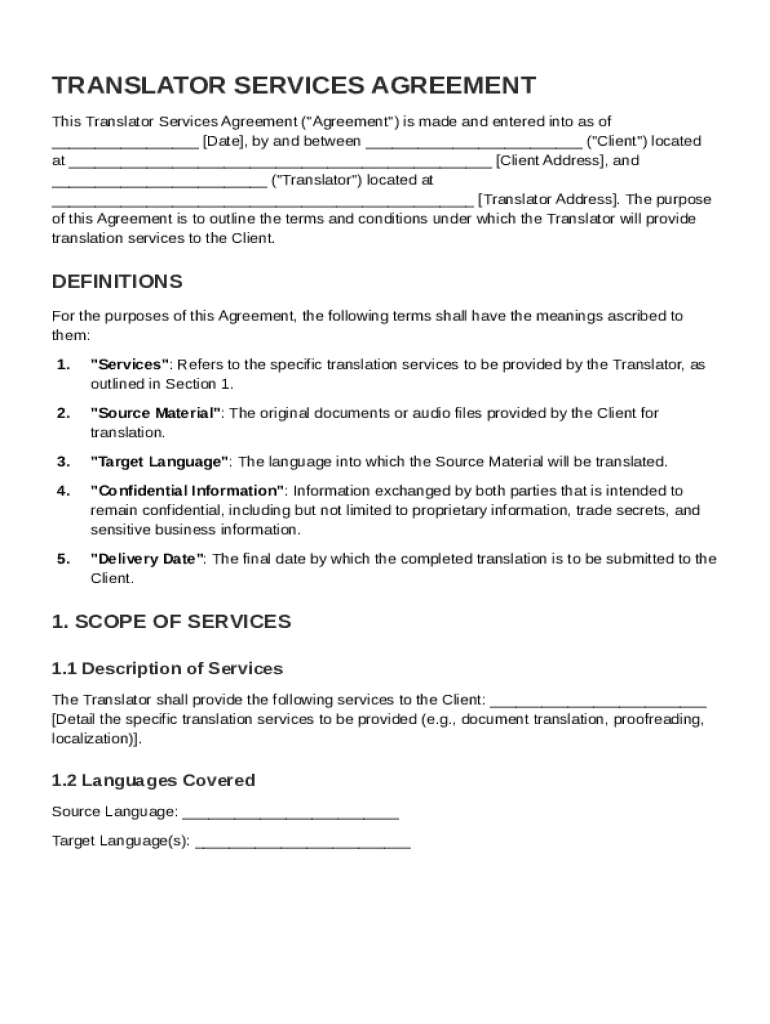







Key Elements of the Translator Contract Template
The Translator Contract Template is a foundational document structured to establish clear terms and conditions between a translator and client. It includes several key elements that ensure all parties are aligned and protected. These components are crucial for a mutual understanding and smooth transactional relationship.
-
Scope of Services: Clearly defines the range of services to be provided by the translator. This includes the type of documents to be translated, the language pairs, and any additional tasks such as editing or proofreading.
-
Compensation Details: Specifies the payment structure, including the rate of compensation, payment schedule, and any penalties for late payment. It may also detail expenses covered by the client, such as travel or materials.
-
Confidentiality Obligations: Outlines the responsibility of the translator to protect sensitive information contained within the documents being translated. It sets parameters for non-disclosure and privacy to safeguard the client's proprietary information.
-
Intellectual Property Rights: Addresses the ownership of the translated works. Typically, the client owns the translation and all related intellectual property rights once payment is made in full.
-
Termination Conditions: Details the circumstances under which either party can terminate the agreement. It protects both translator and client against unforeseen breaches or dissatisfaction with service quality.
-
Liability Limits: Establishes the extent of liability for errors or omissions in translation. This often includes clauses that limit the translator’s responsibility to correct issues without additional charge.
How to Use the Translator Contract Template
This section explores the practical application of the Translator Contract Template. Knowing how to effectively use this template ensures that it serves as a robust legal tool and reference point for both parties.
-
Customize the Template: Begin by tailoring the Translator Contract Template to reflect the specifics of the agreement. Input correct details for both parties, define the scope of work, and adjust clauses as needed.
-
Review Key Sections: Pay particular attention to sections on payment terms, confidentiality, and intellectual property to ensure they meet the needs and expectations of both parties.
-
Seek Legal Advice: It is advisable for both parties to consult with legal professionals to verify that the template complies with jurisdictional law and adequately protects their interests.
-
Sign and Distribute: Once all terms are clear and agreed upon, both parties should sign the document. Each party should retain a copy for their records.
Legal Use of the Translator Contract Template
Understanding the legal dimensions of the Translator Contract Template is essential to avoid potential disputes. Compliance with legal standards ensures the contract's enforceability and integrity.
-
Adhering to Local Laws: The contract should align with national and local laws. This includes labor laws relating to independent contractors versus employees.
-
Preserving Contractual Validity: For the contract to be legally binding, it must include all necessary legal components such as offer, acceptance, consideration, and mutual intent.
-
Dispute Resolution Provisions: Incorporate mechanisms for resolving disagreements, such as arbitration or mediation, to provide a structured approach to addressing conflicts.
Who Typically Uses the Translator Contract Template
The Translator Contract Template is widely used across various sectors requiring language services. Identifying typical users helps understand the document's adaptability and relevance.
-
Freelance Translators: Independent translators who provide services to different clients benefit from the clarity and protection the template offers.
-
Translation Agencies: Agencies that manage multiple contracts with corporate clients and translators use this template to standardize agreements.
-
Corporate Clients: Businesses engaging translators for international operations rely on the template to ensure consistent service terms and quality assurance.


Steps to Complete the Translator Contract Template
Completing the Translator Contract Template involves a series of methodical steps that ensure accuracy and clarity. This section provides a step-by-step guide to ensure a smooth process.
-
Information Gathering: Collect all necessary details from both parties, including personal information, service scope, deadlines, and budget.
-
Template Customization: Insert the gathered information accurately into the relevant sections of the template.
-
Review and Edit: Carefully read through the completed document to confirm accuracy and comprehensiveness. Edit any section that may require clarification or adjustment.
-
Legal Review: Have the completed contract reviewed by a legal expert to ensure compliance and enforceability.
-
Final Approval and Signature: Once both parties are satisfied, sign the contract to make it legally binding. Ensure all signatories receive a copy of the completed document.
Important Terms Related to the Translator Contract Template
Grasping the terminology used within the Translator Contract Template is vital for proper interpretation and execution of the contract.
-
Client: The party seeking translation services, typically responsible for providing source material and compensation.
-
Translator: The service provider tasked with converting materials from one language to another while maintaining meaning and context.
-
Source Text: The original document or content that requires translation.
-
Target Language: The language into which the source text is to be translated.
State-Specific Rules for the Translator Contract Template
State-specific variations of the Translator Contract Template might be necessary to adhere to regional legal requirements. This section highlights possible differences.
-
Employment Classification: Some states have specific criteria for distinguishing contractors from employees, impacting how the template is structured.
-
Intellectual Property Regulations: Variations in intellectual property laws across states may necessitate specific clauses regarding the use and distribution of translated materials.
-
Payment and Tax Laws: Consider state taxation and labor laws which might influence compensation structuring and reporting.
Examples of Using the Translator Contract Template
Real-world examples provide insight into the applicability of the Translator Contract Template across different contexts.
-
Educational Partnerships: Universities may enter into contracts with translators for the development of multilingual educational materials.
-
Legal Firms: Law firms might engage translators to facilitate the translation of legal documents for international clients.
-
Publishing Houses: Publishers often require translation services for broadened market reach, ensuring legally compliant translations for literary works.




