01. Edit your form online
Type text, add images, blackout confidential details, add comments, highlights and more.

Type text, add images, blackout confidential details, add comments, highlights and more.

Draw your signature, type it, upload its image, or use your mobile device as a signature pad.

Send it via email, link, or fax. You can also download it, export it or print it out.
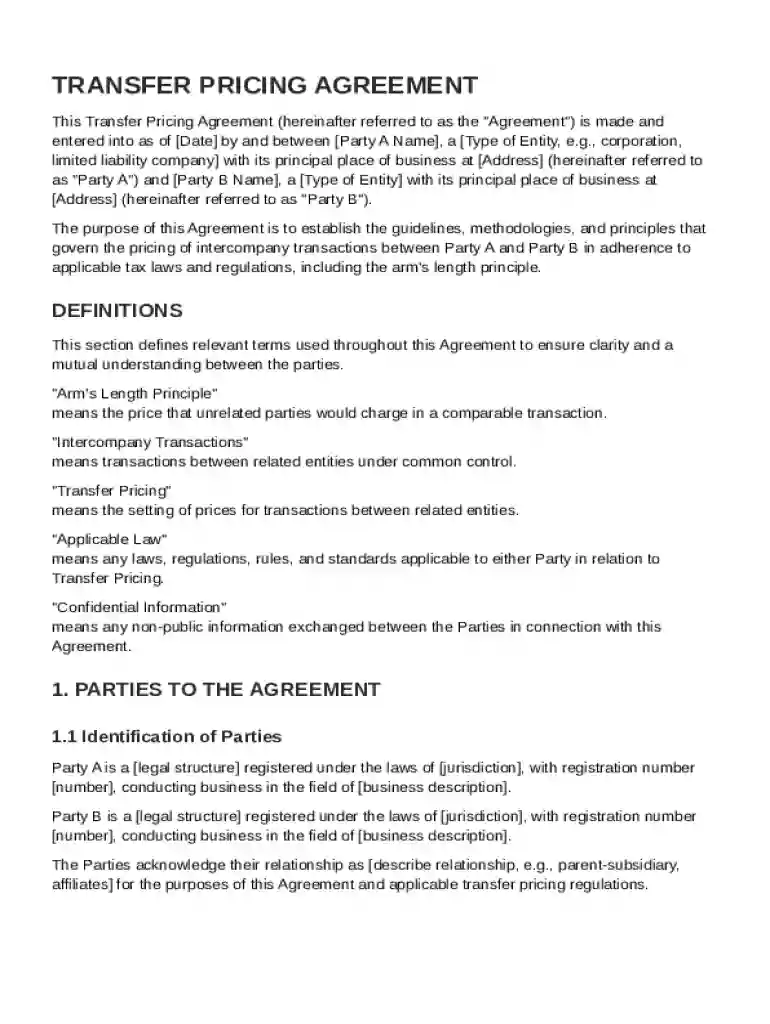
A Transfer Pricing Agreement Template is a foundational document used to establish pricing methodologies for transactions between related parties within multinational enterprises. These agreements ensure that intercompany transactions comply with international tax regulations and adhere to the arm's length principle, which mandates that transactions occur as if they were between unrelated third parties. The agreement provides a structured approach to documenting these transactions, reducing the risk of tax audits and disputes. It is essential for aligning pricing strategies with global compliance standards.
The Transfer Pricing Agreement Template serves several critical functions. First, begin by tailoring the template to fit the specific needs of your organization. This includes specifying the parties involved in the transactions and outlining the range of transactions covered. Next, define the pricing methodologies employed, such as cost-plus or resale price methods, ensuring they align with the arm's length standard. Lastly, incorporate any needed clauses regarding adjustments, confidentiality, and dispute resolution, customizing the template to address your organization’s risk management strategies and operational context.
The legal significance of a Transfer Pricing Agreement Template lies in its ability to mitigate risk by formally documenting the terms and conditions of intercompany transactions. According to U.S. tax regulations under the IRS, detailed documentation helps defend against challenges during audits. The template must align with the Internal Revenue Code and the OECD guidelines to offer robust legal protection. Proper usage entails routine reviews and adjustments, ensuring that the template remains up-to-date with any legislative changes impacting international transfer pricing laws.
Organizations with multinational operations frequently utilize the Transfer Pricing Agreement Template. It is a vital tool for corporations with subsidiaries in different countries, especially in industries such as pharmaceuticals, technology, manufacturing, and finance. Tax professionals and financial advisors within these corporations are primarily responsible for developing and maintaining these agreements, ensuring compliance with international and domestic tax regulations. Transfer pricing consultants may also assist in crafting and optimizing these agreements to better align them with company goals and local tax laws.


The IRS provides comprehensive guidelines to ensure that transfer pricing arrangements adhere to the arm’s length principle. The guidelines emphasize proper documentation, and the use of comparable data to validate the pricing of intercompany transactions. The Transfer Pricing Agreement Template must incorporate these elements to satisfy IRS requirements. It is crucial to provide documentation such as comparability analyses and data supporting the chosen pricing methodologies. Non-compliance may result in penalties, audits, and adjustments, reinforcing the necessity of precise adherence to these IRS guidelines.
To effectively use a Transfer Pricing Agreement Template, gather and maintain several essential documents:
Comprehensive documentation increases the template's robustness, facilitates compliance review, and reduces the risk of penalties from tax authorities.
At DocHub, your data security is our priority. We follow HIPAA, SOC2, GDPR, and other standards, so you can work on your documents with confidence.