




Definition & Meaning
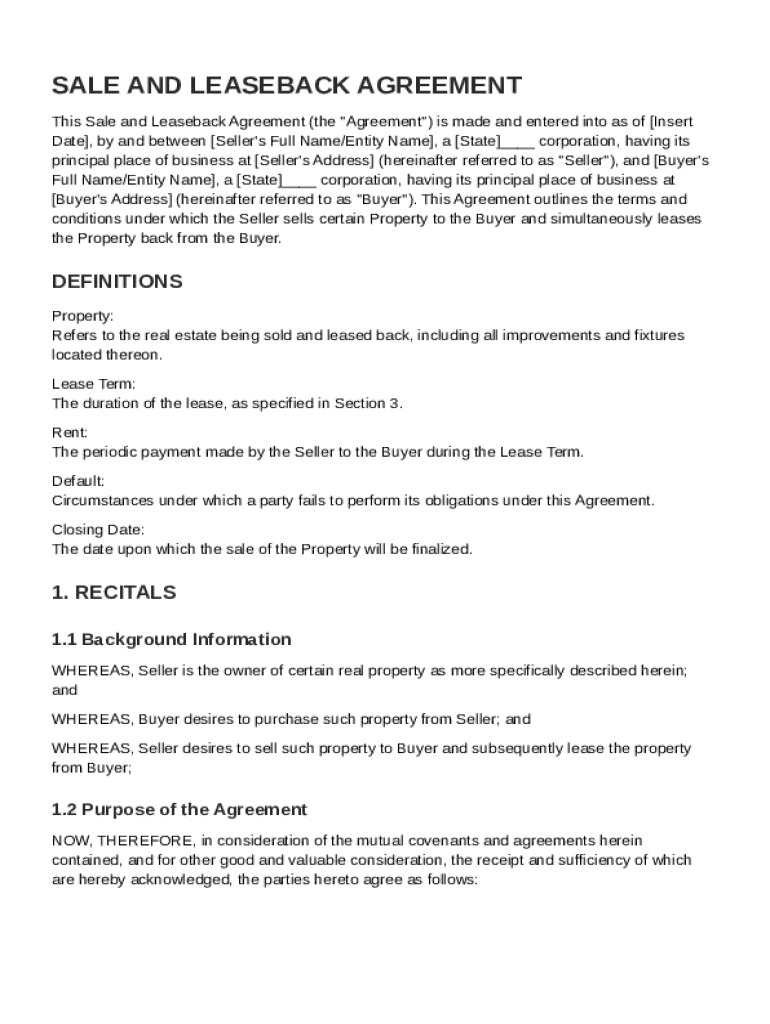
A Sale and Leaseback Agreement is a legal contract where a Seller sells a property to a Buyer and leases it back simultaneously. This type of agreement allows the Seller to unlock the value of their asset while retaining the use of the property. It outlines critical terms such as the sale price, lease duration, rent amount, and responsibilities of each party during the lease period. The agreement helps to improve liquidity for businesses or individuals while the property remains in their operational control.
Key Elements of the Sale and Leaseback Agreement Template
- Purchase and Sale Details: Includes information about the property being sold, the sale price, and the closing date.
- Leaseback Provisions: Specifies the lease term, rent payment schedule, and any renewal options available to the Seller.
- Property Maintenance: Details the responsibilities of the Seller (lessee) to maintain the property and cover expenses like repairs and utilities.
- Rights and Obligations: Defines the obligations of both the Seller and Buyer, ensuring clarity about property use, insurance requirements, and compliance with local laws.
- Default and Termination Conditions: Outlines scenarios where the lease may be terminated early, including breaches of the agreement.
- Miscellaneous Provisions: Contains clauses related to dispute resolution, amendments to the contract, and other legal considerations.
How to Use the Sale and Leaseback Agreement Template
- Identify the Parties: Clearly state the names and contact details of the Seller and Buyer.
- Property Description: Provide a detailed description of the property, including its address and any identifying features.
- Draft the Sale Agreement: Fill in sections related to the sale price, closing conditions, and any warranties provided by the Seller.
- Leaseback Terms: Define the lease duration, rental amount, payment frequency, and any options to extend or renew the lease.
- Signatures and Notarization: Ensure all parties sign the agreement and have it notarized if required by state laws.
Steps to Complete the Sale and Leaseback Agreement Template
-
Gather Required Information:
- Property details, including legal description
- Financial terms, like sale price and rent
- Contact information for all parties involved
-
Customize the Template:
- Add specific terms and conditions relevant to your agreement
- Adjust language based on any unique requirements or legal considerations
-
Review and Revise:
- Double-check for accuracy and completeness
- Ensure all legal and financial terms are reflected accurately
-
Legal Review:
- Consult with legal counsel to ensure compliance with state and federal regulations
-
Finalize and Execute:
- Obtain necessary signatures
- File copies as needed with relevant entities
Important Terms Related to Sale and Leaseback Agreement Template
- Lessee: The Seller who sells the property but continues to lease it back.
- Lessor: The Buyer who purchases the property and leases it back to the Seller.
- Net Lease: Arrangement where the lessee is responsible for additional costs like property taxes and insurance.
- Capital Gain: The profit from the sale of the property, subject to tax consideration under IRS guidelines.
- Right of First Refusal: A clause that allows the Seller to match any third-party offer to purchase the property during or after the lease term.
Who Typically Uses the Sale and Leaseback Agreement Template
- Commercial Entities: Businesses looking to improve liquidity by converting fixed assets into cash.
- Real Estate Investors: Buyers interested in acquiring properties with immediate rental income.
- Property Owners in Distressed Situations: Individuals needing to access the value of their properties quickly without losing operational control.
- Municipalities or Nonprofits: For financial management or fundraising purposes through asset liquidation while retaining usage rights.

State-Specific Rules for the Sale and Leaseback Agreement Template
- Differing Notary Requirements: Some states may require notarization of agreements.
- Tenant-Landlord Laws: Varying protections and rights depending on jurisdiction.
- Disclosure Obligations: States have differing rules on what must be disclosed in such agreements, including environmental hazards.
Examples of Using the Sale and Leaseback Agreement Template
- Example 1: Business Expansion: A company sells office property to raise funds for growth but leases it back to maintain operations without relocating.
- Example 2: Financial Restructuring: A retail chain liquidates real estate holdings to reduce debt, continuing to lease as a tenant.
- Example 3: Real Estate Portfolio Management: Investors buy and leaseback properties to diversify their income while offering sellers liquidity.
Legal Use of the Sale and Leaseback Agreement Template
- Compliance with the ESIGN Act: Agreements signed electronically within compliant platforms like DocHub are legally binding.
- State and Federal Regulations: Must comply with zoning laws, real estate regulations, and Fair Housing Act provisions.
- Title Transfer Requirements: Proper documentation and recording with local government agencies to effectuate the sale transfer.