






Definition & Meaning
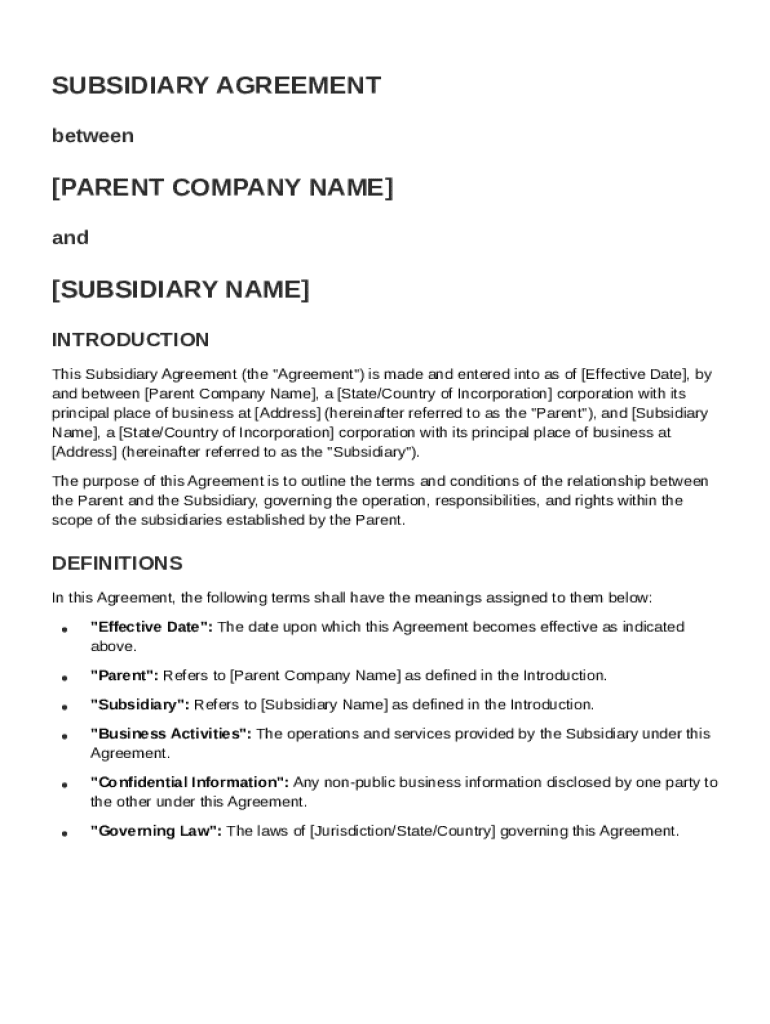
The Subsidiary Agreement Template is a legal document that establishes the relationship between a parent company and its subsidiary. This template outlines the specific terms of operation, governance structure, rights, and responsibilities of both parties involved. It serves as a framework for conducting business activities, providing a clear understanding of financial arrangements, confidentiality obligations, indemnification provisions, and dispute resolution processes. The agreement ensures that the subsidiary operates in compliance with the applicable laws and regulations, safeguarding the interests of all stakeholders.
How to Use the Subsidiary Agreement Template
To effectively use the Subsidiary Agreement Template, begin by reviewing the document to understand each section's purpose and requirements. Customize the template to reflect the unique circumstances and agreements between your parent company and subsidiary. Consider seeking legal advice to ensure compliance with local, state, and federal regulations. Once customized, both parties should review the document thoroughly before signing to ensure mutual understanding and acceptance of the terms outlined.
Steps to Customize
- Identify Key Parties: Clearly state the names and roles of the parent company and subsidiary.
- Outline Governance: Define the governance structure, including decision-making processes and leadership roles.
- Specify Financial Arrangements: Detail how profits, losses, and financial responsibilities will be shared or managed.
- Set Confidentiality Terms: Incorporate clauses regarding the protection of sensitive information.
- Include Dispute Resolution: Establish mechanisms for resolving disagreements that may arise.
Key Elements of the Subsidiary Agreement Template
The key elements of a Subsidiary Agreement Template ensure comprehensive coverage of all necessary aspects. These crucial components include:
- Governance Structure: Defines the management hierarchy and decision-making processes.
- Financial Provisions: Details financial arrangements, responsibility for debts, and profit-sharing.
- Rights and Responsibilities: Clarifies duties of both the parent company and subsidiary.
- Confidentiality Clauses: Ensures sensitive data and proprietary information are protected.
- Indemnification Provisions: Specifies the conditions under which one party will cover losses for the other.
- Dispute Resolution Procedures: Provides a blueprint for handling conflicts.
Important Terms Related to Subsidiary Agreement Template
Understanding the terminology within the Subsidiary Agreement Template is vital for all parties involved. Key terms often include:
Governance Structure
Refers to how the subsidiary is managed and operated, outlining roles, responsibilities, and authority lines.
Indemnification
The process or condition under which one party agrees to compensate for damages or losses incurred by another party.
Confidentiality
Clauses that require both parties to keep certain information private and not disclose it to unauthorized third parties.
Legal Use of the Subsidiary Agreement Template
The Subsidiary Agreement Template must be used in compliance with legal standards. This involves ensuring that the terms align with local, state, and federal laws. It's recommended to engage a legal professional to validate the language of the agreement and to make certain that it does not contain any unenforceable provisions. Legal oversight helps in mitigating the risk of disputes and ensures that all parties have a clear understanding of their obligations under the agreement.
Business Types That Benefit Most from Subsidiary Agreement Template
Several business structures can benefit from utilizing a Subsidiary Agreement Template, including:
- Corporations: Where establishing subsidiaries allows for diversification and risk management.
- Limited Liability Companies (LLCs): To create separate legal entities for specialized business activities.
- Partnerships: In situations where a joint venture would form a subsidiary.
These businesses can leverage the agreement to clarify operational boundaries, manage financial risks, and ensure compliance across different jurisdictions.
Steps to Complete the Subsidiary Agreement Template
Completing the Subsidiary Agreement Template involves several steps to ensure it meets both parties’ needs:
- Gather Information: Obtain all necessary details regarding both the parent company and subsidiary.
- Review the Template: Understand each section and gather any additional information specific to your agreement.
- Customize the Document: Tailor the template to reflect the specific terms agreed upon between the parties.
- Review Legal Compliance: Have a legal professional review the document to ensure it adheres to legal requirements.
- Finalize the Agreement: Have both parties review and sign the agreement to formalize the terms.
Who Typically Uses the Subsidiary Agreement Template
The template is typically used by businesses that have or are planning to establish a subsidiary. This includes corporate entities, financial institutions, and any other business structure pursuing strategic expansion or diversification. It provides a clear legal framework, helping these entities maintain control over the subsidiary while optimizing operational efficiencies.