




Key Elements of the Farmland Lease Agreement Template
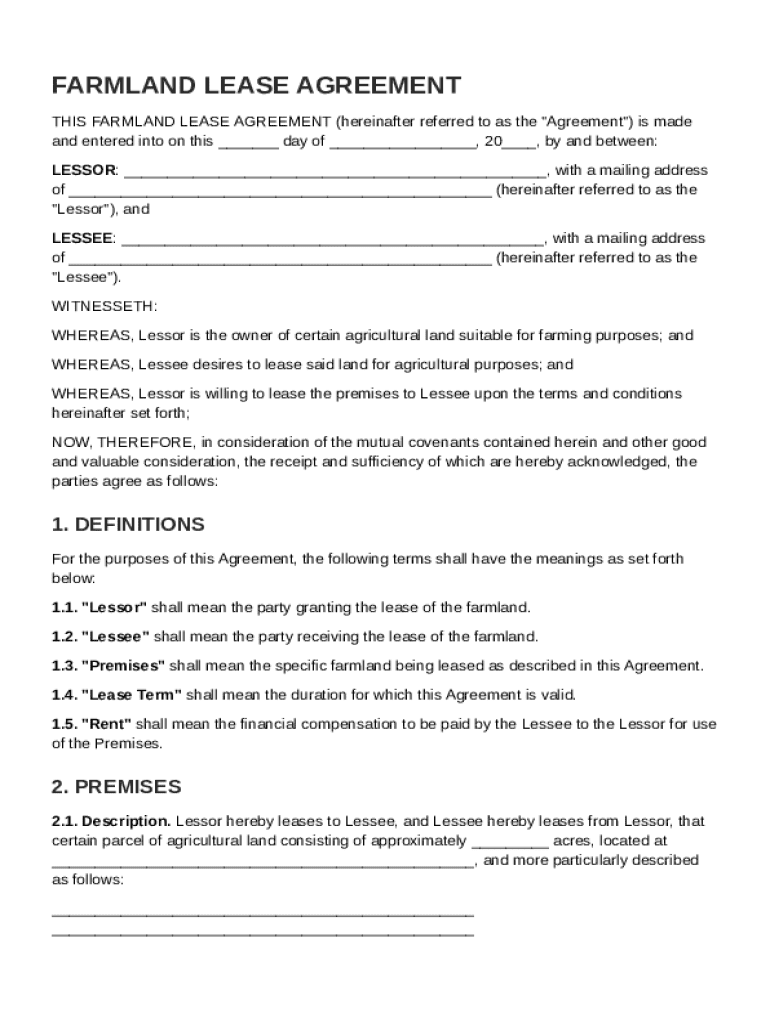
A Farmland Lease Agreement Template serves as a fundamental tool in defining the terms of use between a lessor and a lessee. It encompasses critical components that ensure both parties have clear expectations from the outset. The agreement typically includes:
-
Definitions and Terms: Establishes clear definitions for critical terms used throughout the document. This section aims to prevent any misunderstandings by providing explicit descriptions of terms like "Lease Term," "Rent," "Premises," and others.
-
Premises Description: Details the specific area of farmland being leased. Accurate descriptions are crucial for avoiding disputes related to boundaries or property usage. The description may include maps or surveys to provide visual clarity.
-
Lease Term and Renewal: Outlines the duration of the lease and any conditions for renewal. Clearly stating the start and end dates, along with any options to extend, ensures both parties are aligned on the timeframe.
-
Rent Payment Details: Specifies the rent amount, due dates, and methods of payment. This section might also encompass provisions for late payments or adjustments due to changes in property tax or utility rates.
-
Permitted Uses of the Land: Clearly delineates acceptable and prohibited activities on the leased land. This ensures the lessee uses the property in a manner that both parties have agreed upon, such as agricultural, recreational, or other specified uses.
Steps to Complete the Farmland Lease Agreement Template
Completing a Farmland Lease Agreement Template involves several key steps to ensure thoroughness and legality. Following are guidelines to effectively fill out this document:
-
Gather Necessary Information: Collect all required personal and property details, including names, addresses, and property identifiers such as plot numbers or coordinates.
-
Define Lease Terms: Discuss and agree on the lease duration, rental payment terms, and any renewal options. Clearly outline these terms to prevent future disputes.
-
Specify Land Use and Restrictions: Clearly state the permitted uses and any restrictions on the land. It is vital to align the terms with local regulations and both parties' expectations.
-
Negotiate and Document Responsibilities: Define the responsibilities of both parties concerning maintenance, repairs, and improvements of the land. Include any agreements on who bears the costs associated with these tasks.
-
Final Review and Signature: Before signing, ensure both parties have reviewed the finalized document thoroughly. Consider having a legal professional assess the agreement to validate compliance with relevant laws.
Legal Use of the Farmland Lease Agreement Template
The legal enforceability of a Farmland Lease Agreement is grounded in compliance with state and federal laws. It is essential to ensure that:
-
Compliance with State Laws: Review the lease terms against state-specific regulations governing farmland leases. This may involve clauses related to environmental conservation, zoning laws, and agricultural practices.
-
Incorporation of Mandatory Clauses: Incorporate required clauses, such as the governing law clause, which specifies the legal jurisdiction and forum for any potential disputes.
-
Signature Validity: Ensure all parties sign the agreement in the presence of witnesses, if necessary, to uphold its legality. Additionally, notarization might be required in some jurisdictions for added legal protection.
Important Terms Related to Farmland Lease Agreement Template
Understanding key terminologies within a Farmland Lease Agreement is crucial for both parties. Some essential terms include:
-
Lessee and Lessor: The lessee is the individual or entity leasing the land, while the lessor is the property owner. These terms define the roles and responsibilities within the agreement.
-
Maintenance and Improvements: These clauses specify who is responsible for maintaining the property and any improvements or alterations—vital for planning and budgeting by both parties.
-
Term and Termination: Provides details on the lease duration and conditions for termination by either party. This clause protects both parties by allowing for the lease to end upon mutual agreement or breach of contract.
State-Specific Rules for the Farmland Lease Agreement Template
While the general structure of farmland lease agreements is consistent, specific state rules can impact their terms. Consider:
-
Zoning and Land-Use Regulations: Some states have strict zoning laws that dictate how farmland can be utilized. Ensure the lease complies with these laws to avoid legal complications.
-
Environmental Concerns: States may impose regulations related to soil conservation, water usage, and chemical applications. Address these in the lease to ensure sustainable practices.
-
Tax Implications: States might offer tax incentives for certain types of agricultural use. Ensure that the lease terms capitalize on these where applicable.
Who Typically Uses the Farmland Lease Agreement Template
The Farmland Lease Agreement Template is utilized by various parties involved in agricultural and land management sectors, including:
-
Individual Farmers: Often lease additional farmland to expand operations without the financial burden of purchasing land outright.
-
Agribusinesses: Large agricultural corporations may lease land to optimize resource allocation and maintain operational flexibility.
-
Landowners: Those who own farmland but do not engage directly in farming activities. Leasing allows them to generate income from their property without involvement in farming operations.

Software Compatibility
In the digital age, software compatibility plays a crucial role in document management. When using a Farmland Lease Agreement Template:
-
DocHub Integration: The template can be seamlessly worked on using DocHub, known for its compatibility with various file formats such as PDF, DOC, and TXT.
-
Cloud Storage Options: Users can import and export the template from and to various cloud services like Google Drive and Dropbox, ensuring easy access and sharing capabilities.
-
Editing and Collaboration: DocHub supports real-time editing and annotation, which is ideal for collaborative efforts between lessor and lessee during lease negotiations.
Examples of Using the Farmland Lease Agreement Template
Real-world scenarios highlight the application and utility of the Farmland Lease Agreement:
-
Seasonal Leasing for Crop Cultivation: Farmers might lease land seasonally for crop rotation, ensuring optimal use of farmland without long-term commitments.
-
Leasing for Livestock Grazing: Ranchers may lease additional pastureland for grazing to manage livestock more effectively without overburdening owned resources.
-
Organic Farming Ventures: Entrepreneurs aiming to start organic farming enterprises might lease certified organic farmland to meet regulatory standards from the outset.
Through these examples, the varied applications of a farmland lease become apparent, demonstrating its adaptability to different agricultural needs and contexts.