






Definition and Meaning of a Corporate Lease Agreement
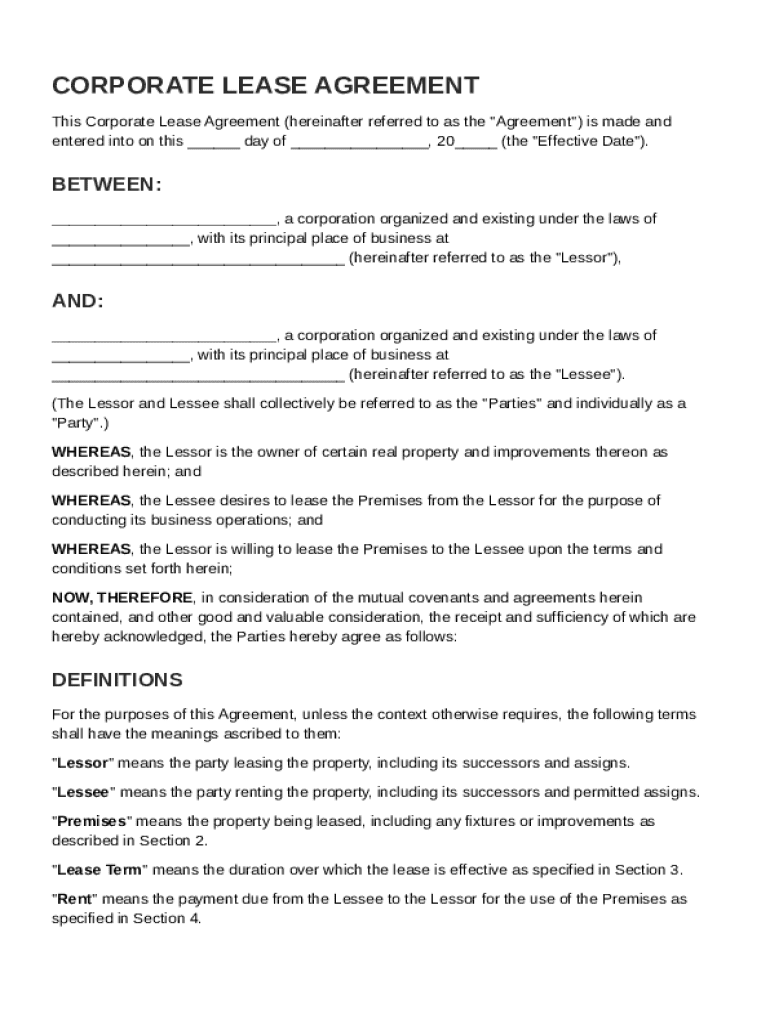
A Corporate Lease Agreement Template is a standardized legal document that outlines the terms under which a corporation (the Lessee) leases property from another corporation (the Lessor) for business operations. This agreement serves to formalize the relationship between the two parties, detailing their rights and obligations throughout the lease term. Key aspects include definitions of important terms, conditions related to the use of the premises, and the responsibilities of both parties regarding maintenance and alterations.
Key Components of the Agreement
- Premises Details: Clearly defines the property, including size, location, and permitted uses.
- Lease Duration: Specifies the start and end dates of the lease period, including renewal options.
- Rent Payment Terms: Outlines the amount, frequency, and method of rent payments.
- Security Deposit: Details the initial deposit required to secure the lease.
- Maintenance Responsibilities: Allocates upkeep duties between the Lessee and Lessor.
- Alteration Permissions: Specifies conditions under which the Lessee may modify the property.
- Termination Conditions: Lists circumstances that may lead to lease termination.
- Indemnification Clauses: Provides legal protection for both parties against certain risks.
- Governing Law: Identifies the legal jurisdiction applicable to the agreement.
Steps to Complete the Corporate Lease Agreement Template
Filling out a Corporate Lease Agreement Template requires careful attention to detail to ensure all sections are correctly addressed.
- Identify Parties Involved: Clearly state the legal names and contact information of both the Lessee and the Lessor.
- Describe the Premises: Provide a comprehensive description of the property being leased.
- Specify the Lease Duration: Define the term of the lease, including the start and end dates.
- Outline Payment Terms: Include the rent amount, payment schedule, and preferred methods of payment.
- Detail Security Deposit: Mention the security deposit amount and conditions for its return.
- Assign Maintenance Duties: Clearly delineate which party is responsible for property maintenance.
- List Alteration Permissions: Specify if and how the Lessee can alter the leased premises.
- Include Termination Clauses: Outline the scenarios under which the lease can be terminated.
- Summarize Indemnification Terms: Detail the conditions under which parties indemnify each other.
- Confirm Governing Law: Declare the state's legal framework governing the lease.
Automation and Streamlining
Using platforms like DocHub can automate form filling and streamline editing, sharing, and signing processes. Digital templates can be customized, shared with collaborators for input, and securely signed—all while ensuring document integrity and compliance with legal standards.
Importance of the Corporate Lease Agreement Template
Utilizing a Corporate Lease Agreement Template offers numerous advantages:
- Legal Clarity: Clearly defines the responsibilities and rights of each party, reducing legal disputes.
- Efficiency: Streamlines the lease preparation process, saving time and resources.
- Standardization: Ensures that all necessary legal terms are consistently addressed in multiple agreements.
- Compliance: Adheres to state-specific legal requirements, minimizing the risk of non-compliance penalties.
Digital vs. Paper Version of the Corporate Lease Agreement
Choosing between a digital and a paper version of the Corporate Lease Agreement depends on the needs and resources of the parties involved.
Advantages of the Digital Version
- Accessibility: Easily accessible from anywhere using cloud-based platforms.
- Editable: Allows for easy modifications and updates without reprinting.
- Integration: Compatible with other digital tools for a cohesive document management system.
- Eco-friendly: Reduces paper use and promotes sustainable practices.
Benefits of the Paper Version
- Traditional Backup: Provides a hard copy backup for reference if digital access is compromised.
- Personal Preference: Some parties may prefer handling physical documents for familiarity or legal requirements.
Important Terms Related to the Corporate Lease Agreement Template
Understanding key terms is crucial for effectively using the Corporate Lease Agreement Template.
- Lessee: The corporation leasing the property.
- Lessor: The corporation owning the property.
- Default: Failing to fulfill obligations as outlined in the lease.
- Renewal Option: The Lessee's right to extend the lease term under specified conditions.
- Sublease: Allowing another entity to lease part or all of the leased premises.
- Net Lease: A type of lease where the Lessee pays additional costs like taxes, insurance, and maintenance.
Legal Use of the Corporate Lease Agreement Template in the U.S.
Within the United States, Corporate Lease Agreements must comply with federal and state regulations to be legally enforceable.
Federal Guidelines
- ESIGN Act: Supports the use of electronic signatures, making digital lease agreements legally binding.
- Interstate Commerce: Federal laws oversee agreements between corporations in different states.
State-Specific Considerations
- State Lease Regulations: Each state may have specific statutes regarding lease agreements, including notice periods, eviction processes, and rental limits.
- Jurisdictional Law: The agreement should specify which state's laws will govern the contract.
How to Use the Corporate Lease Agreement Template
Using a Corporate Lease Agreement Template can simplify the document creation process for businesses.
Practical Steps
- Select a Template: Choose a template that's compatible with your business structure and jurisdiction.
- Customize the Template: Modify sections to accurately reflect the details and nuances of the lease agreement.
- Collaborate and Review: Share the document with legal advisors or stakeholders for input and approval.
- Finalize and Sign: Use digital tools to execute the agreement with electronic signatures for convenience and security.
Using Digital Platforms
DocHub provides a comprehensive solution for managing Corporate Lease Agreement Templates, offering features like real-time collaboration, electronic signatures, and secure document storage—all designed to enhance the efficiency of document workflows for corporate leases.