Definition & Meaning
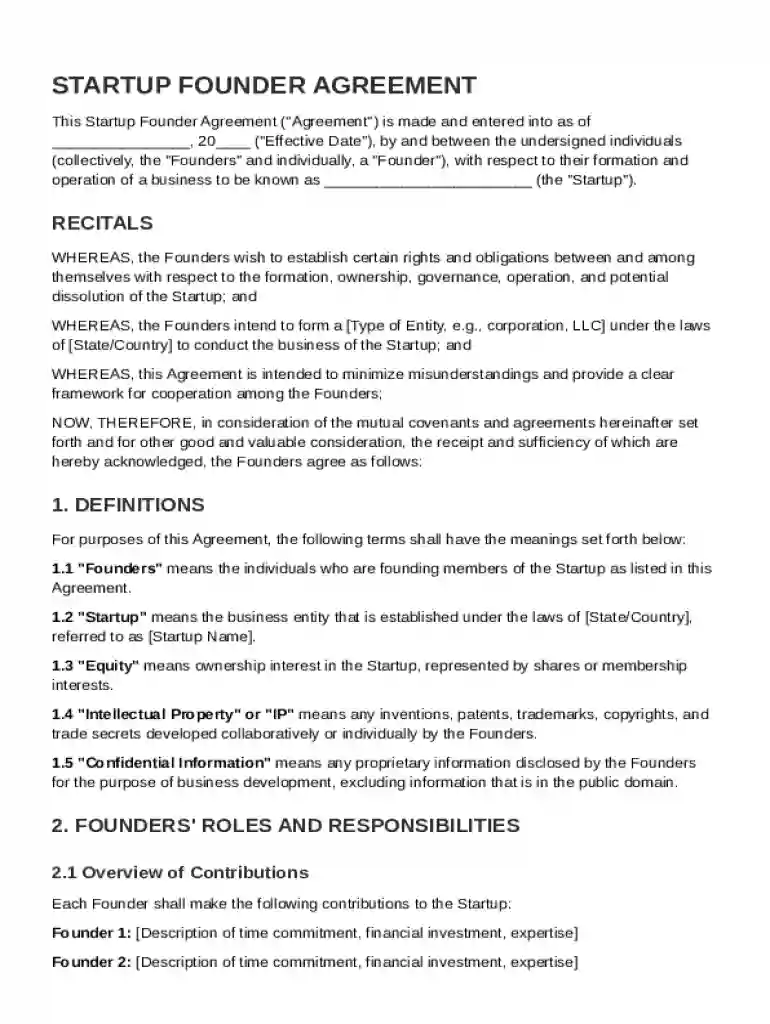
The Startup Founder Agreement Template is a critical document that defines the roles, responsibilities, and relationships among founders of a startup. It serves as the foundational contract outlining each founder's equity ownership, decision-making powers, and procedures for addressing disputes. This agreement is designed to foster transparency and cooperation, significantly reducing the potential for misunderstandings down the line. By specifying both the intellectual and financial contributions of each founder, the agreement ensures clarity and alignment from the outset.
Key Elements of the Startup Founder Agreement Template
A well-constructed Startup Founder Agreement Template contains several essential components:
- Equity Ownership: Detailed information on how equity is distributed among the founders. This section specifies initial ownership percentages and outlines future vesting schedules.
- Roles and Responsibilities: Clarity on the operational roles of each founder within the company. By detailing who manages certain aspects of the business, the document helps prevent overlaps or gaps in responsibilities.
- Intellectual Property: Provisions ensuring that all intellectual property generated during the company’s lifecycle is owned by the company. This is crucial for maintaining the value of the startup.
- Decision-Making Processes: Procedures for making both day-to-day and significant strategic decisions, detailing how votes will be calculated and what constitutes a quorum.
- Exit Strategies: Outlines the process for a founder to leave the company, including the sale or forfeiture of shares, to ensure business continuity.
- Non-Compete Clauses: Restrictions on activities that may compete with the startup, safeguarding the company's competitive edge.
Steps to Complete the Startup Founder Agreement Template
When filling out the Startup Founder Agreement Template, follow these steps to ensure all necessary details are accurately captured:
- Outline the Parties Involved: Start by listing all the founding members along with their basic contact information.
- Define Equity and Vesting Schedule: Clearly indicate the equity percentage each founder will receive and any vesting timelines, specifying milestones that affect stock ownership.
- Establish Roles and Responsibilities: Assign specific duties to each founder to eliminate ambiguity, clarifying operational expectations.
- Set Terms for Intellectual Property: Specify terms under which all intellectual property belongs to the company, preventing disputes over innovations and ideas.
- Outline Decision-Making Protocols: Detail how decisions are made, including voting processes and resolution methods for deadlocks.
- Address Dispute Resolution: Include mechanisms to handle disagreements amicably, using mediation or arbitration as needed.
- Include Exit Provisions: Specify processes for when a founder wants to exit or is involuntarily removed, ensuring stability and fairness.
Legal Use of the Startup Founder Agreement Template
The legal application of the Startup Founder Agreement Template is paramount for maintaining startup operations within lawful parameters. This contract protects founders by legally securing their rights within the business framework. It complies with the ESIGN Act for digital signatures, making electronic agreements legally binding. Adhering to state-specific laws is crucial, as legal nuances can vary across jurisdictions, especially in terms of business entity structure and employment law. Consulting with a legal professional during completion is recommended to ensure all components meet the necessary legal standards.
Who Typically Uses the Startup Founder Agreement Template
The Startup Founder Agreement Template is most commonly utilized by:

- New Entrepreneurs: Individuals embarking on new business ventures who require clearly defined roles and equity arrangements.
- Startup Incubators & Accelerators: Organizations supporting startup development, where multiple founders must align on company groundwork.
- Business Partners: Partners initiating a joint venture that demands a comprehensive agreement detailing each party's contributions and expectations.
- Legal Advisors: Attorneys and legal consultants drafting agreements during the business formation stage to ensure clients' interests are protected.
Software Compatibility
The Startup Founder Agreement Template is versatile and integrates smoothly with various document management software systems. DocHub's platform supports this template, allowing users to edit and sign the agreement digitally. Other compatible software includes:
- Google Workspace: Facilitates real-time collaboration and editing with seamless integration to Google Drive and Gmail.
- Microsoft Office: Compatible with Word and PDF formats, enabling easy editing and sharing.
- Dropbox: Provides secure cloud storage and sharing for collaborative editing needs.
This compatibility allows founders to choose the platform that best aligns with their workflow preferences.
Important Terms Related to the Startup Founder Agreement Template
Understanding the terminology in a Startup Founder Agreement Template is crucial. Some important terms include:
- Vesting Schedule: A timeline dictating when founders earn their equity shares fully.
- Quorum: The minimum number of votes needed for a decision to take place.
- Dilution: The reduction in existing equity percentages when new shares are issued.
- Non-Disclosure Agreement (NDA): A clause that prevents the sharing of confidential company information.
- Drag-Along Rights: Allows majority stakeholders to force minority stakeholders to sell their shares during a sale.
Familiarizing founders with these terms is essential to ensure informed decision-making.
Business Types that Benefit Most from the Startup Founder Agreement Template
Various business types find the Startup Founder Agreement Template invaluable, including:
- Tech Startups: Where multiple founders often contribute different technical skills, necessitating clear delineation of who is responsible for various technical aspects.
- Retail Ventures: Startups with co-founders responsible for different functions, such as operations and sales, benefit from clear role definitions.
- Biotech Companies: Where specialized knowledge and long-time development pipelines require agreed intellectual property protocols.
- Culinary Enterprises: Businesses with founders from diverse creative backgrounds leverage the template to align on vision and operations.
This template helps align goals across these diverse sectors, ensuring successful partnerships and business growth.