
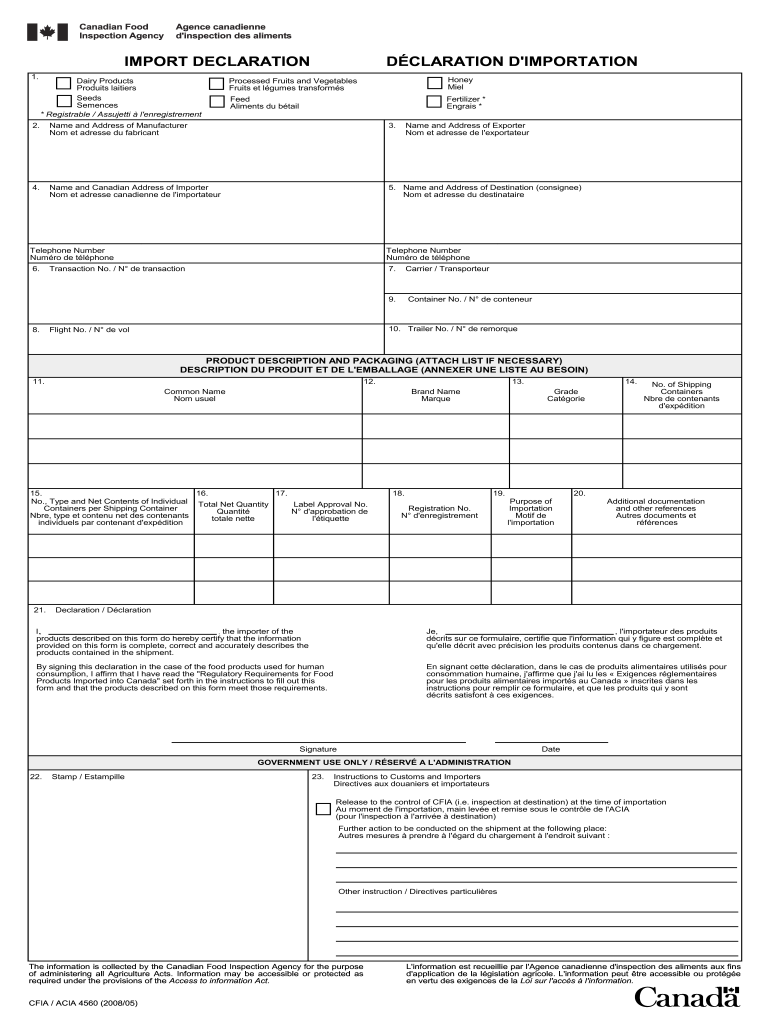







Definition and Purpose of the Import Declaration Form
The import declaration form serves as a formal document required by customs authorities during the importation process. This form captures essential details regarding the goods being imported, facilitating compliance with regulations and enabling accurate customs duties and taxes assessment. The information collected typically includes:
- Importer and exporter details
- Description of the imported goods
- Quantity and value of the items
- Applicable tariffs and relevant codes
By submitting this form, importers ensure that their shipments are processed efficiently and in accordance with legal requirements, preventing potential delays or complications at the border.
Steps to Complete the Import Declaration Form
Completing the import declaration form can be a structured process that, when followed correctly, minimizes the risk of errors that might lead to delays in clearance. Here are the general steps involved:
-
Gather Necessary Information: Collect all relevant documents, including invoices, purchase orders, and shipping papers. This information will provide the basis for completing the form accurately.
-
Fill Out Importer and Exporter Details: Complete sections that require the names, addresses, and contact information of both the importer and exporter. Ensure that this information matches the records held by customs.
-
Describe the Goods: Provide a detailed description of each item being imported. This might include the common name, brand, and any specific differentiators such as model numbers.
-
Specify Quantities and Values: Clearly state the quantity of each item and its corresponding unit value. Accurate values will assist in calculating duties and taxes effectively.
-
Review and Sign: Double-check all entries for accuracy and completeness. The form must be signed by an authorized representative of the importing company, affirming that all information is truthful and complies with applicable laws.
-
Submit the Form: Depending on the requirements of the specific port of entry or customs office, submit the form via your electronic customs system or through traditional methods as necessary.
Important Terms Related to the Import Declaration Form
Understanding the terminology associated with an import declaration form is crucial for successful navigation through the import process. Some critical terms include:
- Tariff Classification: A system of codes used to categorize goods, directly impacting the duties assessed on imports.
- Commercial Invoice: A document provided by the seller to the buyer that outlines the sale terms. It is essential for customs processing.
- Bill of Lading: A document issued by a carrier that acknowledges receipt of goods for shipment; it serves as a contract between the shipper and carrier.
- Clearing Agent: A professional who assists importers in navigating customs processes and regulations, often knowledgeable in preparing import declaration forms.
Familiarity with these terms helps streamline the import process and aids in compliance with customs regulations.
Legal Use of the Import Declaration Form
The legal framework surrounding the import declaration form is governed by federal customs laws and regulations. Proper use of this form ensures importers comply with:
- Customs Regulations: These regulations specify what information must be provided for customs clearance and the legal implications of inaccurate data.
- Trade Agreements: Specific agreements can affect tariffs and import duties, and accurate declaration helps in benefiting from such agreements.
- Compliance with Safety Standards: Goods imported may be subject to safety and health regulations, which necessitate accurate labeling on the import declaration form.
Failure to adhere to legal requirements related to the import declaration can result in penalties, including fines and shipment delays.
Examples of Using the Import Declaration Form
Several scenarios exemplify the real-world application of the import declaration form. Consider these cases:
-
Importing Electronics: A business importing consumer electronics from overseas must accurately classify these products using the appropriate tariff codes. The import declaration must list the quantity of each type of device, its total declared value, and comply with safety regulations.
-
Bringing in Agricultural Products: An importer bringing in products such as seeds or fertilizers must specify agricultural safety compliance on their import declaration form, thus ensuring adherence to both customs and agricultural regulations.
These examples showcase the diversity of situations where the import declaration form is pivotal in facilitating lawful and efficient import processes.
Required Documents to Accompany the Import Declaration Form
Submitting an import declaration form typically necessitates several accompanying documents to substantiate the information provided. Required documents may include:
- Commercial Invoice: Outlines the transaction details and serves as proof of purchase.
- Packing List: Details the contents of the shipment, including dimensions and weight, which aids customs in assessing and inspecting goods.
- Bill of Lading: Confirms shipment details and ownership of the cargo.
- Certificates of Origin: Verify the manufacturing origin of the products, which can affect tariff application.
Having these documents prepared alongside the import declaration form can streamline the customs clearance process and reduce hold-up risks.




