




Definition and Overview
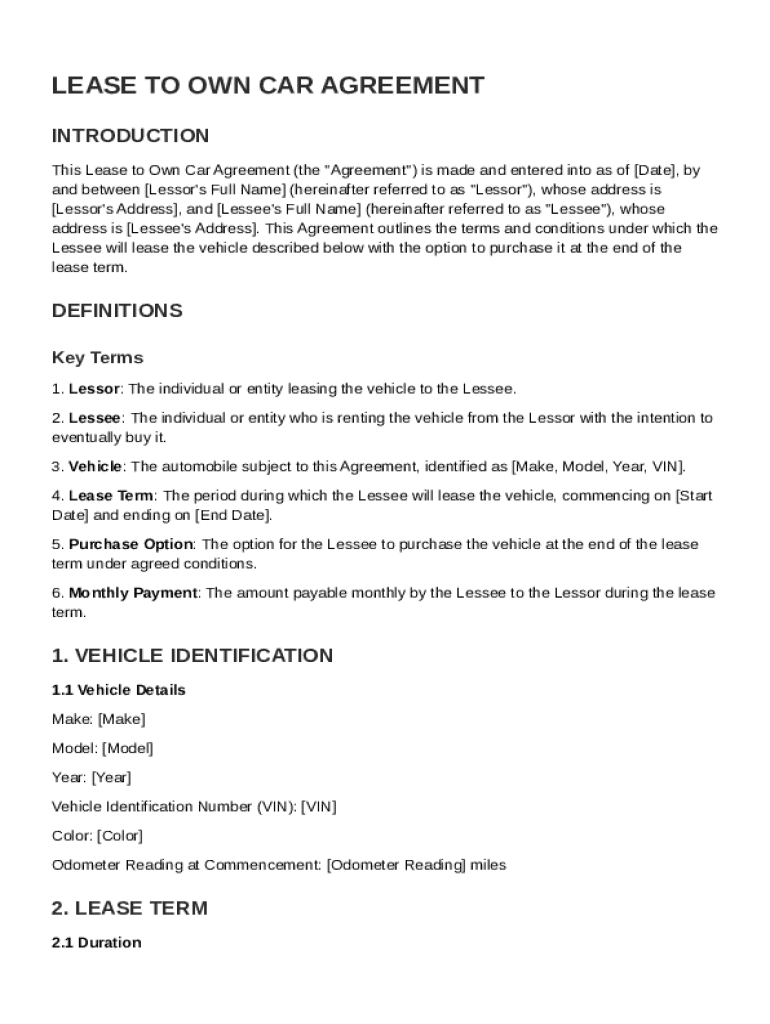
The Lease to Own Car Agreement Template is a legal document that outlines the terms and conditions under which an individual, known as the lessee, can lease a vehicle from the owner, referred to as the lessor, with the option to purchase it at the end of the lease period. This type of agreement serves as a hybrid between a lease and a purchase agreement, offering the flexibility of leasing alongside the advantages of future ownership. Typically, the template covers crucial elements such as payment schedules, maintenance responsibilities, insurance requirements, and conditions for default or termination.
Examples of Usage
Lease to Own Car Agreement Templates are frequently utilized in situations where an individual desires eventual ownership of a vehicle but is not immediately ready to purchase it outright. For instance, a young professional who recently secured a new job might prefer leasing initially due to budget constraints, with the aim to own the vehicle once finances stabilize. Additionally, small businesses often leverage these agreements to manage cash flow while systematically acquiring company vehicles over time.
How to Use the Lease to Own Car Agreement Template
To effectively utilize a Lease to Own Car Agreement Template, it's essential to understand its structure and how to fill it out accurately. The process begins by entering personal and vehicle details, followed by specifying the lease term and monthly payment amount. It is crucial to negotiate and clearly define terms such as who will be responsible for maintenance and insurance coverage during the lease period.
Step-by-Step Instructions
- Enter Personal Information: Start by filling out the names and contact details of both the lessee and lessor.
- Specify Vehicle Details: Include essential information about the vehicle, such as make, model, year, and Vehicle Identification Number (VIN).
- Define Lease Terms: Clearly articulate the lease duration, payment schedule, and any applicable interest rates.
- Outline Maintenance Responsibilities: Indicate who is accountable for maintenance tasks and costs, ensuring that both parties are aware of their responsibilities.
- Detail Insurance Requirements: Specify minimum insurance coverage necessary during the lease term to protect both parties' interests.
Key Elements of the Lease to Own Car Agreement Template
When drafting a Lease to Own Car Agreement, particular elements need to be included to ensure clarity and legality of the document. These components help safeguard the rights and responsibilities of both the lessee and lessor.
Important Terms
- Payment Terms: Details regarding monthly payments, deposits, interest rates, and penalties for late payments.
- Option to Purchase: Provisions detailing how the purchase option is exercised at the lease's end, including the final buying price and related arrangements.
- Default Conditions: Circumstances triggering default and the subsequent consequences, such as repossession or additional charges.
- Dispute Resolution: Procedures for addressing disputes that may arise during the lease term, ranging from mediation to arbitration or court proceedings.
Advantages of Using the Lease to Own Car Agreement Template
Opting for a Lease to Own Car Agreement offers multiple benefits both for individuals and businesses, providing financial flexibility and a clear path to vehicle ownership.
Benefits to Users
- Financial Planning: Facilitates structured financial planning by setting predictable monthly payments, helping manage budgeting processes effectively.
- Flexibility: Provides lessees with the flexibility to walk away at the end of the lease term or to purchase the vehicle, accommodating changing needs or circumstances.
- Ownership Path: Combines the benefits of leasing and purchasing, gradually transitioning users to full ownership without the need for upfront capital.
Legal Considerations
Understanding the legal aspects of a Lease to Own Car Agreement is crucial for mitigating risks and ensuring compliance with applicable laws.
Governing Law and Compliance
The agreement should specify the governing law, typically aligned with the state in which the transaction occurs. Lessees and lessors must ensure compliance with state-specific regulations relevant to lease agreements and consumer protection laws.
Who Typically Uses the Lease to Own Car Agreement Template
Lease to Own Car Agreements are popular among a diverse range of users, including private individuals, small business owners, and even larger organizations looking to manage their fleets efficiently.

Common Users
- Private Individuals: Often used by individuals who plan to own a car after using it temporarily due to budget constraints or changing personal circumstances.
- Small Businesses: Employed by small enterprises that prefer managing vehicle acquisition through predictable leasing options before transitioning to ownership.
- Corporate Fleets: Large firms managing vehicle fleets may adopt this model to gain fleet ownership while maintaining cash flow balance.

State-Specific Rules for the Lease to Own Car Agreement Template
Lease agreements often vary by state due to differing legal requirements, making it essential to incorporate state-specific regulations into the agreement.
State-by-State Variations
- California: May require additional disclosures regarding mileage limits and potential overage penalties.
- New York: Offers specific guidelines for lessee rights and privacy protections during the agreement duration.
- Texas: Enforces particular rules around lease termination fees and notice requirements, ensuring clear termination terms.
Important Terms Related to Lease to Own Car Agreement Template
Familiarity with related legal and contractual terms enhances understanding and ensures accurate agreement drafting.
Glossary of Terms
- Lessor: The owner of the vehicle who agrees to lease it to another party.
- Lessee: The individual or entity leasing the vehicle with an option to purchase.
- Cap Cost: The capitalized cost; essentially the lease price or vehicle value at agreement inception.
- Residual Value: The car's estimated value at the end of the lease term, often reflecting the purchase price if the option is exercised.
- Early Termination: Conditions under which the lease may be concluded before the agreed term ends, including associated penalties and fees.