
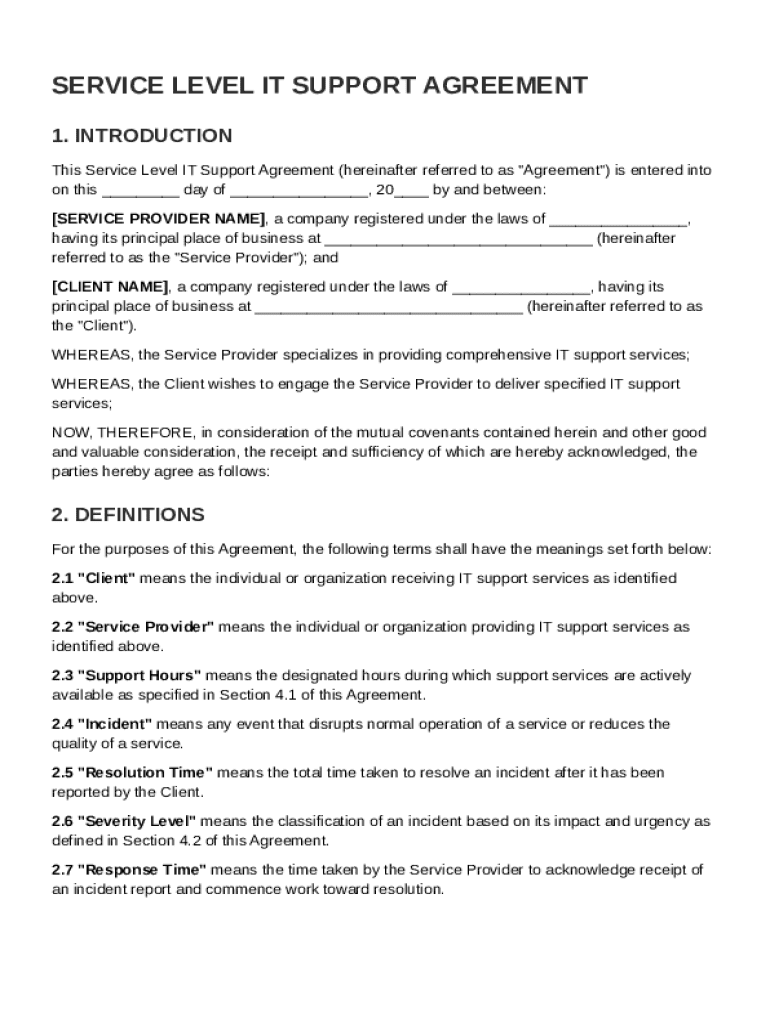







Definition and Purpose of Service Level IT Support Agreement
A Service Level IT Support Agreement Template establishes a formal contract that outlines the terms and conditions for IT support services provided by a service provider to a client. This agreement specifies the level of service expected, including response and resolution times, service availability, and performance metrics. By defining these expectations, both parties can ensure a mutual understanding and commitment to service quality, which helps in building a reliable business relationship.
Key Elements of Service Level IT Support Agreement
The template includes several critical components that need attention:
- Service Definitions: Detailed descriptions of the services provided, such as technical support, troubleshooting, and maintenance.
- Response and Resolution Times: Specific times within which the service provider must respond to and resolve issues based on priority levels.
- Performance Metrics: KPIs and other metrics to evaluate the service provider’s performance.
- Responsibilities: Duties and obligations of both the client and the service provider.
- Reporting Procedures: Frequency and format of performance and progress reports.
How to Use the Service Level IT Support Agreement Template
To effectively utilize the template, follow these steps:
- Review Service Requirements: Assess your IT support needs to determine relevant service levels.
- Customize the Template: Adjust the terms, service descriptions, and performance expectations to match your specific requirements.
- Negotiate Terms: Collaborate with the service provider to finalize terms that are acceptable to both parties.
- Legal Review: Have the agreement reviewed by legal counsel to ensure compliance with applicable laws.
- Finalize and Sign: Obtain signatures from all involved parties to formalize the agreement.
Steps to Complete the Service Level IT Support Agreement Template
When completing the agreement template, consider the following steps:
- Fill in Basic Information: Provide the names and contact details of both parties.
- Specify Service Scope: Clearly outline the IT services to be provided, including any exclusions.
- Define Service Levels: Document the agreed-upon performance standards and resolution times.
- Set Reporting Guidelines: Detail how and when reports will be shared.
- Include Confidentiality and Liability Clauses: Add sections addressing confidentiality obligations and liability limitations to protect both parties.
- Review and Edit: Ensure all details are accurate and complete before finalizing.
Important Terms Related to Service Level IT Support Agreement
Familiarize yourself with these terms commonly associated with IT service agreements:
- Incident: An unplanned interruption or reduction in service quality.
- Priority Levels: Categorization of incidents based on their impact and urgency.
- Response Time: The time it takes for the service provider to acknowledge a reported incident.
- Resolution Time: The time it takes to resolve an incident completely.
- Uptime: The period during which services are available and operational.
Legal Use of the Service Level IT Support Agreement Template
Ensure that your use of the agreement template:
- Complies with U.S. Laws: Adheres to national contract laws and regulations.
- Reflects Mutual Consent: Every term and condition should be clearly agreed upon by both parties.
- Provides Legal Protection: Contains appropriate clauses for dispute resolution, confidentiality, and liability.
Why Use a Service Level IT Support Agreement Template
Utilizing this template is crucial for:
- Clarity and Precision: Clearly defines service expectations and responsibilities.
- Risk Mitigation: Protects both parties from potential disagreements and misunderstandings by laying out all agreed-upon terms.
- Performance Monitoring: Enables clients to monitor the service provider’s performance vis-a-vis predefined metrics.
Examples of Using Service Level IT Support Agreement
Real-world scenarios showcasing the template’s use include:
- Incident Management: A company uses the template to ensure critical software issues receive immediate attention.
- Agile Development Support: An IT firm utilizes it to define service levels for ongoing support during agile project phases.
- Remote Support Services: A multinational corporation employs the agreement to manage remote IT support for its global offices.
Business Types That Benefit Most from Service Level IT Support Agreement
Several business entities can greatly benefit from this type of agreement:
- Technology Startups: Ensure reliable IT support to maintain uninterrupted operations.
- Retail Chains: Utilize the agreement to secure consistent support for their point-of-sale systems.
- Financial Institutions: Benefit from detailed service level agreements to manage critical IT infrastructure.




