





Definition & Meaning
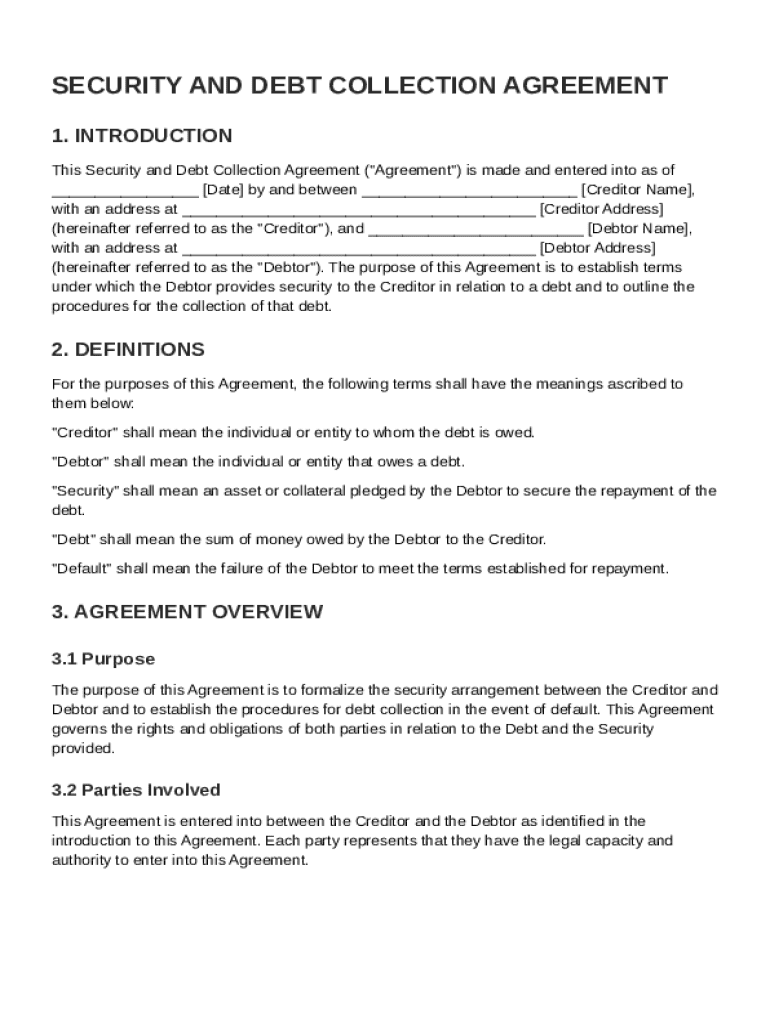
A Security and Debt Collection Agreement Template is a legal document that establishes the terms and conditions between a creditor and debtor for managing a specified debt. This agreement typically involves the attachment of a security interest to an asset or collateral, which serves as a guarantee for the owed amount. The template defines the parties involved, the amount of debt, payment schedules, and provisions for what happens in the event of default by the debtor. Understanding this template is crucial, as it outlines the legal rights and obligations of each party, providing a framework for recourse and legal remedies if the terms are breached.
Key Elements of the Security and Debt Collection Agreement Template
Several key elements form the crux of the Security and Debt Collection Agreement Template:
- Parties Involved: The agreement identifies the creditor and debtor, clearly outlining their roles and responsibilities.
- Debt Description: Details of the amount owed, including any interest applicable, are specified.
- Collateral or Security: The agreement must detail what asset is being used as security and the terms for its use or seizure in case of default.
- Payment Terms: Specifies the timeline for repayment, frequency of payments, and acceptable methods of payment.
- Default Provisions: Outlines what constitutes a default and the creditor's rights to recourse, including repossession or legal action.
- Governing Law and Jurisdiction: Specifies which state’s laws will apply to the agreement and where any disputes will be legally resolved.
- Amendments and Notices: Terms regarding how any changes to the agreement will be handled and the requirements for notifying each party.
Legal Use of the Security and Debt Collection Agreement Template
The legal use of a Security and Debt Collection Agreement is centered around providing a clear structure and enforceable terms for debt recovery. It assists creditors in securing a claim over an asset, ensuring there is a tangible way to recover funds if the debtor defaults. The agreement complies with laws relevant to debt collection and security interests, aligning with commercial and contract law provisions, thus requiring understanding of both legal obligations and rights. Legal use involves:
- Ensuring Compliance: Adhering to state and federal laws regarding debt recovery and security interests.
- Dispute Resolution: Establishing methods for conflict resolution which are legally binding.
- Protecting Interests: Providing a clear legal claim to a security or collateral to protect the creditor’s financial interests.
Steps to Complete the Security and Debt Collection Agreement Template
- Identify the Parties: Clearly state the names and contact information for the creditor and debtor.
- Outline the Debt: Fill in specifics about the debt amount, interest rates, and any associated fees.
- Detail Collateral Terms: Specify which assets are secured and under what conditions they may be repossessed.
- Clarify Payment Conditions: Define the payment schedule, methods, and any grace periods.
- Define Default Terms: Clearly articulate what constitutes default and the actions available to the creditor.
- Select Governing Law: Indicate the jurisdiction whose laws will govern the agreement.
- Amendment Procedures: Ensure all parties understand how changes to the agreement will be made and recorded.
- Finalize Agreement: Collect signatures from all parties after reviewing the document thoroughly to ensure understanding and acceptability of terms.
Who Typically Uses the Security and Debt Collection Agreement Template
The Security and Debt Collection Agreement Template is commonly used by:
- Banks and Financial Institutions: As part of their loan agreements where collateral is required.
- Property Management Companies: When tenants owe significant debt or when securing unpaid rents with property.
- Private Creditors and Lenders: Individuals or businesses lending to other entities or persons with collateral as security.
- Debt Collection Agencies: To formalize agreements when taking over debt recovery processes from other entities.


Important Terms Related to Security and Debt Collection Agreement Template
Understanding certain key terms is crucial to effectively using and comprehending the Security and Debt Collection Agreement Template:
- Collateral: An asset pledged by a debtor to secure the repayment of a loan.
- Default: Failure to fulfill a financial obligation according to the terms of the agreement.
- Security Interest: A legal claim on collateral that has been pledged, usually to obtain a loan.
- Lien: The right to keep possession of property belonging to another person until a debt owed by that person is discharged.
- Repossession: Taking back an asset due to default on agreed terms.
State-Specific Rules for the Security and Debt Collection Agreement Template
The application of the Security and Debt Collection Agreement Template can vary depending on the state-specific rules and regulations. These can impact:
- Interest Rate Limits: Usury laws may cap how much interest can be charged on borrowed money.
- Repossession Procedures: States may have distinct processes for repossessing secured collateral following a default.
- Notarization Requirements: Some jurisdictions require documents to be notarized to be legally enforceable.
- Notification Requirements: States could mandate specific guidelines on how notices of default must be delivered to debtors.
Examples of Using the Security and Debt Collection Agreement Template
This template can be adapted for various real-world applications, such as:
- Auto Loans: A bank may use this template to secure the loan against the vehicle itself.
- Equipment Financing: A company leasing machinery might require this agreement to secure the lease against the equipment.
- Personal Loans: In personal lending scenarios, a lender may wish to secure the loan with personal property.
- Contractor Projects: Businesses might use this to secure advance payments made for upcoming projects with equipment or receivables.
Each application may involve unique elements related to specific collateral or payment provisions tailored to the involved parties’ needs. This variability makes the template versatile for different scenarios, ensuring comprehensive coverage and security for creditors.