
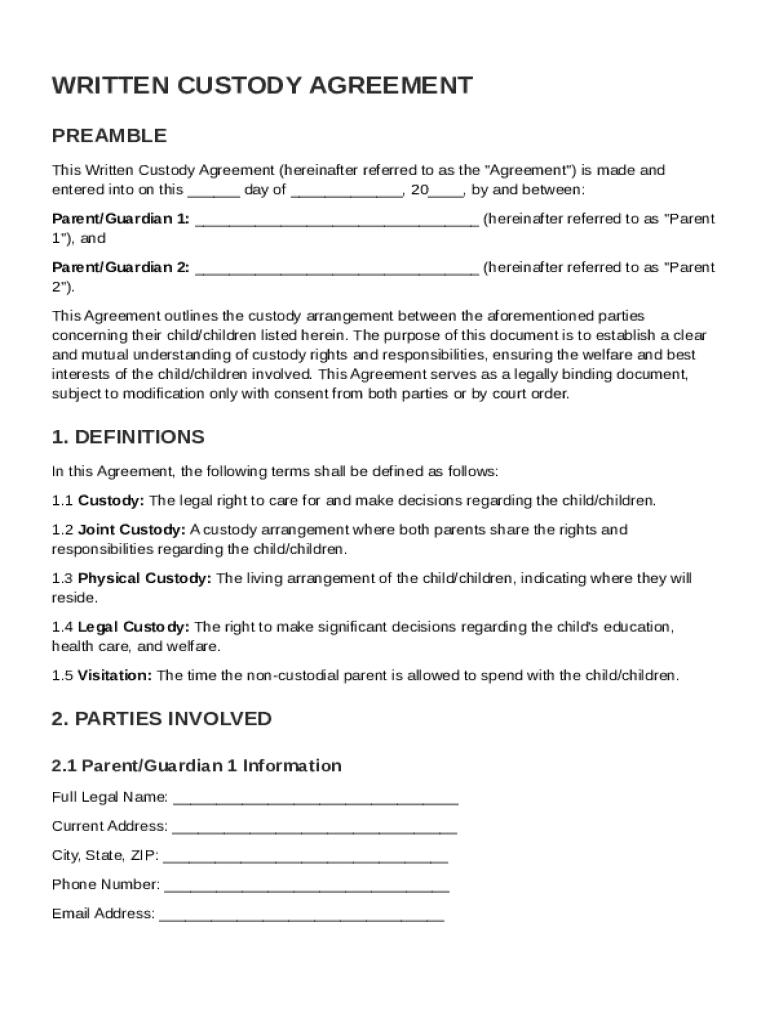







Definition & Meaning
A Written Custody Agreement is a legally binding document created by two parents outlining the custody and care arrangements for their children. It establishes the legal terms regarding where the child will live, which parent will make specific decisions, and how time will be shared between the parents. This agreement ensures that there is a clear understanding of both physical and legal custody, addressing the interests and well-being of the children involved.
Key Custody Definitions
- Physical Custody: Refers to where the child will live on a day-to-day basis.
- Legal Custody: Involves the right to make major decisions about the child's life, including education, healthcare, and religious upbringing.
- Joint Custody: A situation where both parents share either physical or legal custody of the child, or both.
Key Elements of the Written Custody Agreement Template
The Written Custody Agreement Template typically includes specific sections that ensure comprehensive coverage of various custody arrangements.
Basic Information Requirements
- Parents' Details: Full names and contact information of both parents involved.
- Child's Information: Names and birthdates of all children covered under the agreement.
Custody Arrangements
- Physical Custody Schedule: Outlines where the child will reside during weekdays, weekends, and holidays.
- Decision-Making Provisions: Details which parent has the authority to make decisions and in what areas.
Additional Provisions
- Visitation Rights: Defines the visiting schedules for the non-custodial parent, including regular days and special occasions.
- Communication Guidelines: Stipulates how parents will communicate about the child’s needs and activities.
Steps to Complete the Written Custody Agreement Template
Following a structured process ensures that all necessary details are captured accurately.
- Gather Personal Information: Collect basic details about both parents and the children.
- Define Custody Terms: Clearly establish where the child will live and decision-making responsibilities.
- Detail Visitation Schedules: Specify regular visitation times and any specific holiday or vacation plans.
- Include Additional Clauses: Add any unique provisions needed, such as who will handle transportation.
- Review Legal Requirements: Ensure compliance with state-specific custody laws.
- Finalize & Sign: Both parents should review the document thoroughly and sign to demonstrate mutual agreement.
Legal Use of the Written Custody Agreement Template
Within the legal framework of the U.S., a Written Custody Agreement serves as a roadmap for parental responsibilities and can be enforced by the courts.
Importance of Legal Compliance
- Agreements need to comply with the laws of the state where they will be enforced.
- Often, agreements are submitted for court approval to provide a legal backstop.
Enforceability
- In case of non-compliance, the courts can intervene to enforce the terms outlined in the agreement.
- It offers a clear legal basis for resolving disputes, helping to mitigate conflict.
How to Obtain the Written Custody Agreement Template
Accessing a Written Custody Agreement Template is straightforward, with several resources available.
Available Sources
- Online Platforms: Websites like DocHub provide downloadable templates with customizable fields.
- Legal Service Providers: Attorneys or family law centers often provide templates tailored to specific legal jurisdictions.
Factors to Consider
- Ensure that the template adheres to the laws specific to your state.
- Consider how comprehensive the template is in addressing family dynamics and needs.
State-Specific Rules for the Written Custody Agreement Template
Custody laws can vary significantly across different states, impacting how agreements are structured.
Common Variations
- Residency Requirements: Some states dictate that a child must reside in the state for a certain period before the agreement is enforceable.
- Parental Rights: States differ on default assumptions about joint custody and visitation rights.
- Modification Procedures: Each state has specific methods for modifying the custody terms.
Practical Implications
- Parents should consult state guidelines to ensure proper format and content.
- This can affect the enforceability and interpretation of the agreement.
Important Terms Related to Written Custody Agreement Template
Understanding the terminology used within custody agreements is critical for clarity and precision.
Legal Jargon Explained
- Modification: The process by which existing custody arrangements can be altered in response to changed circumstances.
- Custodial Parent: The parent who has primary living arrangements with the child.
- Non-Custodial Parent: The parent who does not have the child residing primarily with them but maintains visitation rights.
Examples of Using the Written Custody Agreement Template
By examining real-world scenarios, parents can better grasp the utility of custody agreements.
Scenario Applications
- Divorce Cases: Courts often request a custody agreement before finalizing a divorce involving children.
- Parental Relocation: If one parent moves to a different city or state, the agreement needs to define new living and visitation arrangements.
- Educational Decisions: The document can specify which parent will make education-related decisions, potentially resolving disputes more swiftly.
In every aspect of crafting a Written Custody Agreement, clarity, precision, and a focus on the child's best interests are paramount to creating a legally sound and practically effective document.




