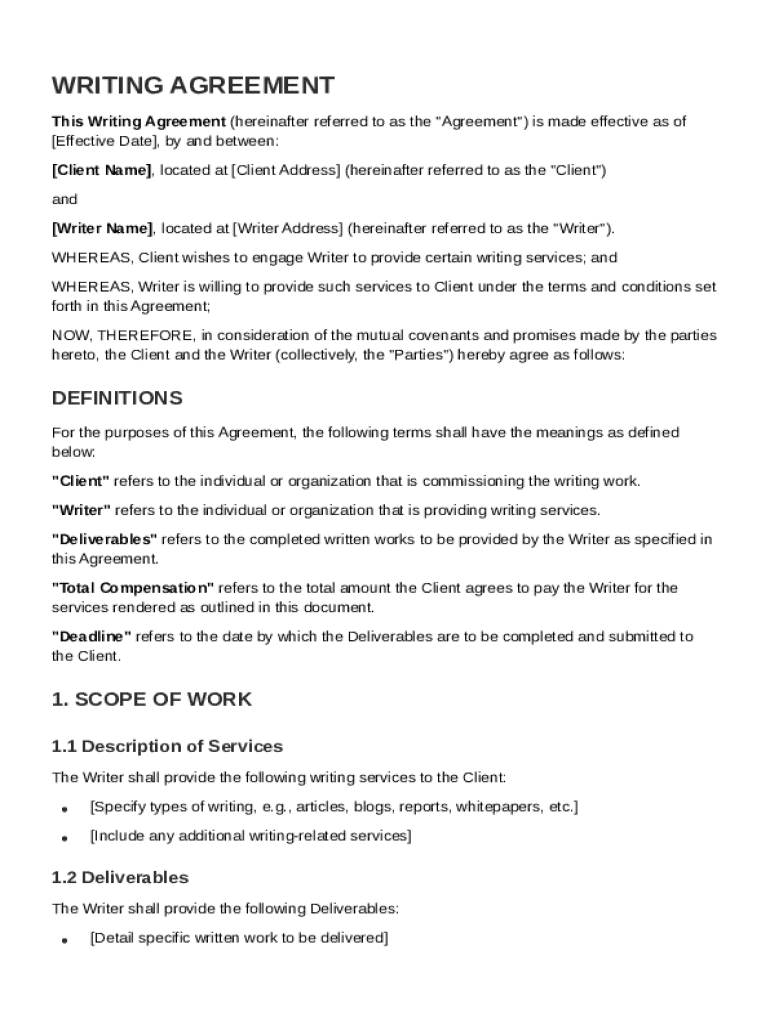







Definition and Meaning of a Writing Agreement Template
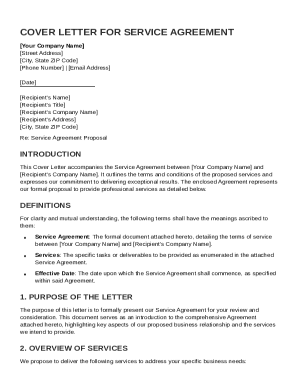
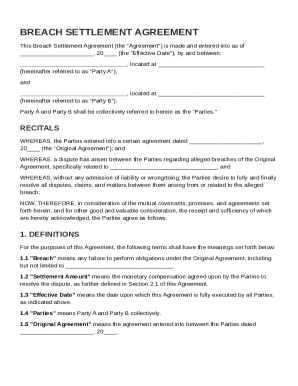
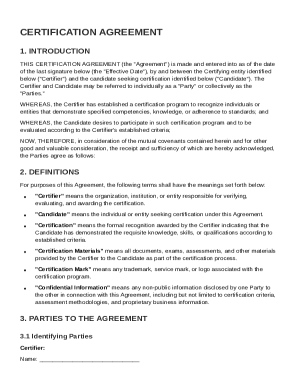
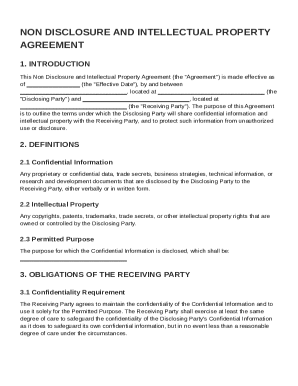
A Writing Agreement Template is a pre-structured document designed to establish clear terms and conditions between a client and a writer. This template serves as a legally binding agreement that outlines the specifics of writing services to be provided, ensuring both parties have a clear understanding of their obligations. Essential components typically include the scope of work, compensation, timelines, and revision policies. While it aims to guide both parties in project execution, its versatility allows customization based on specific needs.
How to Use the Writing Agreement Template
Using a Writing Agreement Template involves several critical steps to ensure clarity and compliance. Begin by selecting a template that suits your specific writing project needs. Tailor the template by inputting key details such as project objectives, deadlines, payment structures, and confidentiality clauses. Ensure both parties review the document thoroughly to confirm mutual understanding and agreement on all aspects. Lastly, finalize the document by signing it, validating the agreement's terms and starting the project with clear guidelines.
Steps to Complete the Writing Agreement Template
Filling out a Writing Agreement Template involves a systematic approach:
- Identify Parties Involved: Include the full names and contact details of the client and writer.
- Define Project Scope: Clearly outline the writing tasks, including specific topics, deliverables, and formats.
- Set Compensation Terms: Specify payment amounts, schedules, and modes of payment.
- Establish Timelines: Include start and end dates, with milestones or checkpoints for progress reviews.
- Include Revision Policies: Detail the number of revisions allowed and processes for making changes.
- Ownership and Rights: Define who holds the rights to the final content and any stipulations regarding its use.
- Confidentiality Clauses: Establish what information must remain confidential and any non-disclosure agreements.
- Sign and Date: Ensure both parties sign the document to indicate agreement and understanding.
Key Elements of the Writing Agreement Template
A robust Writing Agreement Template includes several critical elements that both protect and guide the involved parties:
- Project Description: An in-depth outline of the writing project's goals and deliverables.
- Responsibilities: Clear delineation of responsibilities for the client and the writer, fostering transparency.
- Payment Structure: Comprehensive detailing of fees, payment methods, and conditions under which payments are made.
- Deadlines and Schedules: Precise timelines for project initiation, completion, and interim deliverables.
- Revision Guidelines: Clear instruction on the possibilities and limits of revisions and edits.
- Legal Rights: Documentation on the ownership of intellectual property and usage rights post-completion.
- Termination Conditions: Conditions under which the agreement can be terminated by either party.
Legal Use of the Writing Agreement Template
A properly executed Writing Agreement Template is vital for legal protection and clarity. In the U.S., these agreements form a binding contract, adhering to contract laws that protect both parties' interests. They must be clearly written, free of ambiguous language, and all parties must voluntarily consent to the terms. Additionally, it should comply with federal, state, and local laws applicable to contract enforcement.
Examples of Using the Writing Agreement Template
Various professionals utilize Writing Agreement Templates in differing contexts:
- Freelance Writers: Engaging with clients for articles, blogs, or book projects.
- Companies: Hiring ghostwriters or copywriters for digital content creation.
- Authors: Collaborating with editors or co-authors on a publication.
- Academic Writers: Ensuring clarity and compliance in thesis or dissertation collaborations.
In each scenario, the template presents a structured approach, reducing ambiguities and facilitating smooth working relationships.
Important Terms Related to Writing Agreement Template
Legal agreements, particularly Writing Agreement Templates, often include specific technical terms:
- Scope of Work (SOW): Defines specific tasks and responsibilities.
- Deliverables: Expected outcomes or completed works from the writer.
- Milestones: Important progress markers within the project timeline.
- Intellectual Property (IP) Rights: Legal entitlements linked to writings.
- Termination Clause: Outlines conditions for discontinuing the agreement.
Understanding these terms ensures clearer communication and prevents potential disputes.
Digital vs. Paper Version of the Writing Agreement Template
Modern usage of Writing Agreement Templates often involves choosing between digital and paper formats:
-
Digital Templates: They offer significant convenience, allowing for quick edits, e-signature capabilities, and easy sharing among parties. They support environmental sustainability by reducing paper usage.
-
Paper Versions: Some traditionalists prefer physical documents, believing them to offer a stronger sense of permanence and easier access in environments with limited digital access.
Both formats should ensure security, with digital documents utilizing encryption and authentication methods to prevent unauthorized access.
Versions or Alternatives to the Writing Agreement Template
While the Writing Agreement Template is widely used, variations may better suit certain industries or project types:
- Content-specific Agreements: Tailored for niche areas like technical writing or creative writing.
- Service-specific Variants: Templates focusing on editing or consultation could offer more specific stipulations relevant to those tasks.
- Custom Agreements: Unique creations developed from templates to fit highly specialized project requirements.
Choosing an appropriate version ensures the agreement aligns closely with the intended project outcome.