
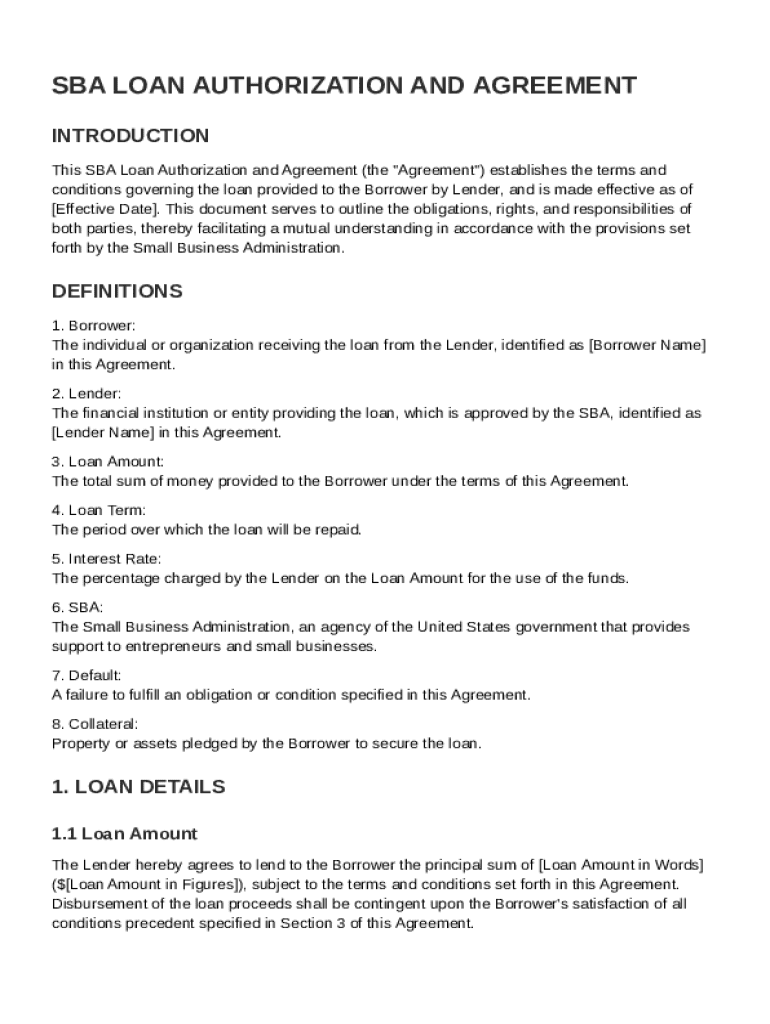







Definition & Meaning
The SBA Loan Authorization and Agreement Template serves as a crucial document outlining the agreement between a lender and a borrower under the guidelines of the Small Business Administration (SBA). This template defines the key terms and conditions of the loan, including repayment schedules, interest rates, and any applicable fees. It is designed to ensure both parties understand their obligations and rights within the loan agreement. By detailing aspects like loan amount, purpose, and conditions for disbursement, this template ensures clarity and facilitates a smooth borrowing process.
Key Elements of the SBA Loan Authorization and Agreement Template
Understanding the essential components of the SBA Loan Authorization and Agreement Template is crucial for effective usage. Key elements include:
- Loan Amount and Purpose: Clearly defines the total loan amount and specifies the real intent or purpose for which the loan is granted.
- Interest Rates and Fees: Details the applicable interest rates, including any fixed or variable terms, along with any origination or service fees.
- Repayment Terms: Outlines the repayment schedule, including the duration of the loan and the frequency of payments.
- Conditions for Disbursement: Sets forth any prerequisites or conditions that must be fulfilled before the loan funds are released.
- Representations and Warranties: Includes declarations made by both lender and borrower about their capabilities and understanding of the agreement.
- Events of Default: Describes the circumstances under which the borrower is considered in default and the remedies available to the lender.
- Miscellaneous Provisions: Covers additional terms and conditions that govern the relationship and responsibilities of both parties.
How to Use the SBA Loan Authorization and Agreement Template
To effectively utilize the SBA Loan Authorization and Agreement Template, follow these steps:
- Review the Template: Begin by carefully reviewing all sections of the template to ensure understanding of each element.
- Input Loan Details: Populate the template with specific information about the loan, such as amount, purpose, and party details.
- Customize Terms and Conditions: Modify any standard terms to better suit the specific needs of the lender and borrower, while staying compliant with SBA regulations.
- Consult with Legal Advisors: It is prudent to have a legal professional review the completed document to confirm its accuracy and legality.
- Finalize and Execute: Once all parties agree on the terms, ensure that all required signatures are obtained to validate the agreement.
Important Terms Related to SBA Loan Authorization and Agreement Template
Familiarity with significant terms can help users navigate the SBA Loan Authorization and Agreement Template more effectively. These terms include:
- SBA Loan: A government-backed loan aimed at supporting small businesses with favorable terms not typically available from regular lenders.
- Disbursement Conditions: Specific requirements that need to be met before the loan funds are released.
- Interest Rate: The cost of borrowing the principal amount, expressed as a percentage.
- Default: A failure to meet the legal obligations of the loan agreement, often leading to predefined remedies.
- Collateral: An asset pledged by the borrower to secure the loan, which the lender may claim in case of default.
Steps to Complete the SBA Loan Authorization and Agreement Template
Completing the SBA Loan Authorization and Agreement Template requires attention to detail and care at each step. The process includes:
- Gather Necessary Information: Collect all relevant details concerning the loan, including financial statements, borrower identities, and specific loan terms.
- Complete the Template Sections: Input gathered information into appropriate sections of the template, ensuring accuracy and completeness.
- Review the Document: Thoroughly check the document for any inaccuracies or omissions.
- Seek Feedback from Stakeholders: Share the draft with both legal and financial advisors to obtain feedback and ensure alignment with business objectives.
- Incorporate Feedback and Finalize: Make necessary amendments based on the feedback received and prepare the document for final approval.
- Sign and Distribute: Obtain signatures from both parties and distribute copies to all relevant stakeholders for record-keeping.
Legal Use of the SBA Loan Authorization and Agreement Template
The legal framework governing the usage of the SBA Loan Authorization and Agreement Template ensures that the document serves its intended purpose without any legal ambiguities. Key considerations for legal use include:
- Adhering to SBA Guidelines: Ensure the template complies with all SBA stipulations, safeguarding its enforceability.
- State-Specific Laws: Adjust the template to comply with variations in state laws that may affect contract validity.
- Signatory Authority: Confirm that individuals signing the document possess the legal authority to enter binding agreements on behalf of their respective organizations.
- Ethical Responsibility: All terms and conditions should reflect ethical lending and borrowing practices, ensuring fair treatment of all parties involved.
Examples of Using the SBA Loan Authorization and Agreement Template
Practical examples of how this template can be utilized include:
- New Business Ventures: Utilizing the document to secure funding for startups aiming to launch innovative products or services.
- Operational Expansion: Applying for additional capital to expand the operations or geographic reach of a growing business.
- Equipment Purchase Financing: Using the loan for acquiring essential equipment that can enhance productivity and operational efficiency.
By applying these real-world scenarios, businesses can strategically leverage the SBA Loan Authorization and Agreement Template to meet their financial objectives.
Application Process & Approval Time
Understanding the process and timeline for applying for an SBA loan using the Authorization and Agreement Template is crucial for planning and decision-making. The application process typically involves:
- Initial Preparation: Prepare and compile relevant financial documents and business plans.
- Application Submission: Submit the completed template and accompanying documents to the lender for review.
- Credit Analysis: Lenders perform credit analysis of the borrower to assess eligibility and terms.
- Approval Process: Borrowers undergo a detailed approval process, which varies based on lender protocols but generally takes several weeks.
- Loan Disbursement: Upon approval, the terms of the loan are finalized, and funds are disbursed according to the distribution schedule outlined in the agreement.
By understanding the structured application and approval process, borrowers can optimize their timelines and prepare effectively for loan acquisition.




