






Definition & Meaning
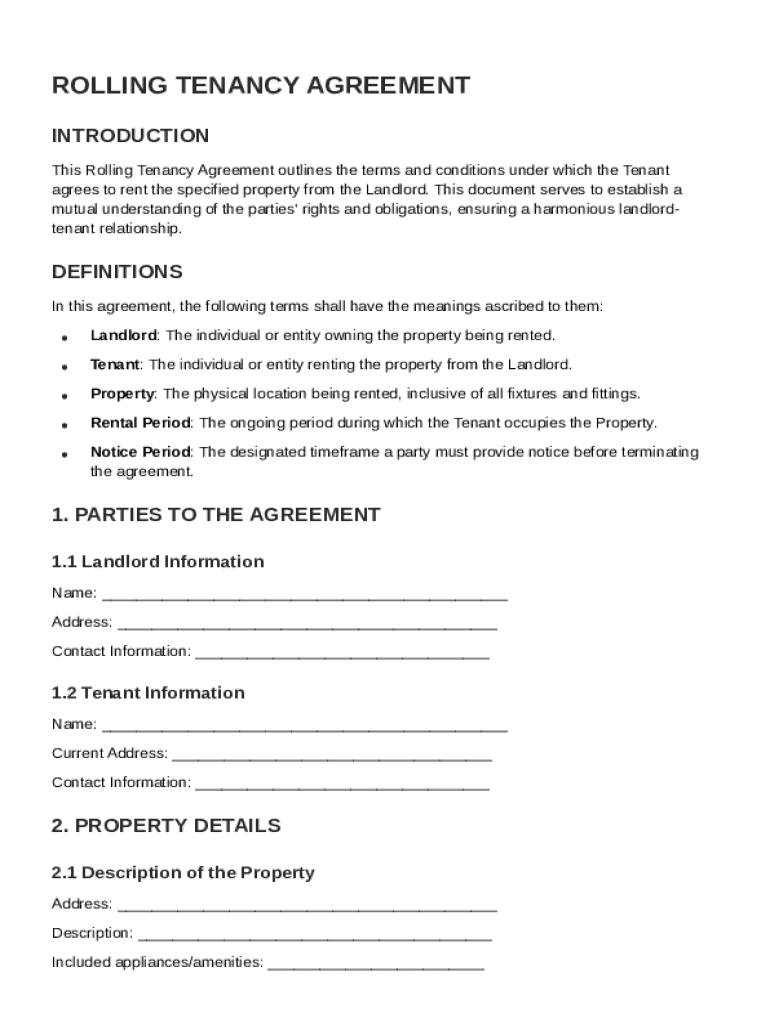
A Rolling Tenancy Agreement Template is utilized to outline the continuing rental relationship between a landlord and tenant, allowing the lease to automatically renew under the original terms until either party decides to terminate. This type of agreement provides flexibility for both parties, adapting to changes without the need for renegotiation or a formal contract renewal each time the lease period expires. Designed to ensure continuity, the template includes clauses detailing rent payment schedules, property maintenance responsibilities, and guidelines for terminating the tenancy.
Key Elements of the Rolling Tenancy Agreement Template
This template covers essential components vital for maintaining a smooth landlord-tenant relationship. Key elements include:
- Rental Terms: Specifies the duration, renewal conditions, and clauses pertaining to automatic continuance.
- Payment Details: Outlines the monthly rent, payment due dates, and any applicable late fees.
- Security Deposit: Details the amount, conditions for return, and situations that could lead to partial or full forfeiture.
- Tenant Obligations: Includes maintenance responsibilities and rules concerning property use.
- Termination Procedure: Describes the process for ending the tenancy, including notice periods required by both parties.
By addressing these elements, the template facilitates clear communication and reduces potential disputes.
Steps to Complete the Rolling Tenancy Agreement Template
When completing this template, follow these essential steps:
- Insert Basic Information: Include the names and contact details of the landlord and tenant.
- Specify Property Details: Note the property's address and any specific provisions related to its use.
- Define Rental Terms: Clearly state the rental period, renewal conditions, and rent amount.
- Outline Responsibilities: Detail maintenance duties and access rights.
- Address Termination Protocols: Clarify the termination notice process for both parties.
- Review and Sign: Ensure all parties understand the agreement before signing, and consider seeking legal advice if necessary.
By following these steps, you establish a legally binding agreement that promotes transparency.
Who Typically Uses the Rolling Tenancy Agreement Template
The template is primarily used by landlords and tenants engaged in an ongoing rental relationship where flexibility and continuity are desired. It is particularly advantageous for:
- Landlords with Multiple Properties: Streamlines management by minimizing the need for repeated contract renewals.
- Tenants Seeking Stability: Offers assurance of continued tenancy without frequent formal renewals.
- Property Management Companies: Utilizes the template for efficient lease management across their portfolio.
Each user benefits from the streamlined approach to managing lease arrangements provided by this template.


Legal Use of the Rolling Tenancy Agreement Template
This agreement ensures legal compliance with federal and state housing regulations by incorporating standard leasing provisions. Key considerations include:
- Fair Housing Laws: Compliance ensures non-discrimination in tenant selection.
- Landlord-Tenant Acts: State-specific acts dictate allowable lease terms and tenant rights.
- Security Deposit Regulations: Limits and return conditions vary by jurisdiction.
Consulting with legal professionals or referencing local legislation can further assure that the agreement terms are both fair and enforceable.
State-Specific Rules for the Rolling Tenancy Agreement Template
Rental laws vary significantly across states, affecting aspects such as security deposit limits, eviction procedures, and notification periods. For instance:
- California: Requires a three-day notice for eviction due to nonpayment.
- Texas: Allows for a shorter notice period for terminating a month-to-month tenancy.
- New York: Mandates specific landlord disclosures related to health and safety.
Understanding these variances is crucial for tailoring the template to comply with local legal requirements and protecting both parties' interests.
Examples of Using the Rolling Tenancy Agreement Template
Consider these scenarios illustrating the template's application:
- A landlord uses the template to manage a portfolio of rental properties, opting for leases that automatically renew to minimize administrative overhead.
- A tenant striving for stability in a volatile housing market finds assurance with a rolling agreement, knowing the lease terms are preserved until they decide to relocate.
- A property manager employs the template for a newly acquired building, ensuring incoming tenants have consistent, legally sound agreements.
These examples underscore how the template adapts to varying needs within rental arrangements.
Versions or Alternatives to the Rolling Tenancy Agreement Template
While the rolling tenancy agreement provides flexibility, other lease formats might better suit specific situations:
- Fixed-Term Lease: A traditional alternative with a set end date, offering stability and predictability.
- Month-to-Month Lease: Provides even greater flexibility than a rolling agreement, allowing termination with proper notice.
- Joint Tenancy Agreements: Suitable for tenants in shared housing, detailing the responsibility of each occupant.
Choosing between these options depends on desired flexibility, stability, and the landlord-tenant dynamic.