






Definition & Meaning
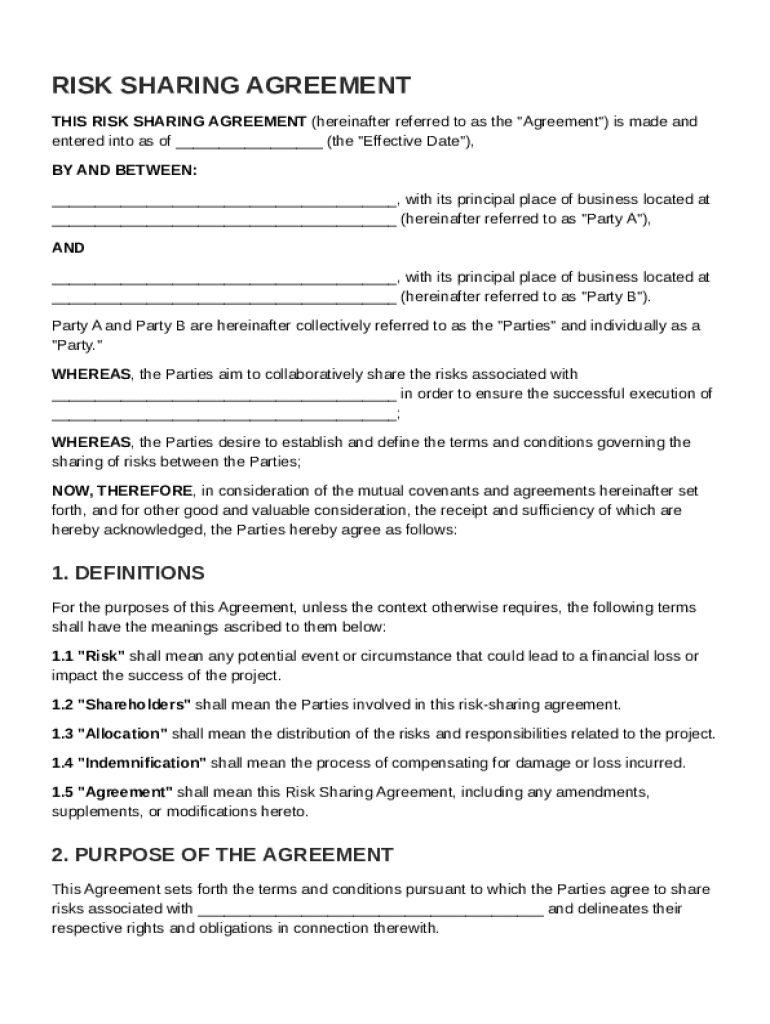
The Risk Sharing Agreement Template is a structured document outlining the terms under which multiple parties agree to distribute the risks associated with a particular venture or project. It ensures clear understanding and cooperation between parties, often referred to as Party A and Party B, detailing how risks, responsibilities, and any potential liabilities are shared. The template typically encompasses aspects such as compensation, indemnification, dispute resolution, confidentiality, and termination. This agreement is essential for managing potential financial impacts and ensuring that all participating parties maintain a mutual understanding of their roles and obligations.
Key Elements of the Risk Sharing Agreement Template
A comprehensive Risk Sharing Agreement Template includes several crucial components to ensure clarity and enforceability:
- Scope of Agreement: Defines the specific risks to be shared and the project or venture's scope.
- Responsibilities: Clearly states the obligations and duties of each party involved.
- Compensation and Indemnity: Describes how and when parties will be compensated for losses and establishes indemnification terms.
- Confidentiality: Ensures that sensitive information shared under the agreement is kept secure and private.
- Dispute Resolution: Provides methods, such as mediation or arbitration, to resolve any disagreements that may arise.
- Termination Provisions: Details the circumstances under which the agreement can be concluded or terminated.
Additionally, the template may include clauses for regular review, adjustment procedures, and contingencies to address unexpected events.
How to Use the Risk Sharing Agreement Template
To effectively utilize a Risk Sharing Agreement Template, follow these steps:
- Identify Parties and Context: Clearly establish who the involved parties are, including their roles and interests.
- Customize the Template: Tailor the template to address specific project risks, goals, and responsibilities of the parties involved.
- Clarify Terms and Conditions: Ensure all terms, definitions, and conditions are specific and relevant to the particular context of the project.
- Consult Legal Experts: Engage with legal professionals to review the template and ensure compliance with applicable laws.
- Document Execution and Storage: Execute the agreement by all parties and securely store copies for reference and compliance.
Customization and legal consultation are critical to ensure the template addresses all pertinent issues relevant to the parties and project scope.
Why Use a Risk Sharing Agreement Template
Using a Risk Sharing Agreement Template offers several advantages:
- Efficiency: Provides a structured framework that significantly reduces the time and effort needed to draft an agreement from scratch.
- Clarity: Ensures all parties have a mutual understanding of roles, responsibilities, and risk-sharing aspects.
- Risk Management: Facilitates proactive identification and management of potential project risks.
- Legal Protection: Offers protection by clearly defining terms and conditions, reducing the potential for disputes.
- Professionalism: Demonstrates a sophisticated and systematic approach to managing project-related risks.
For businesses and individuals alike, using such a template can streamline the preparation process and contribute to the successful execution of projects.
Important Terms Related to Risk Sharing Agreement Template
Understanding key terminology in a Risk Sharing Agreement Template is crucial for effective usage:
- Indemnification: Legal protection ensuring one party compensates for losses incurred by another party.
- Liability: The state of being legally responsible for something, including debts or obligations.
- Mitigation: Actions taken to reduce the severity or likelihood of risks.
- Arbitration: A method of dispute resolution outside of court, where an independent third party makes a binding decision.
- Force Majeure: A clause that frees parties from obligation due to unforeseeable and unavoidable events.
These terms convey the legal and operational aspects vital to constructing a precise and enforceable agreement.
Legal Use of the Risk Sharing Agreement Template
The Risk Sharing Agreement Template needs to be legally sound and compliant with applicable state and federal laws:
- Compliance: Ensure all terms within the agreement adhere to legal standards within jurisdictions relevant to the parties.
- Enforceability: Drafted in a manner that the agreement is enforceable in court.
- Jurisdiction: Specify which state or region’s laws govern the agreement.
- Signatures: Must be signed by authorized representatives of each party to hold legal validity.
Consulting with legal professionals ensures that the agreement holds up under legal scrutiny and adequately protects all parties involved.
Steps to Complete the Risk Sharing Agreement Template
Here's how to finalize a Risk Sharing Agreement Template:
- Gather Information: Collect details about parties involved, project scope, and specific risks.
- Draft Initial Agreement: Use the template to prepare an initial draft covering all required elements.
- Review and Revise: Conduct thorough reviews, making revisions as necessary to ensure clarity and compliance.
- Legal Vetting: Submit the draft to legal counsel for examination and suggestions.
- Finalization and Signing: Once all parties agree on terms, sign the document to formalize the agreement.
- Distribution and Storage: Distribute signed copies to all parties and store securely.
By following this systematic procedure, parties can ensure the agreement is comprehensive, precise, and enforceable.
Who Typically Uses the Risk Sharing Agreement Template
Risk Sharing Agreement Templates are widely used across various sectors:
- Businesses and Corporations: Engaged in partnerships or joint ventures to mitigate and manage risk.
- Government Entities: During public projects involving multiple contractors and stakeholders.
- Non-Profit Organizations: When collaborating on initiatives that involve shared responsibilities and risks.
- Financial Institutions: In cases involving syndicated loans or collaborative investments.
- Insurance Companies: For reinsurance or collaborative risk assessment ventures.
In diverse industries, these templates support strategic risk management and promote collaborative success.