






Definition and Meaning
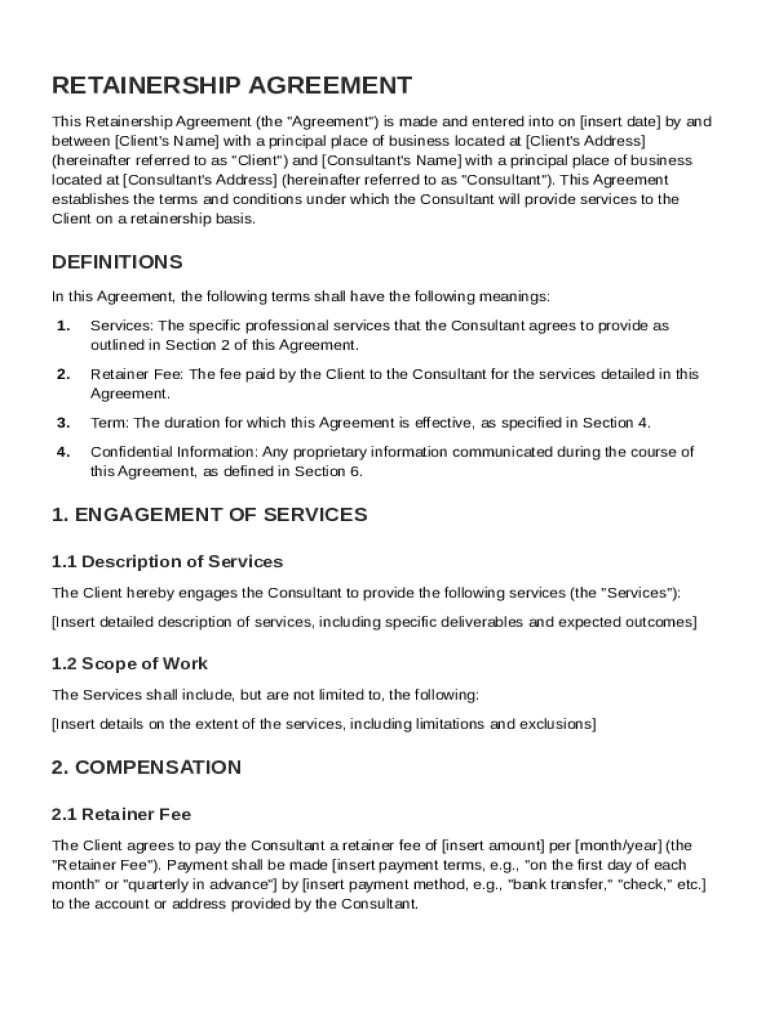
A Retainership Agreement Template sets the terms and conditions under which a consultant provides professional services to a client on a retainership basis. This legally binding document delineates the roles and expectations of both parties, serving as a framework to ensure clarity and understanding. The agreement typically includes critical sections such as engagement details, compensation, responsibilities, confidentiality, intellectual property rights, indemnification, governing law, and other miscellaneous provisions essential to the business relationship.
In practical terms, this agreement is used when a client wishes to engage a consultant's services over a period of time, paying a fixed fee to retain their availability and skills. Unlike one-off service contracts, retainership agreements guarantee that a consultant's expertise is accessible when required, allowing for more strategic planning and resource allocation.
Key Elements of the Retainership Agreement Template
Engagement Details
- Scope of Services: Clearly defines the services the consultant will provide.
- Duration of Agreement: Specifies the start and end dates of the contract, including renewal options.
Compensation Structure
- Retainer Fee: Outlines the agreed-upon fixed fee for retaining the consultant's services, along with payment schedules.
- Additional Charges: Details any potential extra costs, such as travel expenses or overtime rates.
Responsibilities of Both Parties
- Consultant's Obligations: Includes specifics on daily work duties and expected deliverables.
- Client's Duties: May involve providing necessary resources and support for the consultant to fulfill their responsibilities.
Important Terms Related to Retainership Agreement Template
Confidentiality Obligations
- Ensures that sensitive information shared between parties remains private and is not disclosed without consent.
- Includes non-disclosure agreements as a sub-component.
Intellectual Property Rights
- Defines ownership of any work products, inventions, or intellectual property developed during the engagement.
Indemnification and Liability Clauses
- Addresses potential liabilities and provides mechanisms for indemnity or risk sharing, protecting both parties from possible damages or lawsuits.
Who Typically Uses the Retainership Agreement Template


Professional Services Industry
- Consultants and Advisors: Essential for individuals providing strategic advice or specialized knowledge.
- Legal and Financial Professionals: Lawyers and accountants often work under retainership agreements.
Small to Medium Enterprises (SMEs)
- Retainerships allow SMEs to have continued access to expertise without the cost of hiring full-time employees.
Steps to Complete the Retainership Agreement Template
- Review the Template: Start by understanding the template's structure and identify any sections that require personal customization.
- Input Required Information: Enter details such as names, addresses, and contact information for both parties involved.
- Define Scope and Fees: Clearly articulate the services and agreed retainer fees, ensuring mutual understanding.
- Customize Legal Clauses: Tailor the confidentiality, indemnification, and intellectual property sections according to the engagement's needs.
- Review and Finalize: Conduct a thorough review or engage a legal professional to ensure all terms are clear and legally enforceable.
- Sign and Execute: Once confirmed, both parties need to sign the document which can be facilitated with electronic signatures using platforms like DocHub.
Legal Use of the Retainership Agreement Template
Compliance with U.S. Laws
- Ensure the agreement aligns with federal and state laws, covering aspects like taxation, labor rights, and contractual obligations.
Electronic Signatures
- Utilize compliant digital signature tools like DocHub to ensure legality under the ESIGN Act.
Examples of Using the Retainership Agreement Template
Case Study: IT Consultant
- An IT consultant retains a contract with a technology firm to oversee and optimize network infrastructure on an ongoing basis. By having a retainer, the consultant is assured monthly income, while the firm gains guaranteed expert support.
Real Estate Advisory
- A real estate advisor enters into a retainership agreement with a property management company, providing strategic consulting related to market trends and property valuation during the agreed term.
These examples highlight how varied industries can employ retainership agreements to foster stable, ongoing professional relationships.